Portrait of Francesco d'Este
Rogier van der Weyden · 1460
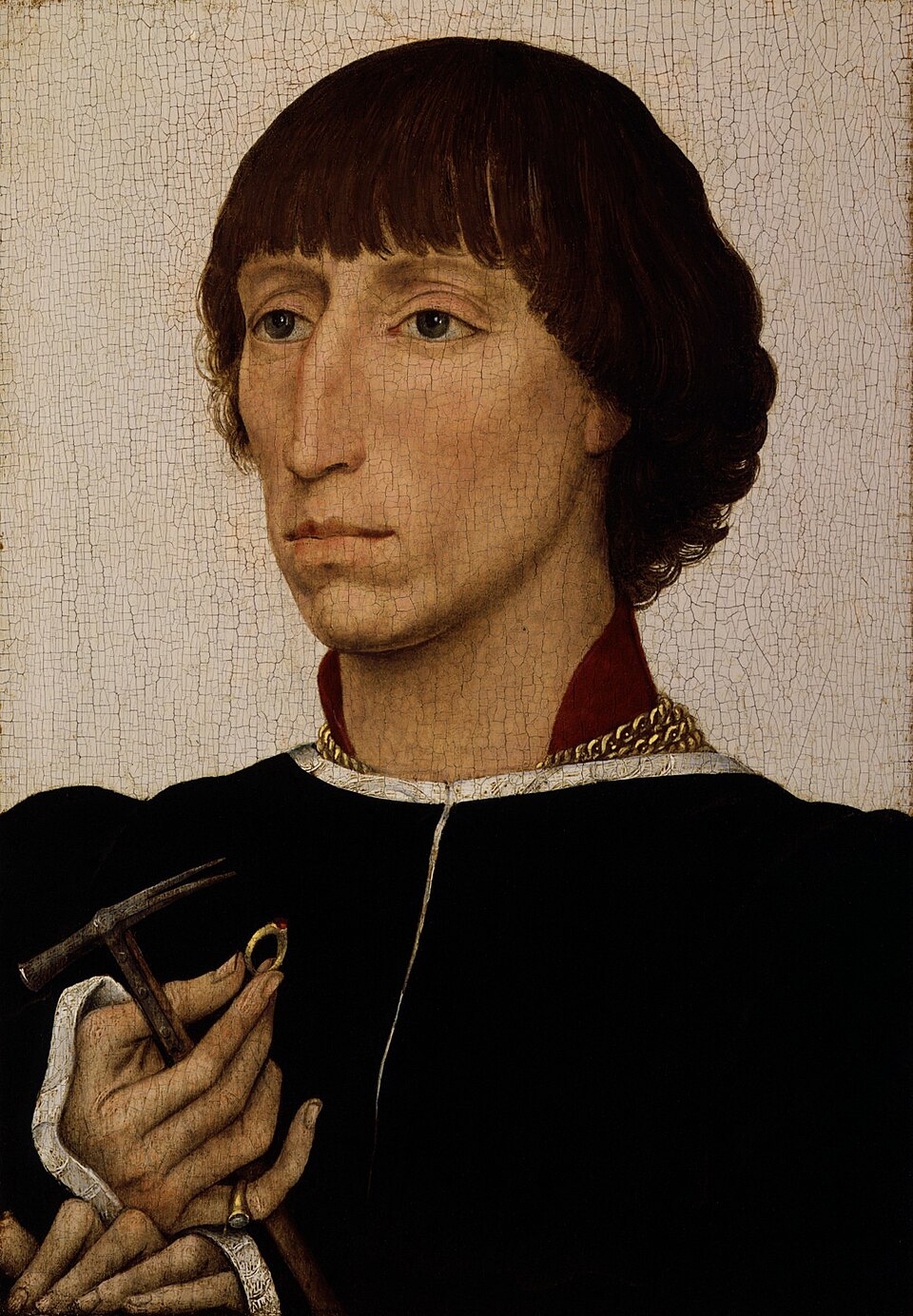
A young nobleman stands against an almost white background, holding a hammer and a ring whose meaning no one has fully explained. Rogier van der Weyden painted Francesco d'Este around 1460, and the ring stayed hidden under paint until 1934.
The story behind the painting
The sitter was the illegitimate son of Lionello d'Este, Marquis of Ferrara. In 1444 his father sent him to the Burgundian court to be raised and educated with Charles the Bold, and he spent most of his life as a military officer in the Netherlands, returning to Italy several times as a Burgundian envoy. The panel was painted around 1460, when he was about 30. It was lost for centuries and resurfaced in the late 1800s. The family crest on the back marked him as a d'Este, and for years he was thought to be Lionello himself, until Ernst Kantorowicz identified Francesco in 1939.
What to look for
This small oil on wood panel, about 30 by 20 cm, shows the sitter half length in three quarter view, gazing aloofly into the middle distance. The background is its most striking feature: plain, shallow and layered with white, unlike the deep, shadowed spaces of Jan van Eyck. His broad chest fills the panel, so his head looks small. He is not handsome, with sunken eyes, heavy lids and an aquiline nose, yet his face is sensitive and thoughtful. His long, bony fingers rest almost on the frame, holding a hammer and a ring. On the back, two lynxes hold his coat of arms beneath the words VOIR TOUT, to see all.
Meaning and intent
The painting is unusually secular for its time. It celebrates d'Este's worldly position rather than his piety or humility, with no religious imagery at all. The hammer may be a symbol of knightly authority, perhaps tied to tournaments, or the hammer of the Jubilee year; the ring may be a jousting prize. Their exact meaning is unknown. The hammer once earned the panel the title Portrait of a Goldsmith. On the reverse, the lynxes are a pun on his father's name, and many historians see the crest as the illegitimate son's wish to be recognised as Lionello's heir.
Legacy
The panel belonged to Sir Audley Neeld of Chippenham until 1909, passed through the collections of R. Langton Douglas and Edgar Speyer, and was given to the Metropolitan Museum of Art by Michael Friedsam in 1931. A cleaning in 1934 revealed the painted out ring. Van der Weyden's authorship has not been seriously questioned since the late 19th century, and the work is considered one of his finest portraits. A later phrase on the back, non plus courcelles, remains unexplained; it may refer to Courcelles, near where Francesco may have died in 1476.
Did you know?
- Oil on oak panel, painted around 1460, about 29.8 by 20.3 cm.
- The sitter was identified as Francesco d'Este by Ernst Kantorowicz in 1939.
- The ring in his hand was revealed only by a cleaning in 1934.
- In the Metropolitan Museum of Art since 1931.
About the artist
Rogier van der Weyden (1390s-1464)
portrait · man · Metropolitan Museum of Art · Early Netherlandish painting · portrait · ring
More by Rogier van der Weyden
 The Descent from the Cross - Rogier van der Weyden (1440s)
 Portrait of a Lady - Rogier van der Weyden (1460)
 The Last Judgment - Rogier van der Weyden (1443)
 Saint Luke Drawing the Virgin - Rogier van der Weyden (1490)
 Columba Triptych - Rogier van der Weyden (1450s)
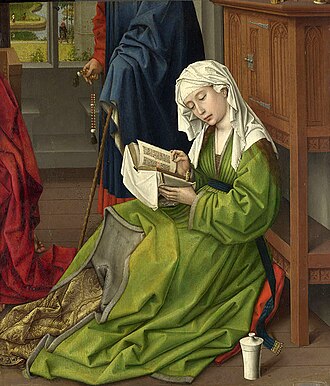 The Magdalen Reading - Rogier van der Weyden (1435)
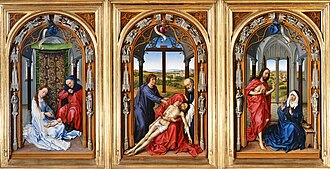 Miraflores Altarpiece - Rogier van der Weyden (1443)
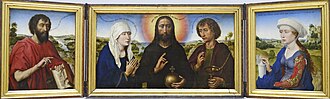 Braque Triptych - Rogier van der Weyden (1452)
Paintings by related artists
 Arnolfini Portrait - Jan van Eyck (1434)
 Ghent Altarpiece - Jan van Eyck (1432)
 Annunciation - Hans Memling (1480s)
 Scenes from the Passion of Christ - Hans Memling (1470)
 The Garden of Earthly Delights - Hieronymus Bosch
 Ship of Fools - Hieronymus Bosch (1500s)
 The Hunters in the Snow - Pieter Bruegel the Elder (1565)
 Netherlandish Proverbs - Pieter Bruegel the Elder (1551)