Portrait of Barbara Holper
Albrecht Dürer · 1490
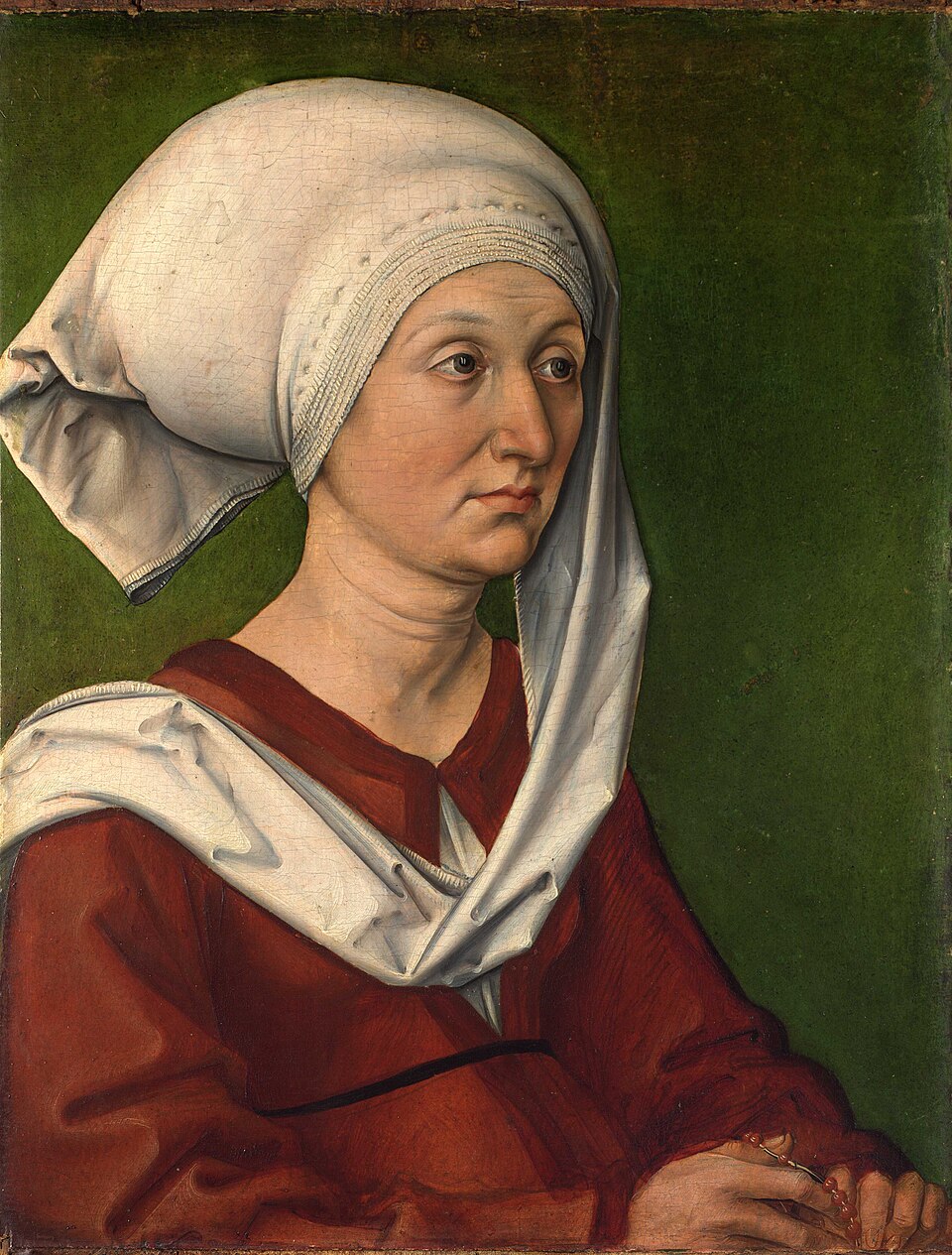
A woman in a white headdress turns her intense gaze to the right, a red rosary in her hands. She is Dürer's mother, and for centuries no one knew this panel was the lost half of a pair.
The story behind the painting
Albrecht Dürer painted his mother, Barbara Holper, around 1490, probably on the eve of leaving his native Nuremberg. It is one of his earliest known paintings. It was once the left half of a diptych with the portrait of his father, signed and dated 1490, now in the Uffizi in Florence. The pairing is supported by the back of the father's portrait, where the young artist painted the combined coat of arms of the Dürer and Holper families.
What to look for
Barbara Holper is shown half length, turned three quarters to the right against a dark, greenish background. Her hands, holding a rosary of red beads, are clearly displayed, following the models of Flemish painting. She wears the local dress of the region: a red jacket open over a glimpse of white shirt, and a large white headdress that holds her hair and falls in a flap over her shoulder. Her gaze is intense and turned to the right, towards her husband in the other panel.
Meaning and intent
The drawing and modelling show remarkable quality. Her pale complexion, typical of Dürer, contrasts with the darker skin of the father, and his black hat answers her bright white headdress, so that the two panels were meant to be read together as one couple. Dürer also drew his mother much later, very old, after her husband's death. Sources give slightly different sizes: Wikipedia says 47 by 38 cm, while Wikidata gives 47 by 35.8 cm.
Legacy
The diptych was split between 1588 and 1628. The father went to Emperor Rudolf II and then to the grand dukes of Tuscany. The mother passed to the Imhoff family of Nuremberg; in the 1630s Willibald Imhoff seems to have offered it to Maximilian I of Bavaria, who rejected it as not original. It came to the Germanisches Nationalmuseum in Nuremberg in 1925 unrecognised, and only in 1979 was it identified as the lost pendant. Some authors still doubt it is entirely by Dürer's hand.
Did you know?
- Painted around 1490, one of Dürer's earliest known paintings.
- Once paired with the portrait of his father, now in the Uffizi.
- Identified as the lost pendant only in 1979.
- Held in the Germanisches Nationalmuseum, Nuremberg.
About the artist
Albrecht Dürer (1471-1528)
portrait · German Renaissance · Germanisches Nationalmuseum
More by Albrecht Dürer
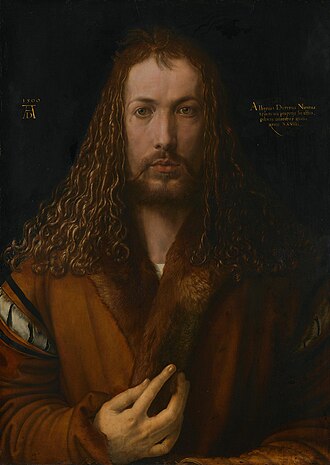 Self-Portrait with Fur-Trimmed Robe - Albrecht Dürer (1500)
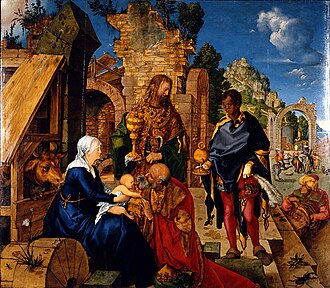 Adoration of the Magi - Albrecht Dürer (1504)
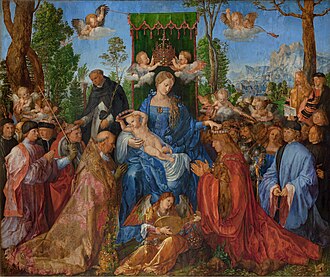 Feast of the Rosary - Albrecht Dürer (1506)
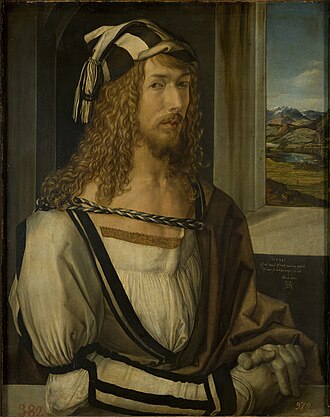 Self-Portrait - Albrecht Dürer (1498)
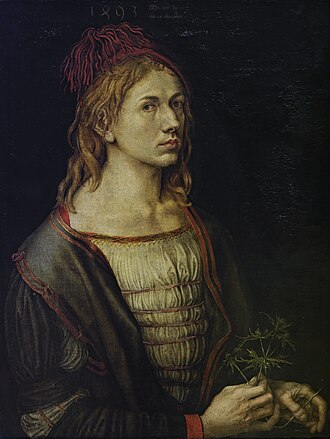 Portrait of the Artist Holding a Thistle - Albrecht Dürer (1493)
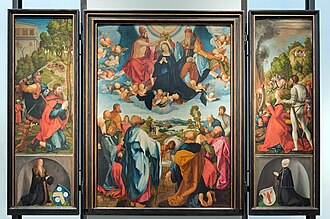 Heller Altarpiece - Albrecht Dürer (1500s)
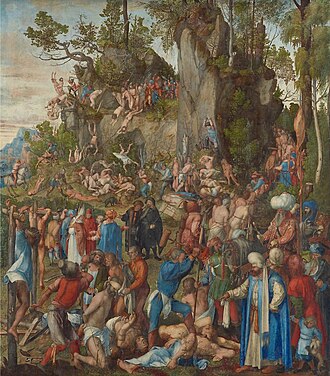 Martyrdom of the Ten Thousand - Albrecht Dürer (1508)
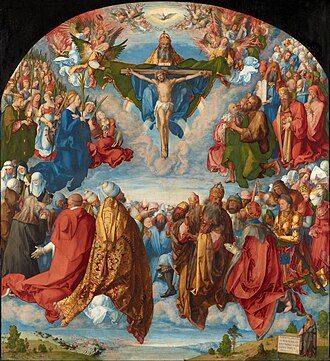 Adoration of the Trinity - Albrecht Dürer (1511)
Paintings by related artists
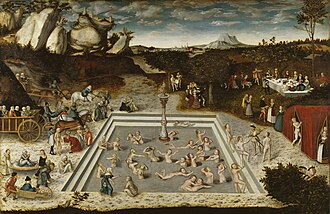 The fountain of youth - Lucas Cranach the Elder (1546)
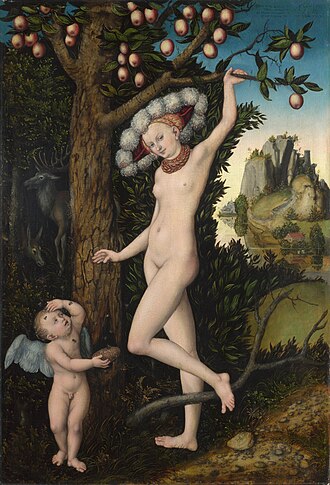 Cupid Complaining to Venus - Lucas Cranach the Elder (1520s)