The fountain of youth
Lucas Cranach the Elder · 1546
.jpg)
Frail old women are carried to a pool on the left and step out young and lovely on the right, ready to dance. Cranach's workshop turned a medieval dream into one wide, teeming panel, with a few bathers who seem unsure they want to go in.
The story behind the painting
The Fountain of Youth is an oil painting on a lime wood panel dated 1546, about 186 by 121 cm. At the bottom centre it carries the winged serpent of Cranach's workshop and the year. It is thought to have been commissioned by an unknown client. The attribution is not certain: research has named both Lucas Cranach the Elder and his son, it is lately linked to the father's late work, and other members of the workshop were probably involved. The idea of a healing fountain was a popular motif in medieval tales, especially in French literature.
What to look for
Read the panel from left to right. Old women, worn and some unable to walk, are brought in carts and on backs to a square pool seen from above. They undress, enter the water and emerge rejuvenated on the right, where a gallant young man leads them into a tent to dress, then on to dancing and dining to music. A man in a red jacket with a book studies one bather, like a doctor. Two women wrapped in towels hesitate at the edge. Venus and Cupid crown the column of the fountain. Bare rock rises on the left, lush green on the right.
Meaning and intent
The barren rocks stand for the hardships of age, the green forest for youth, and Venus and Cupid suggest the bath serves the power of love. Only women bathe, reflecting the belief that old men would be rejuvenated simply by being with young women, though real healing springs were visited by men too. The source calls the picture a man's dream and a search for paradise. Showing old naked women was very unusual at the time, when idealised young nudes were the norm, and most figures follow the beauty ideals of Cranach's age.
Legacy
The painting reflects the real bathing culture of the Middle Ages and the belief that certain baths could heal and renew the body, a belief linked, the source notes, to the wider faith in water seen in baptismal rites. By 1830 it was part of the inventory of the former Prussian royal palaces. It then passed to the Royal Museum and now hangs in the Gemaldegalerie in Berlin, where the hesitant bathers at the pool's edge still ask whether a second youth is truly worth having.
Did you know?
- Oil on lime wood, dated 1546, with the Cranach winged serpent.
- Attribution debated between Lucas Cranach the Elder and his son, with workshop help.
- Old women enter the pool on the left and leave young on the right.
- Now in the Gemaldegalerie, Berlin.
About the artist
Lucas Cranach the Elder (1472-1553)
mythological painting · Gemäldegalerie Berlin · dance
More by Lucas Cranach the Elder
%20-%20Venus%20and%20Cupid%20(National%20Gallery%2C%20London).jpg) Cupid Complaining to Venus - Lucas Cranach the Elder (1520s)
Cupid Complaining to Venus - Lucas Cranach the Elder (1520s).jpg) Caritas - Lucas Cranach the Elder (1540)
Caritas - Lucas Cranach the Elder (1540)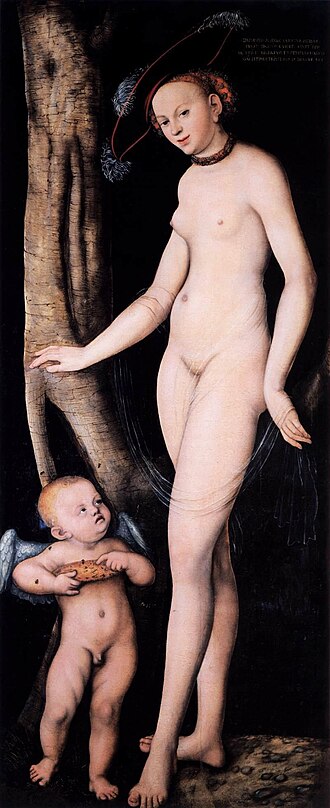 Venus and Cupid with a Honeycomb - Lucas Cranach the Elder (1531)
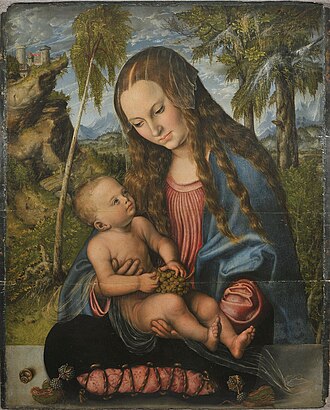 Madonna under the Fir Tree - Lucas Cranach the Elder
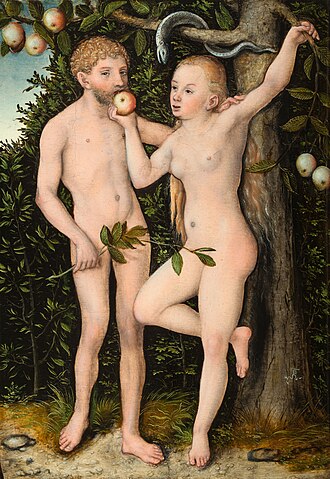 Adam and Eve - Lucas Cranach the Elder (1538)
.jpg) Law and Grace - Lucas Cranach the Elder (1529)
Law and Grace - Lucas Cranach the Elder (1529).jpg) Prince Johann of Anhalt - Lucas Cranach the Elder (1520)
Prince Johann of Anhalt - Lucas Cranach the Elder (1520).jpg) The Procuress - Lucas Cranach the Elder (1548)
The Procuress - Lucas Cranach the Elder (1548)
Paintings by related artists
 Self-Portrait with Fur-Trimmed Robe - Albrecht Dürer (1500)
 Adoration of the Magi - Albrecht Dürer (1504)