Merrymakers at Shrovetide
Frans Hals · 1610s
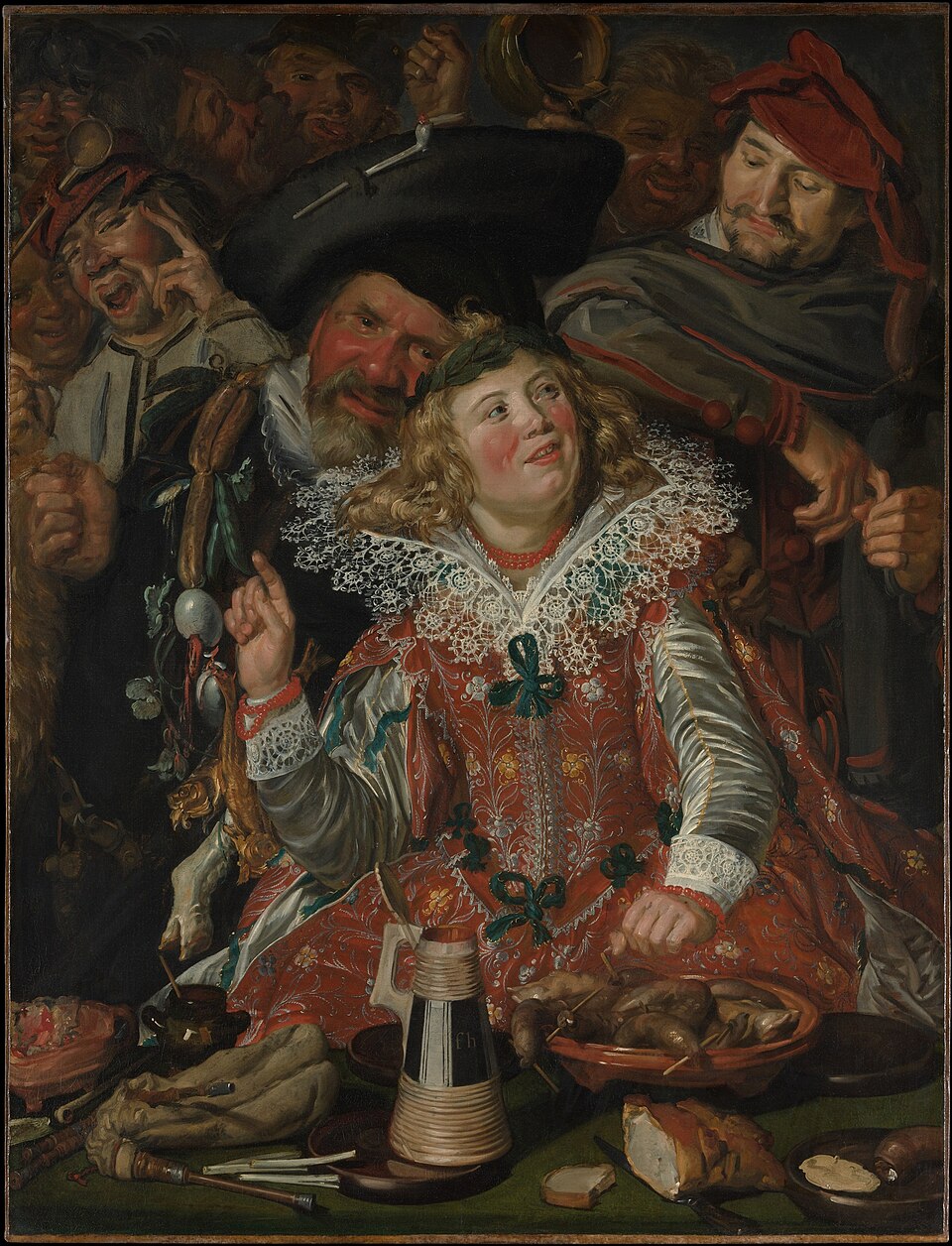
A laughing woman raises a finger, a man with herring and eggs around his neck whispers in her ear, and a sausage dangles from a hat. Frans Hals painted carnival before Lent, and the joy is still loud.
The story behind the painting
Shrovetide Revellers, also called Merrymakers at Shrovetide, is one of the earliest surviving works by Frans Hals, painted around 1616 to 1617. It shows the festivities of Shrovetide, the annual carnival of food and fun held before the Christian fasting season of Lent. The painting was first documented by Wilhelm von Bode in 1883 and afterwards entered most catalogues of Hals's work. The Metropolitan Museum of Art notes an Amsterdam sale of 1765 that mentioned a Shrove Tuesday genre scene. Benjamin Altman acquired it in 1907.
What to look for
An elegantly dressed woman smiles and raises her right finger to make a point. A man grabs her shoulder to whisper in her ear; around his neck hang herring, eggs and mussels, with a pig's trotter and a fox tail, symbols of gluttony and foolishness. Another amused gentleman, a sausage hanging from his cap, leans on the first man's shoulder to listen. Behind them others talk and laugh. The flagon bears the initials fh. The woman wears far brighter colours than any other Hals sitter. Cleaning in 1951 uncovered six heads in the background that had been painted out.
Meaning and intent
Some see the two men as the stage characters Peeckelhaeringh and Hans Wurst. The woman closely resembles the young woman in Hals's Yonker Ramp and His Sweetheart; both are now seen as genre works, so the models could be anyone in his circle, such as his children or pupils. In his 1989 exhibition catalogue, Seymour Slive reproduced the painting in full colour to show Hals's love of life. In the same year, however, Claus Grimm rejected the attribution to Hals, calling it probably a copy after a lost original. The question remains open.
Legacy
Benjamin Altman bequeathed the painting to the Metropolitan Museum of Art in New York in 1913, and it has stayed there ever since. Under the terms of its holding it can never be lent out, which is why it could not travel to the 1989 Hals exhibition even as its image appeared in the catalogue. The canvas measures about 131.4 by 99.7 cm. Whether by Hals or after him, it remains a rare, rowdy record of a Dutch carnival, full of food, gossip and laughter before the fast.
Did you know?
- Painted around 1616-1617, among Hals's earliest surviving works.
- The man's necklace of herring, eggs and mussels mocks gluttony.
- Claus Grimm in 1989 called it a copy after a lost Hals.
- In the Metropolitan Museum of Art since 1913; it is never lent.
About the artist
Frans Hals (1591-1666)
woman · portrait · man · Metropolitan Museum of Art · bread
More by Frans Hals
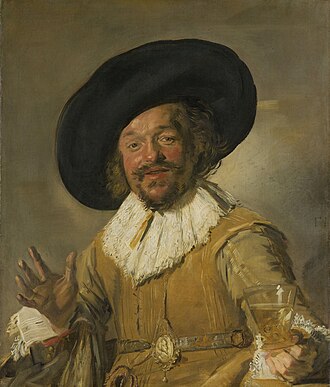 A Militiaman Holding a Berkemeyer, Known as the ‘Merry Drinker’ - Frans Hals (1620s)
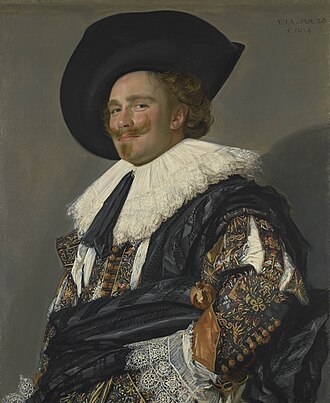 Laughing Cavalier - Frans Hals (1624)
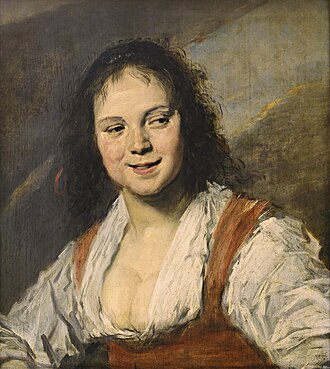 Gipsy Girl - Frans Hals (1628)
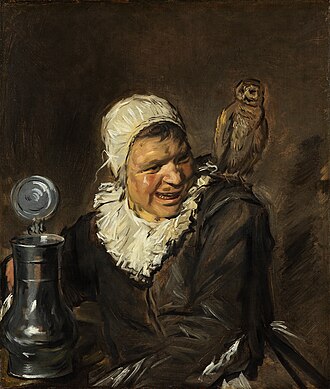 Malle Babbe - Frans Hals (1640s)
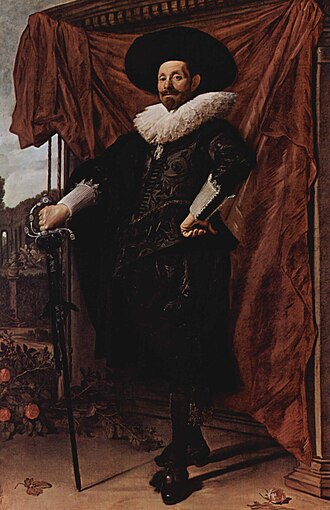 Willem van Heythuysen posing with a sword - Frans Hals (1625)
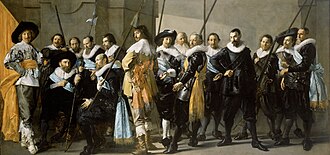 Militia Company of District XI under the Command of Captain Reynier Reael - Frans Hals (1630s)
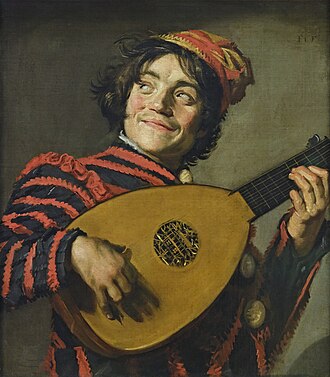 Jester with lute - Frans Hals (1623)
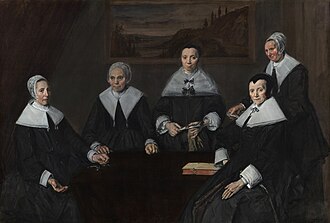 Regentesses of the Old Men's Alms House - Frans Hals (1664)
Paintings by related artists
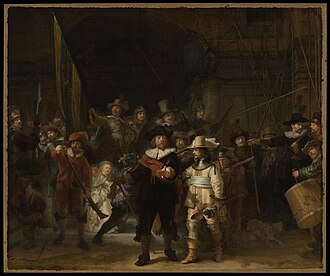 The Night Watch - Rembrandt van Rijn (1642)
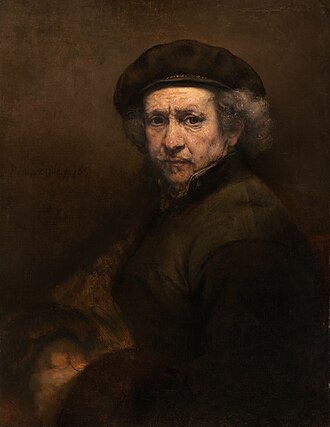 Self-Portrait - Rembrandt van Rijn (1659)
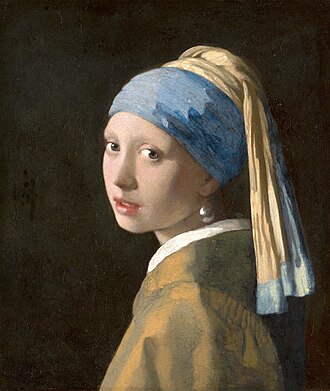 Girl with a Pearl Earring - Johannes Vermeer (1665)
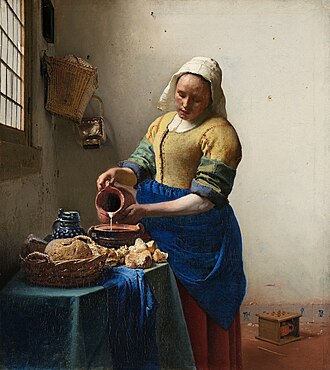 The Milkmaid - Johannes Vermeer (c. 1658)