Madonna and Child with an Angel
Sandro Botticelli · 1465
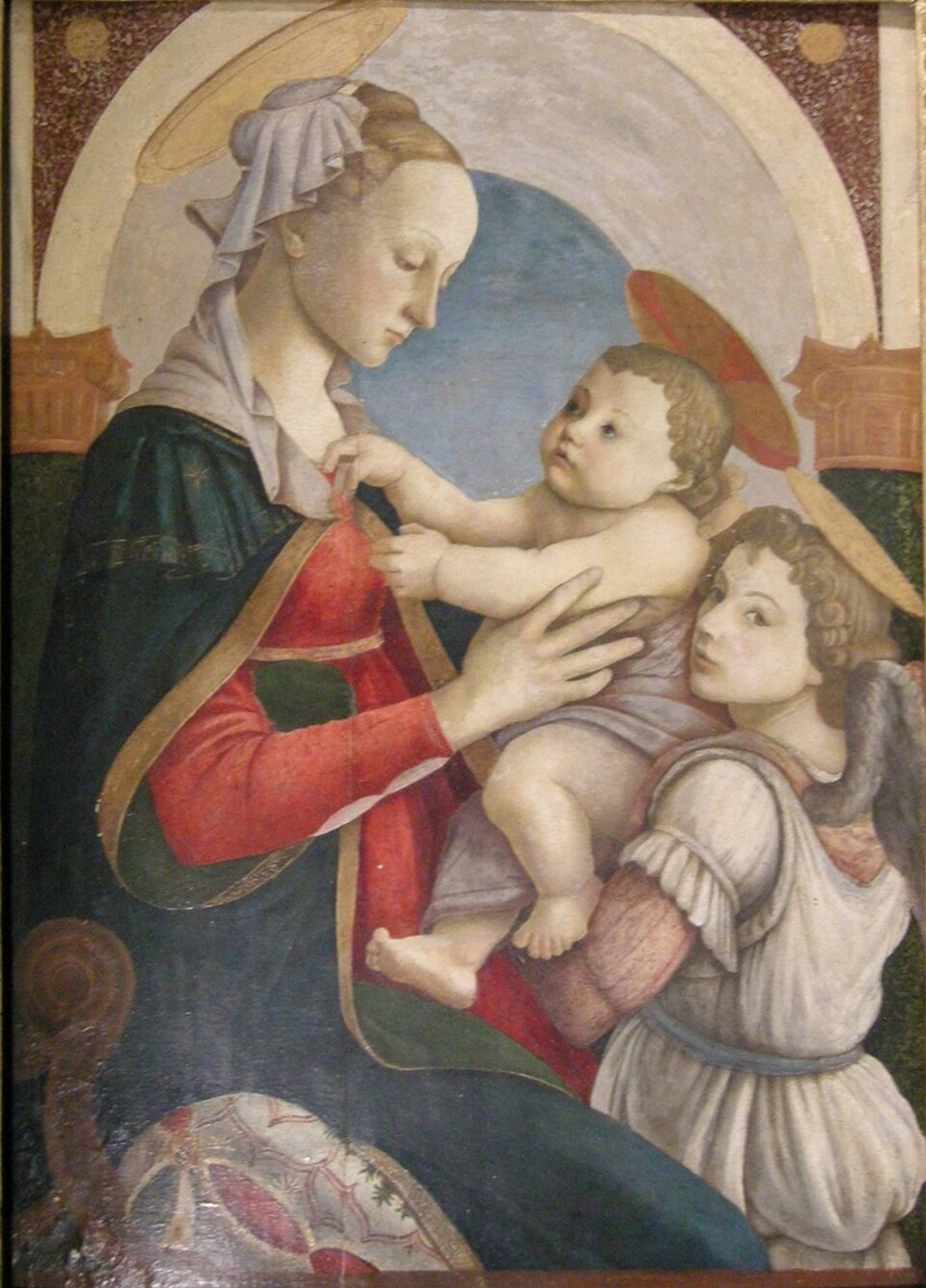
An angel lifts the infant Jesus toward his mother, and while mother and child gaze at each other, the angel looks straight at you. This is one of Botticelli's very first paintings.
The story behind the painting
Sandro Botticelli painted the Madonna and Child with an Angel around 1465-1467, according to Wikipedia; Wikidata gives 1465. It is one of his earliest works, made long before the 1480s, when most of his paintings date. It reveals how close he still was to his teacher, Filippo Lippi, for it is modelled on Lippi's The Virgin and Child with Two Angels. The painting is housed in Florence at the Spedale degli Innocenti, recorded by Wikidata as the Museo degli Innocenti, and Wikidata gives its size as 87 by 60 centimetres.
What to look for
Mary and the Child sit at the centre, their shared gaze framed by a blue background and by a church-like arch on Composite pillars. Mary wears red beneath a black cloak with gold accents and trim. The Child wears only a white cloth. He is being handed to his mother by an angel in the form of a young boy, dressed in white and red, his wings barely visible. Notice the three haloes, and how the Child's alone carries a cross, the traditional sign of Jesus. Then look at the infant's foot and toes, painted from a living baby.
Meaning and intent
Botticelli does not try to show a historical scene. He draws instead on Renaissance ideals of beauty, giving Mary and Jesus fair skin and blonde, wavy hair to suggest a devotional perfection, as he would again in the Madonna of the Magnificat. Yet the painting is also strikingly observant. Because he studied real infant models, his Child may be the earliest known depiction of the Babinski reflex, a natural movement of a baby's toes. The angel's direct gaze completes the design, inviting the viewer into a private moment between mother and son.
Legacy
This early panel lets us watch a great painter at the beginning. The debt to Filippo Lippi is clear, but the tender exchange of glances and the careful study of the living child point toward the Botticelli who would later become famous, and who would also contribute to the Sistine Chapel. The theme of blonde, idealised Madonnas runs through later works such as the Sant'Ambrogio Altarpiece. Today, in the Innocenti in Florence, the painting remains a quiet beginning: a young artist learning from his master while already seeing with his own eyes.
Did you know?
- Painted c. 1465-1467 (Wikipedia); Wikidata gives 1465.
- Modelled on Filippo Lippi's The Virgin and Child with Two Angels (Wikipedia).
- May be the earliest known depiction of the Babinski reflex (Wikipedia).
- Panel 87 x 60 cm; Museo degli Innocenti, Florence (Wikidata).
About the artist
Sandro Botticelli (1445-1510)
religious art · Mary · Christ Child · Early Renaissance · angel · mother · Madonna and Child
More by Sandro Botticelli
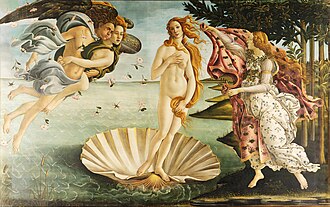 The Birth of Venus - Sandro Botticelli (c. 1485)
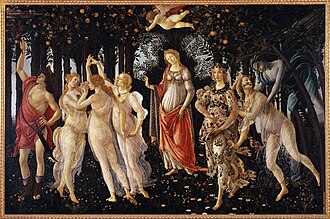 Primavera - Sandro Botticelli (1480s)
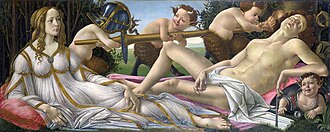 Venus and Mars - Sandro Botticelli (1485)
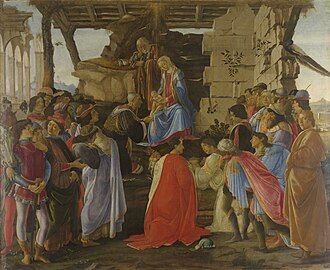 Adoration of the Magi - Sandro Botticelli (1470s)
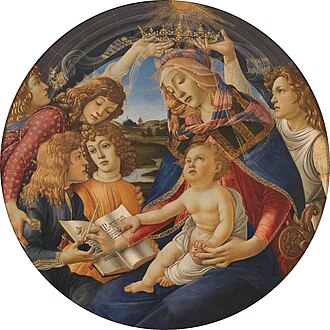 Madonna of the Magnificat - Sandro Botticelli (1481)
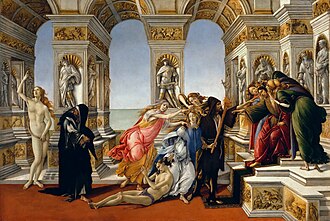 Calumny of Apelles - Sandro Botticelli (1490s)
.jpg) Pallas and the Centaur - Sandro Botticelli (1482)
Pallas and the Centaur - Sandro Botticelli (1482)%20-%20Google%20Art%20Project.jpg) Idealized Portrait of a Lady - Sandro Botticelli (1480)
Idealized Portrait of a Lady - Sandro Botticelli (1480)
Paintings by related artists
 Mona Lisa - Leonardo da Vinci (1503-1519)
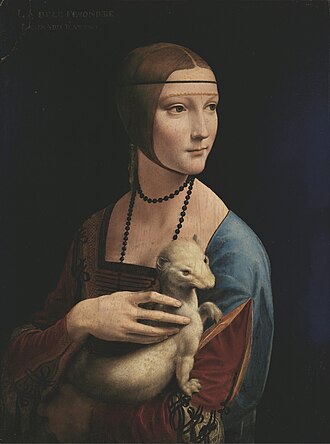 Lady with an Ermine - Leonardo da Vinci (1490)
.jpg) Venus of Urbino - Titian (1538)
Venus of Urbino - Titian (1538)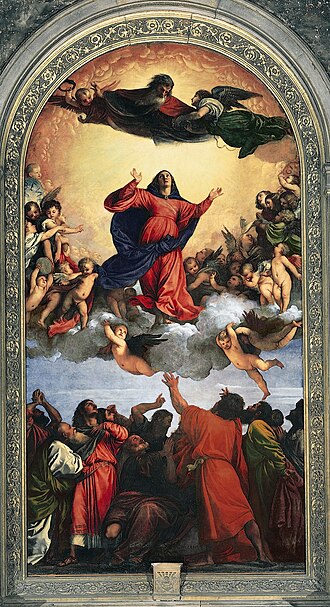 Assumption of the Virgin - Titian (1510s)
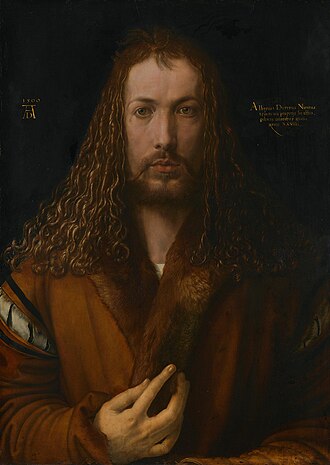 Self-Portrait with Fur-Trimmed Robe - Albrecht Dürer (1500)
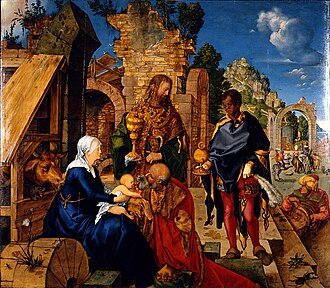 Adoration of the Magi - Albrecht Dürer (1504)