Pallas and the Centaur
Sandro Botticelli · 1482
.jpg)
A tall woman calmly takes a centaur by the hair, and the wild creature seems to give in. Botticelli's life-size allegory has puzzled viewers about who she really is for five centuries.
The story behind the painting
Botticelli's Pallas and the Centaur is usually dated to about 1482 or 1483 on stylistic grounds, soon after the painter returned from Rome, where he had worked on the Sistine Chapel. It is often connected with the 1482 wedding of Lorenzo di Pierfrancesco de' Medici to Semiramide Appiano, perhaps as a gift from Lorenzo il Magnifico. In 1499 an inventory placed it in the same room as the Primavera, in Lorenzo di Pierfrancesco's town palace in Florence. Later it hung in the Palazzo Vecchio, then the Villa di Castello, then the Pitti Palace, by which time Botticelli was out of fashion. In 1895 the English artist William Blundell Spence noticed it in an ante-room of the Pitti. It has been in the Uffizi since 1922.
What to look for
The figures are life-size. On the left a centaur, half man and half horse, holds a bow; he was evidently about to shoot. On the right a woman holds a very elaborate halberd and grips the centaur's hair. His face is close to that of Moses in one of Botticelli's Sistine frescoes. Her fine dress is decorated with the Medici three-ring insignia. The painting is tempera on canvas; Wikipedia gives 207 x 148 cm and Wikidata 205 x 147.5 cm, and it may have been transferred from panel. Many areas were retouched, and those retouchings have faded.
Meaning and intent
Who is she? The earliest record, the 1499 inventory, calls her Camilla, the virgin warrior huntress of Roman myth, for whom subduing a centaur might be ordinary. An inventory of 1516 calls her Minerva, the Roman equivalent of Pallas Athene, goddess of wisdom. Pallas is her usual modern name, but Camilla still has supporters, and Arthur Frothingham proposed Florencia, the personification of Florence. Centaurs are linked with uncontrolled passion and lust, so the meaning is at least partly about passion submitting to chastity or reason. Personal, political and philosophical readings along these lines have all been suggested.
Legacy
For centuries the painting was barely known. Only after Spence's discovery in 1895 did it re-enter the story of Botticelli, and some have proposed it as a companion to the Primavera, despite its different shape. In 2015 it traveled in an exhibition of Botticelli's works that opened in Berlin and moved to London. Today in the Uffizi, the woman with the Medici rings and the subdued centaur still invite us to decide for ourselves: goddess, huntress or city, and what exactly is being tamed.
Did you know?
- Usually dated about 1482-1483 on stylistic grounds (Wikipedia)
- Called Camilla in a 1499 inventory and Minerva in 1516 (Wikipedia)
- Size: 207 x 148 cm per Wikipedia, 205 x 147.5 cm per Wikidata
About the artist
Sandro Botticelli (1445-1510)
mythological painting · Early Renaissance · Uffizi Gallery
More by Sandro Botticelli
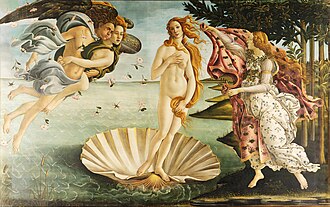 The Birth of Venus - Sandro Botticelli (c. 1485)
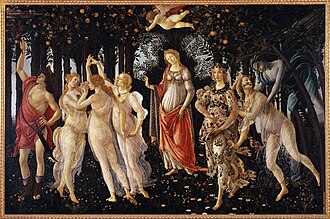 Primavera - Sandro Botticelli (1480s)
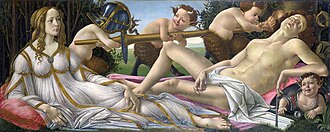 Venus and Mars - Sandro Botticelli (1485)
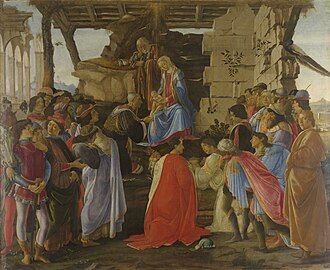 Adoration of the Magi - Sandro Botticelli (1470s)
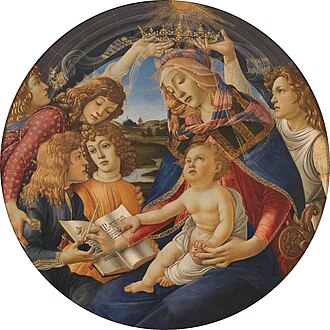 Madonna of the Magnificat - Sandro Botticelli (1481)
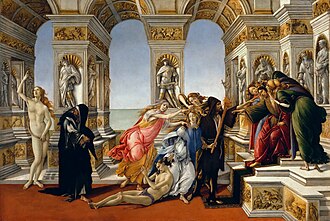 Calumny of Apelles - Sandro Botticelli (1490s)
%20-%20Google%20Art%20Project.jpg) Idealized Portrait of a Lady - Sandro Botticelli (1480)
Idealized Portrait of a Lady - Sandro Botticelli (1480)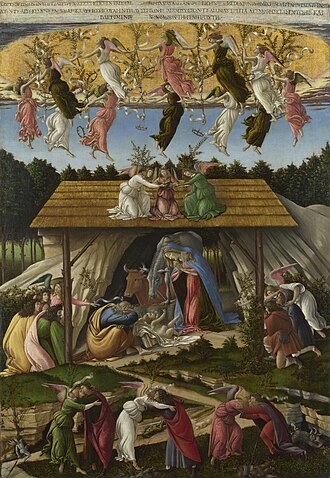 The Mystical Nativity - Sandro Botticelli (1500)
Paintings by related artists
 Mona Lisa - Leonardo da Vinci (1503-1519)
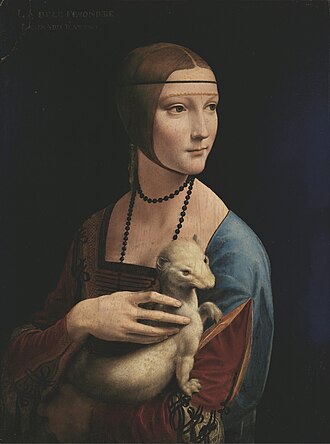 Lady with an Ermine - Leonardo da Vinci (1490)
.jpg) Venus of Urbino - Titian (1538)
Venus of Urbino - Titian (1538)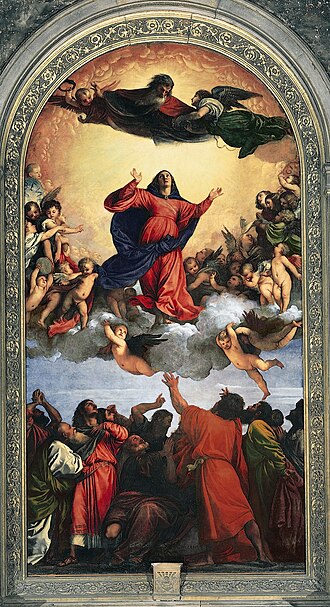 Assumption of the Virgin - Titian (1510s)
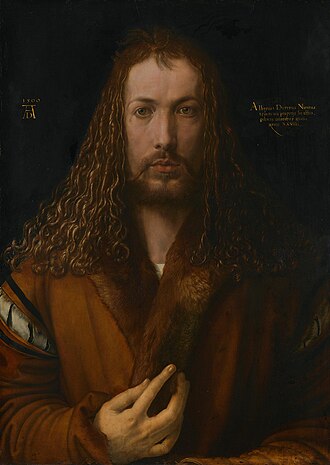 Self-Portrait with Fur-Trimmed Robe - Albrecht Dürer (1500)
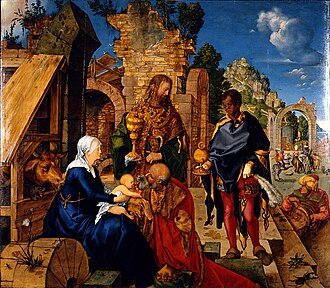 Adoration of the Magi - Albrecht Dürer (1504)