Mademoiselle Rose
Eugène Delacroix · 1820s
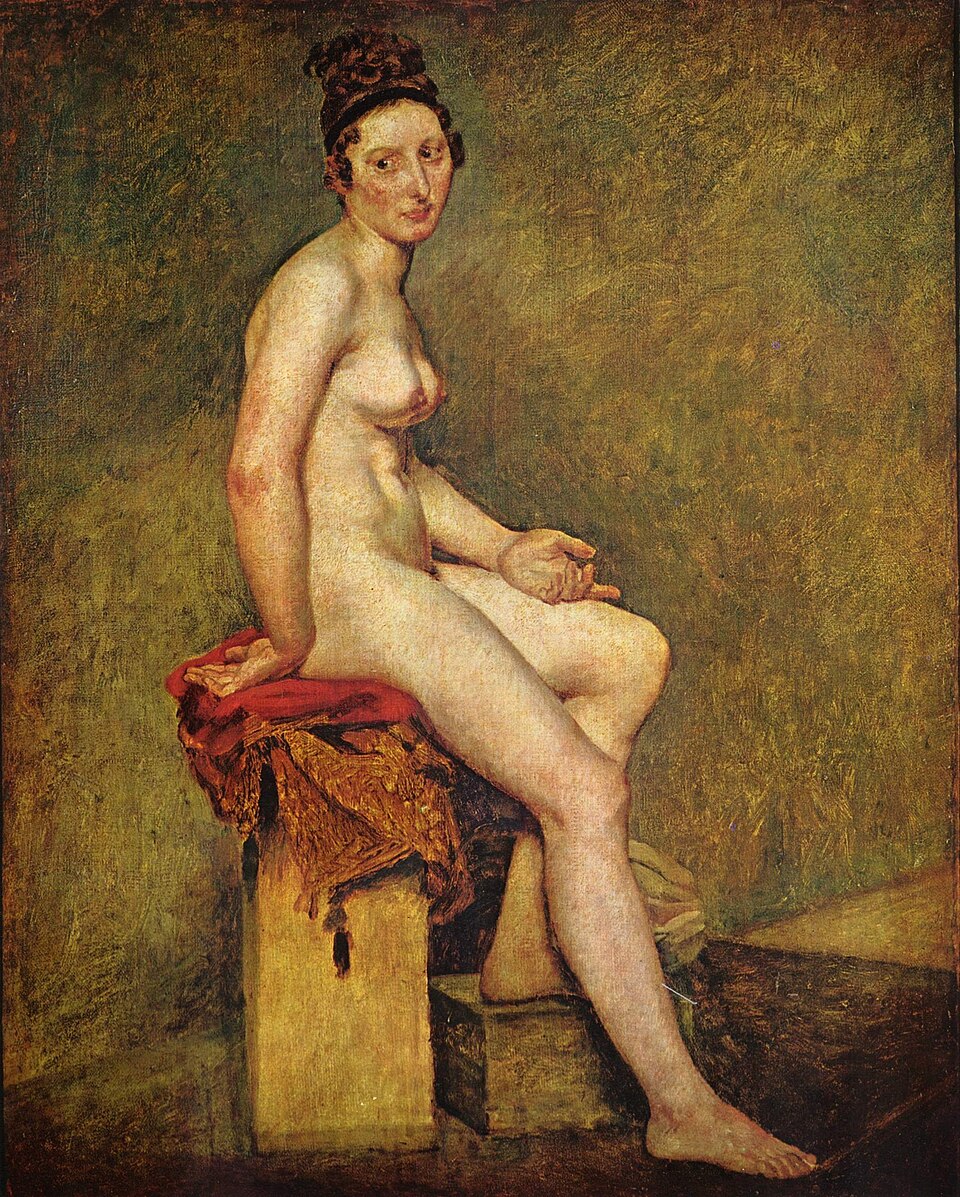
A model sits on a wooden pedestal, half draped in red, and turns her slightly anxious face to the young Delacroix. Long before his great Romantic canvases, he painted her with plain honesty.
The story behind the painting
This nude, also called Seated Nude, was painted by Eugène Delacroix before 1824, probably between 1820 and 1822, though the date cannot be fixed precisely. The sitter has been identified, without certainty, as Mademoiselle Rose, an artists' model who, according to Delacroix's biographer Alfred Robaut, posed several times for him and for Richard Parkes Bonington. In a letter to his friend Pierret, usually dated 1820, Delacroix joked that his friend Félix Guillemardet could not join them the next day because a shortage of money had won out over Mademoiselle Rose. The source gives the date as before 1824, Wikidata as the 1820s.
What to look for
The model is seen from the side, seated on a kind of wooden pedestal half covered with red cloth. Her left foot rests on a wooden block, and her head is turned towards the artist, so we see her face full on. The pose is a somewhat awkward studio pose, and there is no decorative arrangement around her. Watch how the light moves across her skin, a subject that deeply interested Delacroix. The paint is laid in masterly touches of granular impasto, without yet the fluid handling he later took from English painting. The canvas measures 81 by 65 cm.
Meaning and intent
The painting is described as almost naturalistic in its sincerity. Yet it is more than a study of light: Delacroix gives it an emotion rooted in Romanticism. The slight timidity of the pose and the somewhat anxious expression of the face lend this life-class picture a deep humanity, which the source calls purely French Romantic. Instead of an ideal goddess, we meet a real young woman in a working studio, a little uneasy under the painter's eye. That small human hesitation is what makes the picture feel alive and close to us.
Legacy
The painting shows a young artist on the rise. The change in his brushwork came soon after: at the Salon of 1824 Delacroix saw works by John Constable, and in 1825 he visited London, and his paint became more fluid. Delacroix is regarded as the leader of the French Romantic school. This nude is held and shown at the Louvre in Paris, in the Department of Paintings. The source also mentions another version in the Alte Nationalgalerie in Berlin.
Did you know?
- Painted by Delacroix before 1824, probably 1820 to 1822.
- The model is identified, without certainty, as Mademoiselle Rose.
- Oil on canvas, 81 x 65 cm, in the Louvre.
- Another version is in the Alte Nationalgalerie, Berlin.
About the artist
Eugène Delacroix (1798-1863)
woman · portrait · Department of Paintings of the Louvre · nude · nudity · sitting · Romanticism · brown hair · wall · seat · studio
More by Eugène Delacroix
 Liberty Leading the People - Eugène Delacroix (1830)
 Death of Sardanapalus - Eugène Delacroix (1827)
 The Massacre at Chios - Eugène Delacroix (1824)
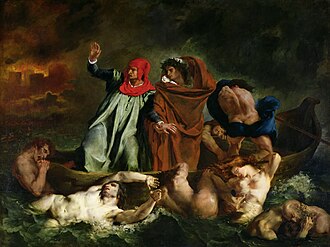 The Barque of Dante - Eugène Delacroix (1822)
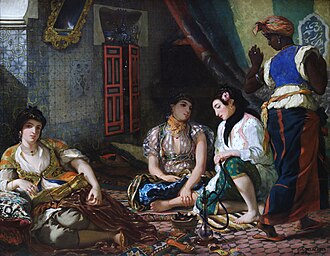 The Women of Algiers - Eugène Delacroix (1834)
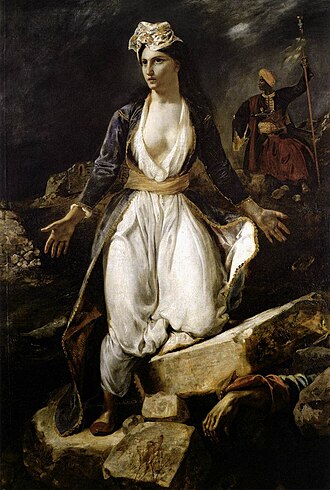 Greece on the Ruins of Missolonghi - Eugène Delacroix (1826)
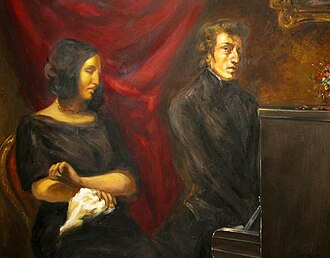 Portrait of Frédéric Chopin and George Sand - Eugène Delacroix (1837)
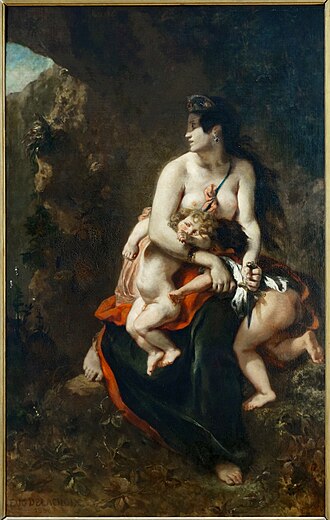 Medea - Eugène Delacroix (1836)
Paintings by related artists
 The Third of May 1808 - Francisco Goya (1814)
.jpg) La Maja nue - Francisco Goya (1800)
La Maja nue - Francisco Goya (1800) Wanderer above the Sea of Fog - Caspar David Friedrich (c. 1818)
 The Abbey in the Oakwood - Caspar David Friedrich (1800s)
 The Fighting Temeraire - J. M. W. Turner (1839)
 Rain, Steam and Speed - The Great Western Railway - J. M. W. Turner (1844)
.jpg) The Blue Boy - Thomas Gainsborough (1770)
The Blue Boy - Thomas Gainsborough (1770).jpg) Mr and Mrs Andrews - Thomas Gainsborough (1748)
Mr and Mrs Andrews - Thomas Gainsborough (1748)