Judith at the Banquet of Holofernes
Rembrandt van Rijn · 1634
%2C%20by%20Rembrandt%2C%20from%20Prado%20in%20Google%20Earth.jpg)
A young woman in jewels and rich garments receives a cup from a maiden. For centuries no one could agree who she was, and the painting has kept her secret beautifully.
The story behind the painting
Rembrandt signed this canvas "REMBRANDT F: 1634", a year of great change in his life. In late 1631 he had moved to Amsterdam, then rapidly growing as the commercial heart of the Dutch Republic, and found immediate success as a portraitist while staying with the art dealer Hendrick van Uylenburgh. In 1634 he married Hendrick's cousin, Saskia van Uylenburgh, gained Amsterdam citizenship and joined the local painters' guild. In these early Amsterdam years he was creating ambitious biblical and mythological scenes on a large scale, with dramatic lighting. This picture, about 143 by 155 centimetres, belongs to that ambitious moment. For the woman at its centre, Rembrandt probably used Saskia as his model.
What to look for
The heart of the scene is a young woman, seated, dressed in rich garments and adorned with jewels. Wikidata's description of the picture notes a pearl necklace and long hair falling to her waist. Follow her attention to the maiden who offers her a cup: this simple exchange of a vessel from one hand to another is the action on which the whole painting turns. Take in the scale of it too. At over a metre and a half wide, it is a large, stage-like canvas, in keeping with the theatrical history scenes Rembrandt was making in Amsterdam at the time. Let the splendour of her costume hold you for a while, and then return to the cup.
Meaning and intent
Who is she? For centuries the subject was unclear. Because of her jewels and splendid clothes she was identified as a queen, sometimes as Sophonisba, receiving a poisoned cup, sometimes as Artemisia, receiving the ashes of her husband Mausolus. The painting still carries those older names as alternative titles. Today it is considered to show Judith at the banquet of Holofernes. The uncertainty is part of the picture's fascination: the same gesture, a cup offered and received, can be read as a moment of mourning, of fatal resolve, or of a heroine poised before her deed. That Saskia probably posed for the woman adds a tender, personal layer to an image from the year of their marriage.
Legacy
The painting now hangs in the Museo del Prado in Madrid. Its riddle has also found a life in literature. In his 1992 novel Corazón tan blanco, published in English as A Heart So White, the Spanish author Javier Marías gives the painting an extended meditation: one character reflects on its double reading as either Artemisia of Caria or Sophonisba, while another, a museum guard, threatens to destroy the painting with a cigarette lighter. Few pictures are lucky enough to become a scene in a novel. The various titles under which the work has been known, including Artemisia Receiving Mausolus' Ashes and Sophonisba Receiving the Poisoned Cup, remain a record of how many ways viewers have tried to name her.
Did you know?
- Signed "REMBRANDT F: 1634"
- Also known as Artemisia Receiving Mausolus' Ashes and Sophonisba Receiving the Poisoned Cup
- Saskia van Uylenburgh probably posed for the woman
- Museo del Prado, Madrid; 143 × 154.7 cm (Wikidata)
Wikipedia · Wikipedia (Rembrandt) · Wikidata
About the artist
Rembrandt van Rijn (1606-1669)
woman · Museo del Prado · Dutch Golden Age painting · sitting · waist-length hair · history painting · Saskia van Uylenburgh
More by Rembrandt van Rijn
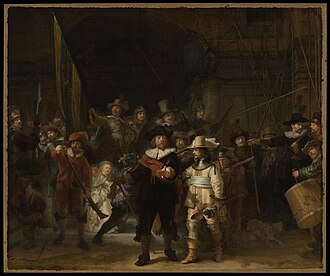 The Night Watch - Rembrandt van Rijn (1642)
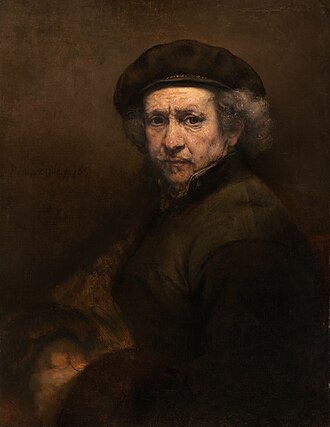 Self-Portrait - Rembrandt van Rijn (1659)
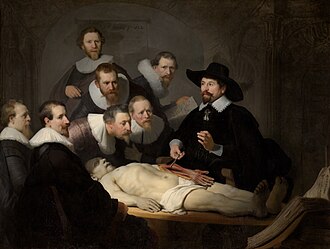 The Anatomy Lesson of Dr. Nicolaes Tulp - Rembrandt van Rijn (1632)
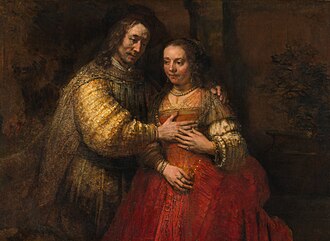 The Jewish Bride - Rembrandt van Rijn (1660s)
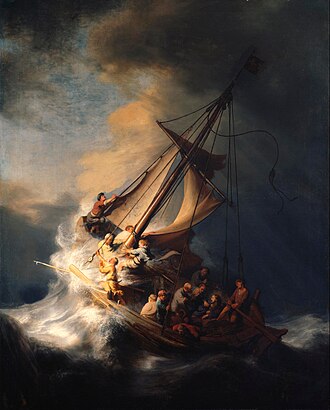 The Storm on the Sea of Galilee - Rembrandt van Rijn (1633)
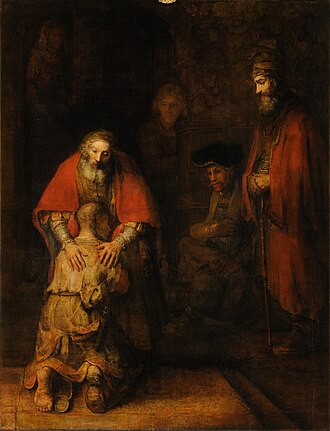 Return of the Prodigal Son - Rembrandt van Rijn (1668)
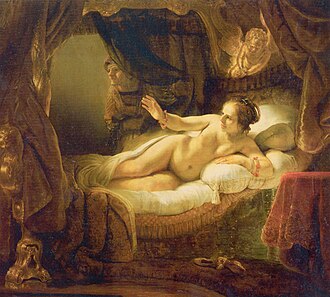 Danaë - Rembrandt van Rijn (1636)
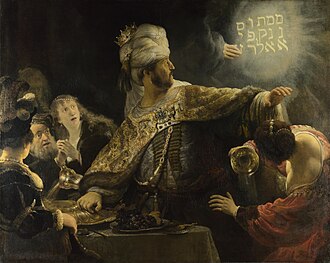 Belshazzar's Feast - Rembrandt van Rijn (1636)
Paintings by related artists
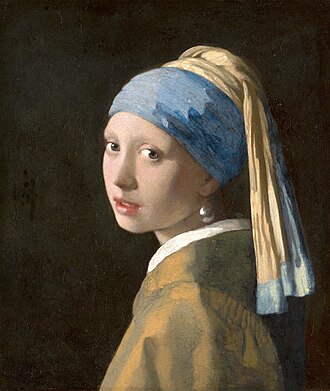 Girl with a Pearl Earring - Johannes Vermeer (1665)
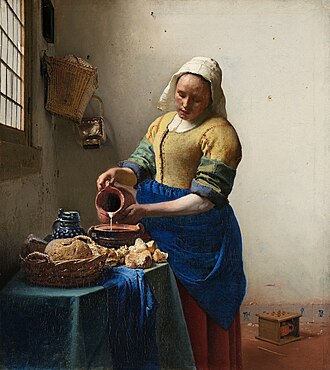 The Milkmaid - Johannes Vermeer (c. 1658)
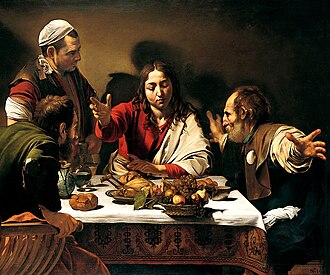 Supper at Emmaus - Caravaggio (1601)
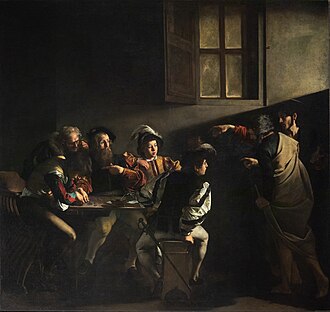 The Calling of Saint Matthew - Caravaggio (1609)
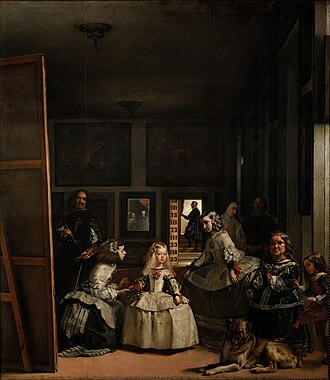 Las Meninas - Diego Velázquez (1656)
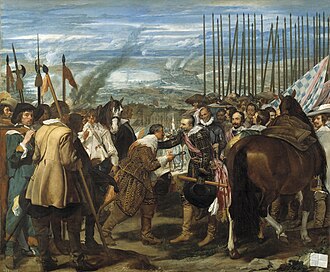 The Surrender of Brea - Diego Velázquez (1635)