Crucifixion Triptych
Rogier van der Weyden · 1440s
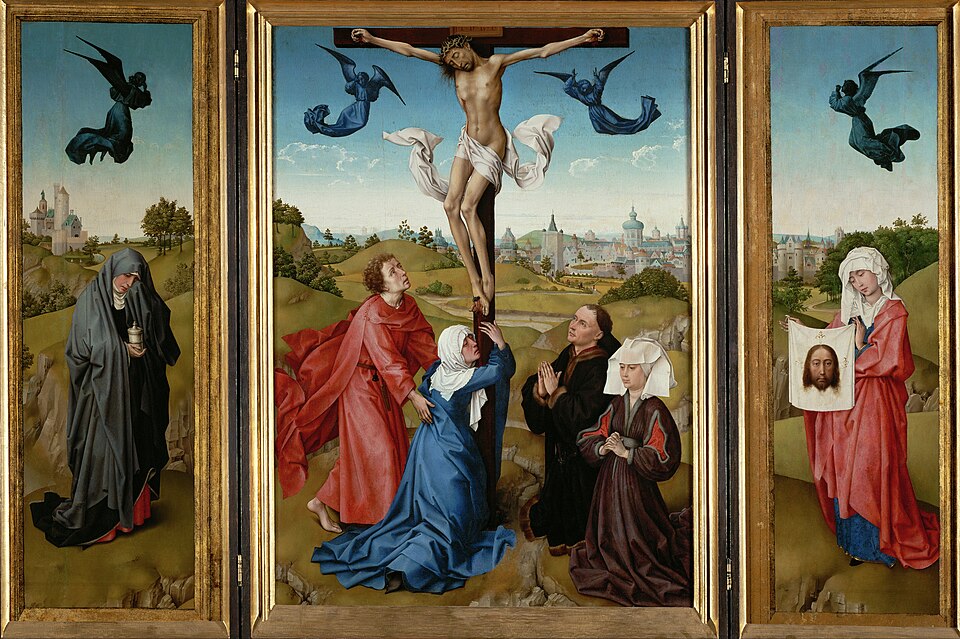
The Virgin presses her cheek against the bloody wood of the cross. Around her, one continuous landscape runs across three panels to a distant Jerusalem.
The story behind the painting
Rogier van der Weyden painted this altarpiece around 1443 to 1445. It is now in the Kunsthistorisches Museum in Vienna. It was painted as a single panel and later cut, but the triptych form was intended from the start: the painter painted delicate golden frames onto the picture itself. The patron is unknown. Since Rogier was official painter to the court in Brussels, it may have been someone connected to the court, a burgher, noble or courtier.
What to look for
In the centre, the Virgin in lapis blue and a white head covering clings to the cross below Christ's pierced feet, her face flushed and wet with tears, her cheek against the bloody wood. John in a red robe lays a hand on her back and looks up at Jesus. To the right kneel the two donors, separated from the holy scene only by a small crack in the earth. Christ's loincloth floats against gravity, and angels fly level with his upper body. On the left panel Mary Magdalene stands alone holding her ointment jar; on the right Veronica shows the cloth with Christ's face. One landscape of green hills and graded blue sky unites all three panels.
Meaning and intent
The crack in the ground lets the donors share the scene while keeping the earthly and the holy apart. The man gazes at the Crucifixion, while the woman seems absorbed in an inner experience, and the image becomes a prayer aid, helping a viewer imagine being present. Rogier also breaks with tradition: Veronica, usually shown old, appears young and smooth-skinned, while the Magdalene, usually young, looks older and isolated. The two women thus become signs of his own choices.
Legacy
The work shows Rogier's precision and intense, almost hyperreal emotion, typical of the Northern style. Wikipedia notes that he learned much from Robert Campin's workshop, and that this painting shows him shaping a style of his own, independent of Campin. Rogier had succeeded Jan van Eyck as the leading painter of his region, and the triptych, painted as one panel with its frames painted in, shows how he turned the Crucifixion into an intimate prayer aid for private patrons. It remains one of the treasures of the Kunsthistorisches Museum in Vienna.
Did you know?
- Painted around 1443 to 1445.
- Painted as one panel, later cut into a triptych.
- Two unknown donors kneel beside the cross.
- Held in the Kunsthistorisches Museum, Vienna.
About the artist
Rogier van der Weyden (1390s-1464)
religious art · Mary · Jesus Christ · Early Netherlandish painting · Kunsthistorisches Museum · landscape · Mary Magdalene · crucifixion of Jesus · John the Apostle
More by Rogier van der Weyden
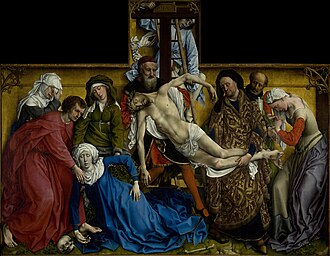 The Descent from the Cross - Rogier van der Weyden (1440s)
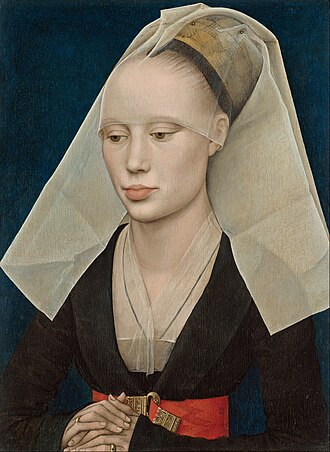 Portrait of a Lady - Rogier van der Weyden (1460)
.jpg) The Last Judgment - Rogier van der Weyden (1443)
The Last Judgment - Rogier van der Weyden (1443)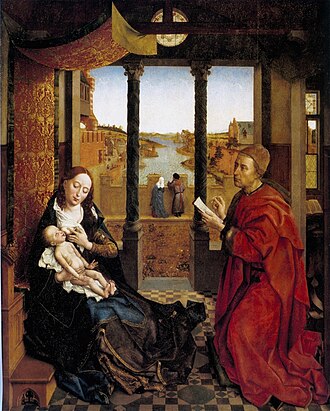 Saint Luke Drawing the Virgin - Rogier van der Weyden (1490)
 Columba Triptych - Rogier van der Weyden (1450s)
 The Magdalen Reading - Rogier van der Weyden (1435)
 Braque Triptych - Rogier van der Weyden (1452)
%20-%20Prado%20P02722.jpg) Durán Madonna - Rogier van der Weyden (1430s)
Durán Madonna - Rogier van der Weyden (1430s)
Paintings by related artists
 The Garden of Earthly Delights - Hieronymus Bosch
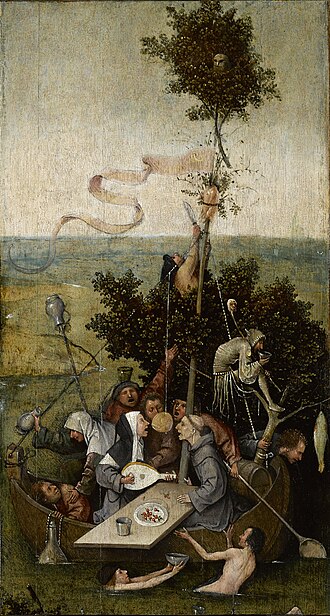 Ship of Fools - Hieronymus Bosch (1500s)
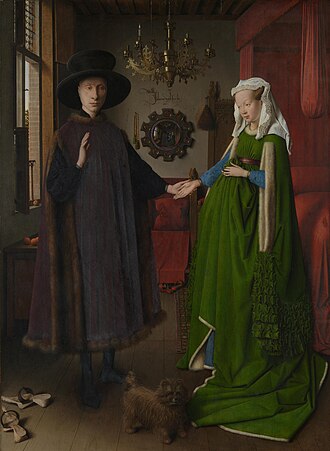 Arnolfini Portrait - Jan van Eyck (1434)
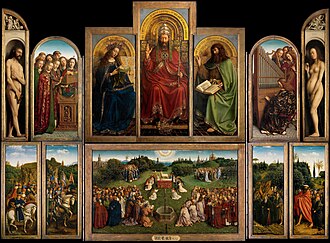 Ghent Altarpiece - Jan van Eyck (1432)
%20-%20Google%20Art%20Project.jpg) The Hunters in the Snow - Pieter Bruegel the Elder (1565)
The Hunters in the Snow - Pieter Bruegel the Elder (1565)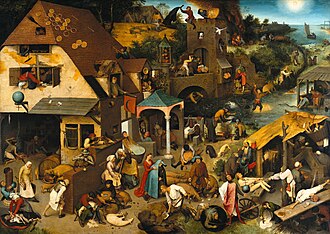 Netherlandish Proverbs - Pieter Bruegel the Elder (1551)