Apparition of the Virgin of Pilar to Santiago and his disciples Zaragoza
Francisco Goya · 1768
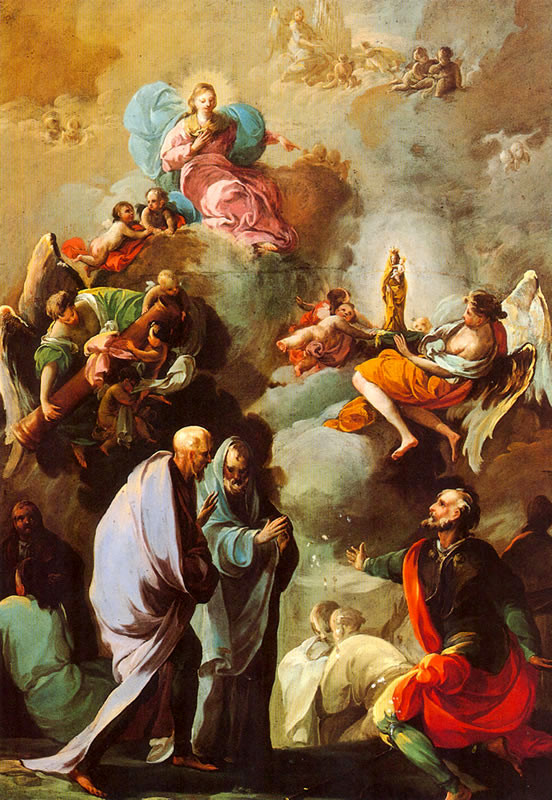
Clouds part above a group of kneeling men as the Virgin appears to Saint James in Roman Zaragoza. This small canvas is one of the earliest works by the young Goya, painted when he was barely twenty-two.
The story behind the painting
The Apparition of the Virgin of Pilar to Saint James and his Disciples of Zaragoza is an early work by Francisco de Goya, painted between 1768 and 1769; Wikidata gives 1768. Its composition and iconography are thought to echo Goya's first paintings made in Fuendetodos, his birthplace, which were destroyed during the Spanish Civil War. The canvas was brought to light by the historian Jose Gudiol in 1970. It came from the collection of Juan Martin de Goycoechea y Galarza and later passed by inheritance into the Pascua y Quinto collection in Zaragoza.
What to look for
The picture, about 79 by 55 cm, shows the Virgin of the Pillar, the apostle James the Greater and some of his disciples in Caesaraugusta, Roman Zaragoza. The composition is built as a pyramid, a scheme Goya repeated throughout his career. Gudiol stressed its vigorous lines and triangles, the contrasts of light and shade, near and far, and the rhythms created through clouds and groups of figures. He also pointed to the tactile quality of the cloaks of the foreground figures, and to expressive distortions that spare not even the Virgin's face.
Meaning and intent
According to Catholic tradition, in the year 40 the Virgin Mary appeared to Saint James in Zaragoza to encourage him in preaching in Hispania. The painting shows the influence of Goya's teacher Jose Luzan. Valeriano Bozal argued that nothing in it is typical of Goya and that nothing of Goya's own survives from those years, so it is safer to call it a youthful work. Jose Luis Morales y Marin described a Luzan-like oil moving toward the brighter tones of Francisco Bayeu.
Legacy
The canvas forms a pair with the Triple Generation and shares its style with The Adoration of the Name of God in the choir of the Basilica of Our Lady of the Pillar, with the Baptism of Christ, and with the Portrait of Juan Martin de Goycoechea. All these works passed down through the Countess of Sobradiel. On 14 January 1996 it became the only Goya painting ever exhibited in Fuendetodos, the village where he was born, and it was shown that year at the Museum of Zaragoza.
Did you know?
- Painted by Goya in 1768-1769.
- Rediscovered by Jose Gudiol in 1970.
- Shows the influence of his teacher Jose Luzan.
- The only Goya painting ever exhibited in his birthplace, Fuendetodos, in 1996.
About the artist
Francisco Goya (1746-1828)
religious art · Mary · Romanticism · St. James the Elder
More by Francisco Goya
 The Third of May 1808 - Francisco Goya (1814)
.jpg) La Maja nue - Francisco Goya (1800)
La Maja nue - Francisco Goya (1800).jpg) Saturn Devouring His Son - Francisco Goya (1819)
Saturn Devouring His Son - Francisco Goya (1819) Charles IV of Spain and His Family - Francisco Goya (1800)
 The Clothed Maja - Francisco Goya (1800)
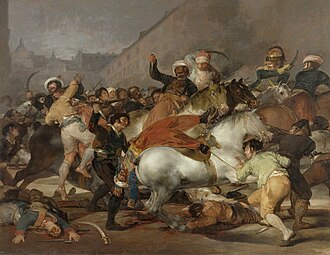 The Second of May 1808 - Francisco Goya (1814)
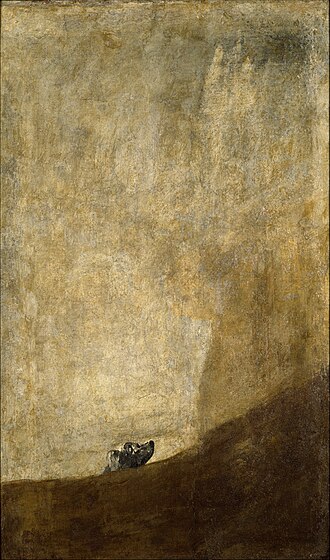 The Dog - Francisco Goya (1819)
 Witches' Sabbath - Francisco Goya (1820s)
Paintings by related artists
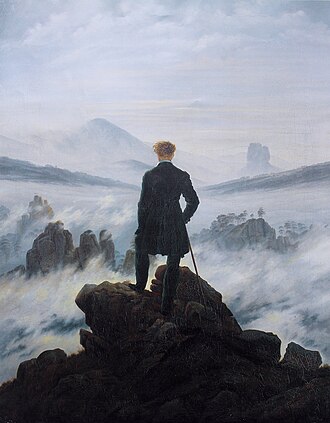 Wanderer above the Sea of Fog - Caspar David Friedrich (c. 1818)
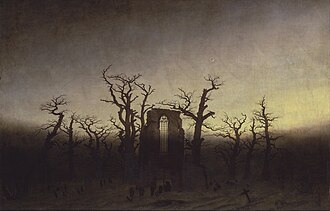 The Abbey in the Oakwood - Caspar David Friedrich (1800s)
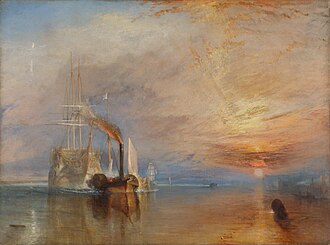 The Fighting Temeraire - J. M. W. Turner (1839)
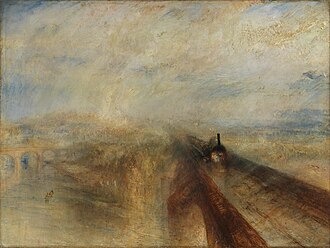 Rain, Steam and Speed - The Great Western Railway - J. M. W. Turner (1844)