Allegory of the Catholic Faith
Johannes Vermeer · 1670s
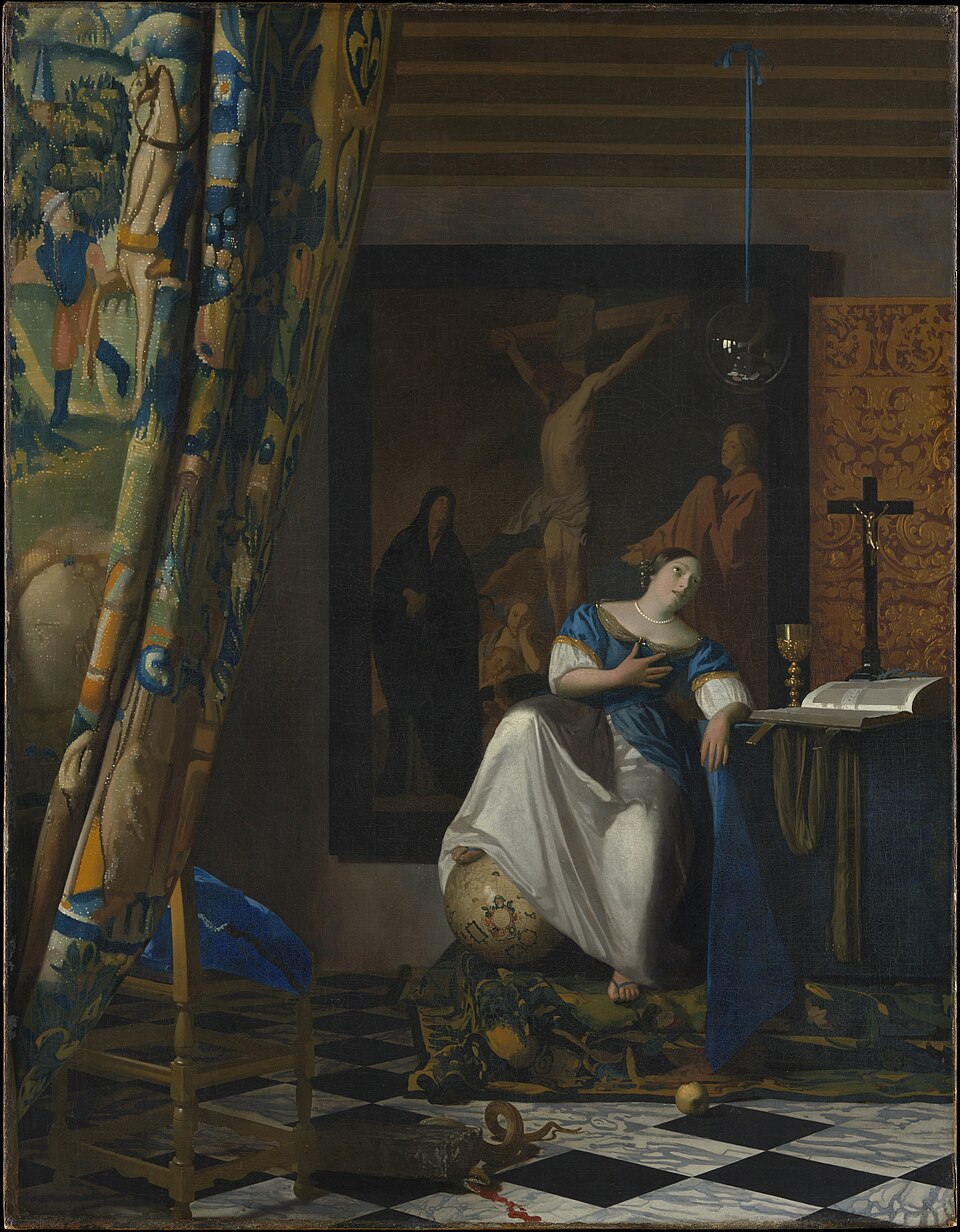
A woman in white and blue satin presses a hand to her heart and gazes up at a glass sphere, one foot on a globe. It is the most openly symbolic painting Vermeer ever made, and one of his most debated.
The story behind the painting
The Allegory of Faith, also called The Allegory of the Catholic Faith, dates from about 1670 to 1672. With The Art of Painting it is one of only two Vermeers that count as history painting, though both keep his usual one or two figures in a room, with a tapestry pulled aside at the left. The original owner is unknown, perhaps a Catholic in Delft, possibly the Jesuits there. The Metropolitan Museum believes it was surely commissioned by a patron both learned and devout.
What to look for
The woman sits on a raised platform above a black and white marble floor, her right foot on a terrestrial globe, identified as one by Hendrick Hondius. A glass sphere hangs from a blue ribbon above her. On the table are a golden chalice, a large book, a dark crucifix against gilt leather, and a crown of thorns. On the far wall hangs a large Crucifixion, after a painting by Jacob Jordaens. Near the viewer lie an apple and a snake crushed by a cornerstone. The canvas measures about 114.3 by 88.9 cm.
Meaning and intent
Much comes from Cesare Ripa's Iconologia, translated into Dutch in 1644: white for purity, blue for heaven, the hand on the heart, the world under Faith's feet, Christ as the cornerstone crushing the Devil's snake, and the apple of original sin. Vermeer moved the chalice and book onto the table, giving the scene a Eucharistic character, according to Arthur Wheelock. The glass orb may come from a 1636 emblem book by the Jesuit Willem Hesius, where a sphere reflecting the world stands for the mind's power to believe. Light falls on her dress from no visible source.
Legacy
Many historians see it as one of Vermeer's less successful works. Selena Cant found Faith too worldly and too solid to seem transported, and Wheelock felt the ecstatic pose and crushed snake sat oddly in a Dutch room. Walter Liedtke disagreed, comparing it with other Dutch allegories and noting how restrained Vermeer was. The painting has been in the Metropolitan Museum of Art in New York since 1931; Wikidata also links it with the Mauritshuis.
Did you know?
- Painted about 1670-1672.
- One of only two history paintings by Vermeer.
- Its symbols come largely from Cesare Ripa's Iconologia.
- In the Metropolitan Museum of Art since 1931.
About the artist
Johannes Vermeer (1632-1675)
woman · Dutch Golden Age painting · Metropolitan Museum of Art · allegory · book · Mauritshuis · crucifixion of Jesus
More by Johannes Vermeer
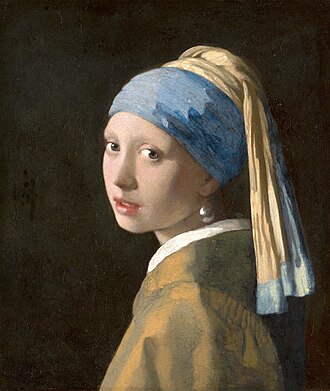 Girl with a Pearl Earring - Johannes Vermeer (1665)
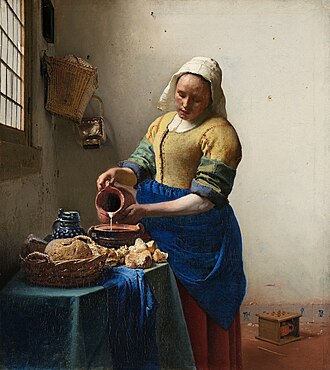 The Milkmaid - Johannes Vermeer (c. 1658)
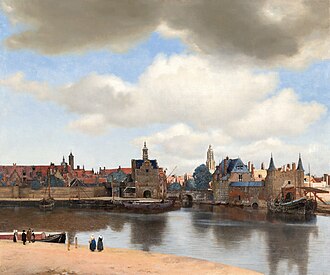 View of Delft - Johannes Vermeer (1660s)
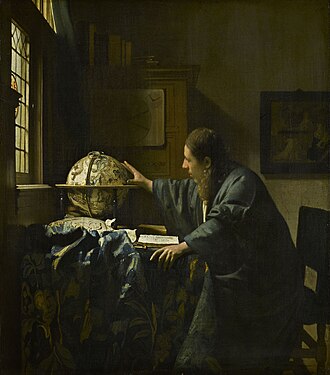 The Astronomer - Johannes Vermeer (1664)
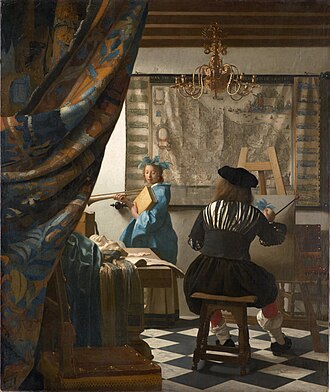 The Art of Painting - Johannes Vermeer (1660s)
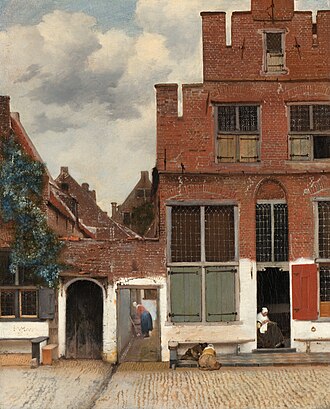 The Little Street - Johannes Vermeer (1658)
.jpg) Girl Reading a Letter at an Open Window - Johannes Vermeer (1650s)
Girl Reading a Letter at an Open Window - Johannes Vermeer (1650s)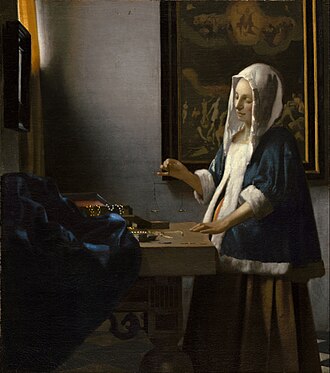 Woman Holding a Balance - Johannes Vermeer (1665)
Paintings by related artists
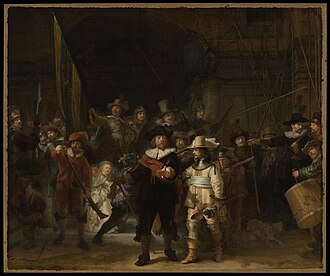 The Night Watch - Rembrandt van Rijn (1642)
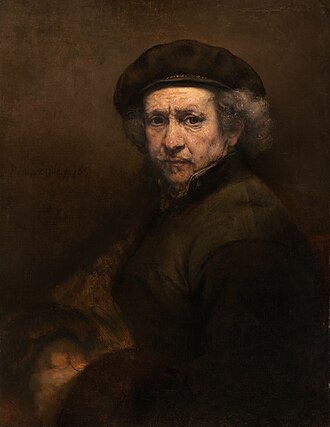 Self-Portrait - Rembrandt van Rijn (1659)