View of Delft
Johannes Vermeer · 1660s
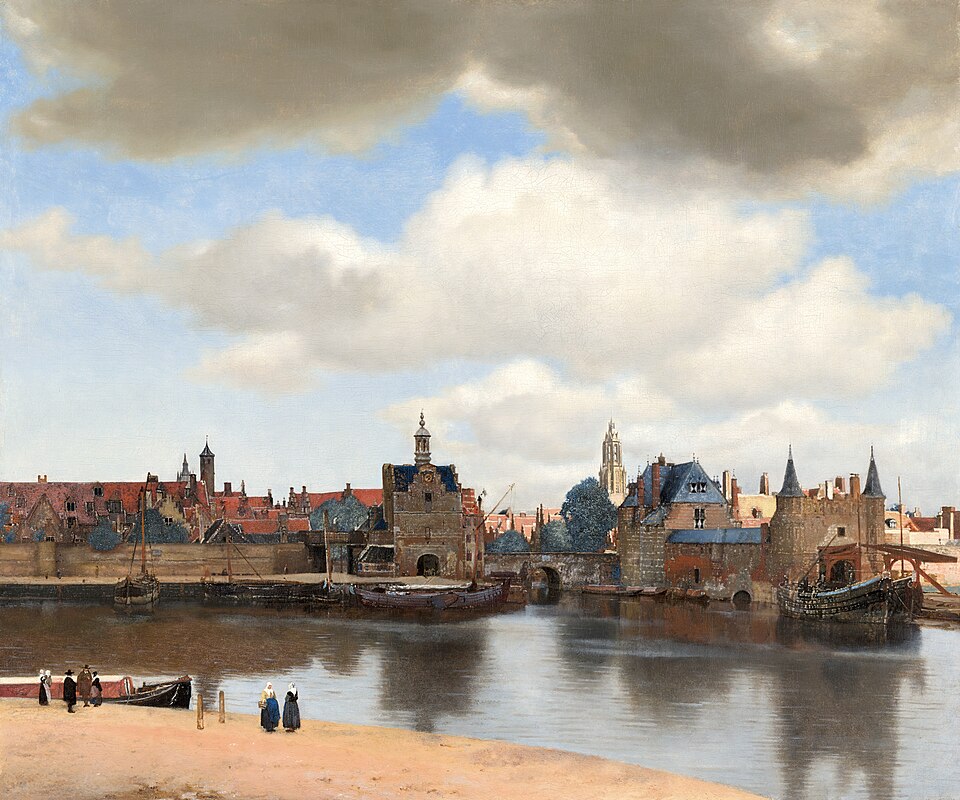
A serene and captivating cityscape of 17th-century Delft, painted by the renowned Dutch master Johannes Vermeer, inviting viewers to step into a tranquil world of light, color, and history.
The story behind the painting
Painted around 1659-1661, View of Delft is one of three known paintings of Delft by Vermeer, and his only cityscape. It was commissioned by Pieter Claeszoon van Ruijven, a native of Delft and a lover of architectural paintings. At the time, Vermeer was living in Delft, working as a moderately successful provincial genre painter. The painting reflects the city's significance as a major trading center in the Netherlands during the Dutch Golden Age.
What to look for
In this breathtaking painting, Vermeer's masterful use of light and color brings the city of Delft to life. The calm harbor of the river Schie, known as the Kolk, reflects the buildings and clouds, creating a sense of serenity. Look for the Rotterdam Gate, a medieval brick building, and the Schiedam Gate, with a clock on its roof. The Nieuwe Kerk's illuminated spire stands out, while the Oude Kerk's tower rises in the background. Five people wait to board a passenger barge, known as a trekschuit, which was pulled by a horse and could hold up to thirty people. Vermeer's initials, VM, are visible on the red interior of the barge.
Meaning and intent
View of Delft is not only a beautiful cityscape but also a symbolic representation of Vermeer's support for the House of Orange. The illumination of the Nieuwe Kerk, where William of Orange's tomb was housed, suggests Vermeer's or his patron's allegiance to the Dutch monarchy. The painting also celebrates the city of Delft and its significance as a trading center, reflecting the Netherlands' growing prosperity during the Dutch Golden Age.
Legacy
View of Delft has become an iconic representation of Vermeer's work and a celebrated masterpiece of Dutch Golden Age painting. It has been owned by the Dutch government since 1822 and is now housed at the Mauritshuis in The Hague. The painting has inspired numerous art lovers, including Marcel Proust, who featured it in his novel In Search of Lost Time. Today, it remains one of Vermeer's most famous works, admired for its captivating beauty, historical significance, and the artist's innovative use of light and color.
Did you know?
- Did you know that View of Delft is one of only three known paintings of Delft by Vermeer?
- The painting was created using calcite, lead white, yellow ochre, natural ultramarine, and madder lake pigments.
- Vermeer painted his initials, VM, on the red interior of the trekschuit barge.
- The painting was commissioned by Pieter Claeszoon van Ruijven, a native of Delft and a lover of architectural paintings.
Wikipedia · Wikipedia - Johannes Vermeer · Wikidata
About the artist
Johannes Vermeer (1632-1675)
Dutch Golden Age painting · sky · cityscape · cloud · Mauritshuis
More by Johannes Vermeer
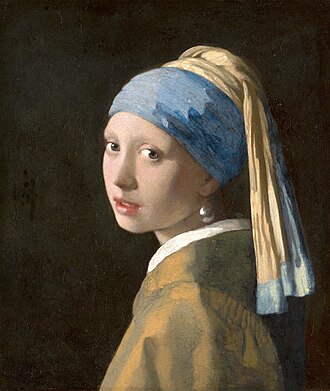 Girl with a Pearl Earring - Johannes Vermeer (1665)
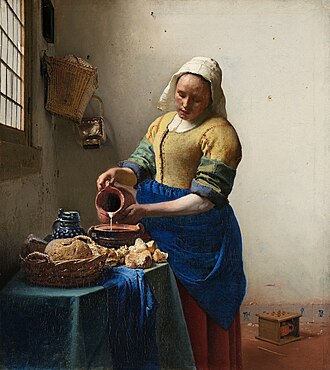 The Milkmaid - Johannes Vermeer (c. 1658)
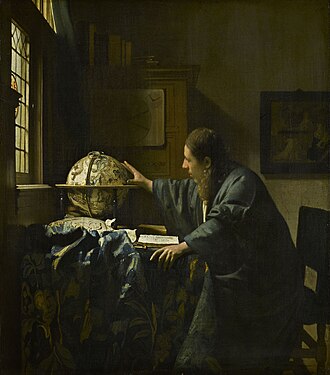 The Astronomer - Johannes Vermeer (1664)
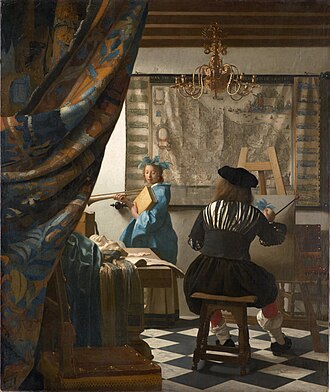 The Art of Painting - Johannes Vermeer (1660s)
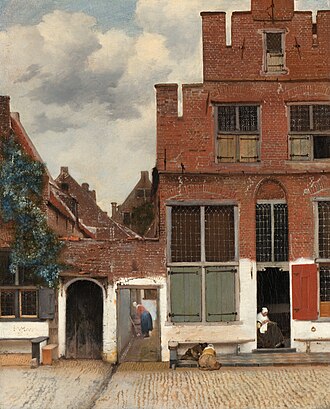 The Little Street - Johannes Vermeer (1658)
.jpg) Girl Reading a Letter at an Open Window - Johannes Vermeer (1650s)
Girl Reading a Letter at an Open Window - Johannes Vermeer (1650s)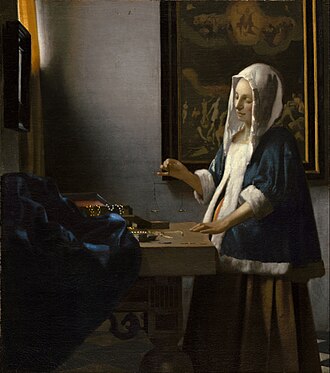 Woman Holding a Balance - Johannes Vermeer (1665)
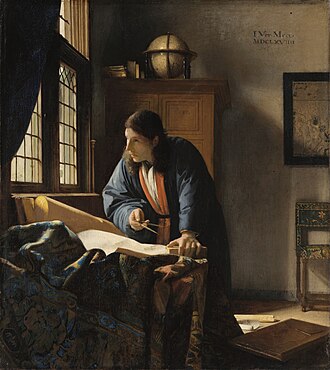 The Geographer - Johannes Vermeer (1668)
Paintings by related artists
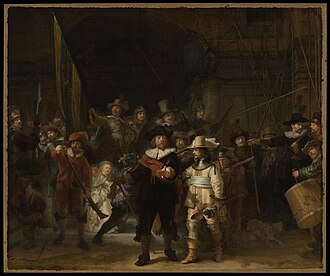 The Night Watch - Rembrandt van Rijn (1642)
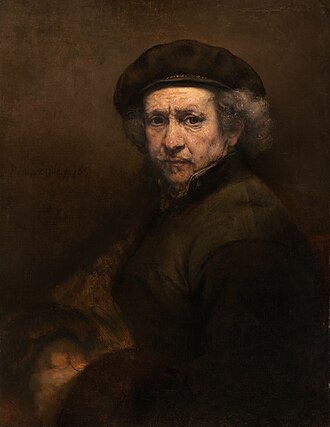 Self-Portrait - Rembrandt van Rijn (1659)
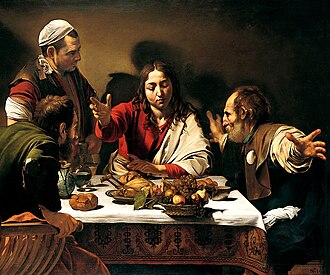 Supper at Emmaus - Caravaggio (1601)
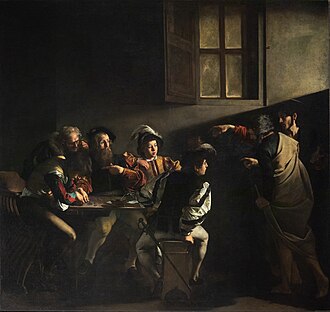 The Calling of Saint Matthew - Caravaggio (1609)
 Las Meninas - Diego Velázquez (1656)
 The Surrender of Brea - Diego Velázquez (1635)