Adoration of the Magi
Sandro Botticelli · 1482
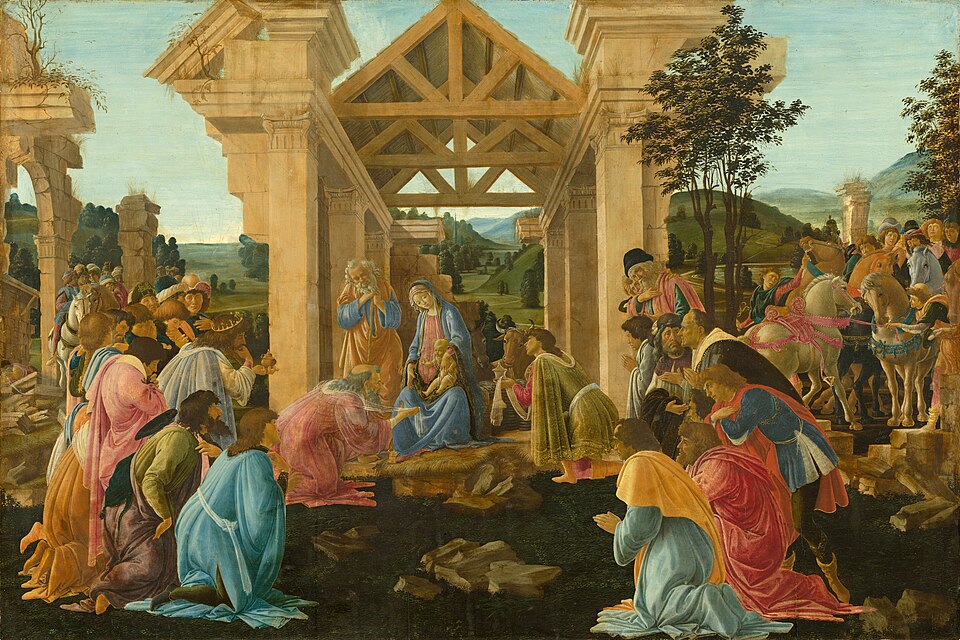
Three kings bow before a newborn child in the shelter of a ruined classical building, while two crowded processions open like curtains onto a calm, hilly landscape. Botticelli painted this Adoration around 1482, just back from Rome.
The story behind the painting
Botticelli painted the Adoration of the Magi several times, and he left one more version unfinished at his death in 1510. This one, in tempera on wood, is generally dated to 1482, the year he returned from Rome, where he had helped decorate the Sistine Chapel. The background seems to show the influence of Perugino, one of his colleagues there. The picture surfaces in records in the eighteenth century with the engraver Peralli, who said he bought it from a private collection in Rome. It then passed to Dominique Vivant Denon, who took it to Paris.
What to look for
The stable is the ruin of a classical building, still intact at the centre with square columns, capitals and roof trusses. Two kings already kneel and bow: the old man on the left close to the Child, and the beardless young one on the right, a little set back. The third, of middle age, is just beginning his bow and has not yet taken off his crown. The processions split into two matching groups, kneeling figures in front, then standing ones, then riders and horses fading toward vanishing points outside the frame. On the right two tall trees, dark against the light, frame distant hills under a sky that deepens to blue.
Meaning and intent
The theme let painters fill the kings' retinues with important people of their own day. The faces in Botticelli's processions probably portray his contemporaries, but none has been identified. Compared with his earlier Adoration in the Uffizi, from about 1475, the central vanishing point here is stated firmly by the roof of the building that shelters the Holy Family, and balanced by the side perspectives of the two processions. The ruins were probably inspired by those of ancient Rome as they looked in the fifteenth century. The front of the stage is left open, so the eye travels straight to the family and the quiet landscape beyond the broken wall.
Legacy
In 1808 the painting was sold to Tsar Alexander I of Russia, who placed it in the Hermitage. In January 1931 it was among the artworks sold in secret under Stalin and bought through Andrew Mellon, a sale described as one of the most important art transactions of the twentieth century. With the Mellon collection it became, from 1937, part of the founding core of the new National Gallery of Art in Washington, where it hangs today. The French Wikipedia gives its size as 70 by 103 cm, while Wikidata records 68 by 102 cm.
Did you know?
- Painted around 1482, after Botticelli's return from Rome.
- Owned by Vivant Denon, then from 1808 by Tsar Alexander I.
- Left the Hermitage in the secret sales of 1931.
- Now in the National Gallery of Art, Washington.
About the artist
Sandro Botticelli (1445-1510)
religious art · woman · Mary · Christ Child · boy · Early Renaissance · Galería Nacional de Arte · Hermitage Museum · adoration of the Magi · adoration · Biblical Magi
More by Sandro Botticelli
 The Birth of Venus - Sandro Botticelli (c. 1485)
 Primavera - Sandro Botticelli (1480s)
 Venus and Mars - Sandro Botticelli (1485)
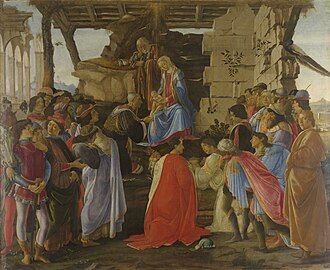 Adoration of the Magi - Sandro Botticelli (1470s)
 Madonna of the Magnificat - Sandro Botticelli (1481)
 Calumny of Apelles - Sandro Botticelli (1490s)
.jpg) Pallas and the Centaur - Sandro Botticelli (1482)
Pallas and the Centaur - Sandro Botticelli (1482)%20-%20Google%20Art%20Project.jpg) Idealized Portrait of a Lady - Sandro Botticelli (1480)
Idealized Portrait of a Lady - Sandro Botticelli (1480)
Paintings by related artists
 Mona Lisa - Leonardo da Vinci (1503-1519)
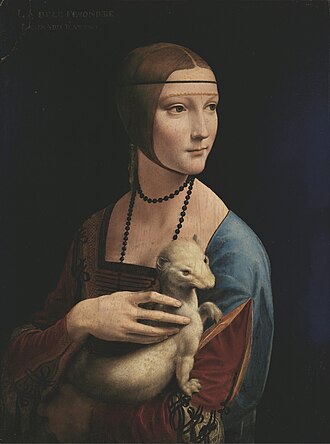 Lady with an Ermine - Leonardo da Vinci (1490)
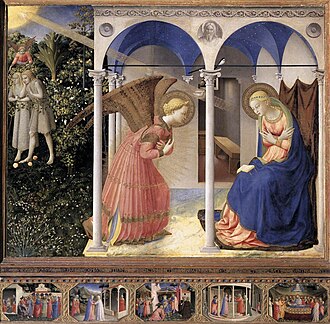 Annunciation - Fra Angelico (1425)
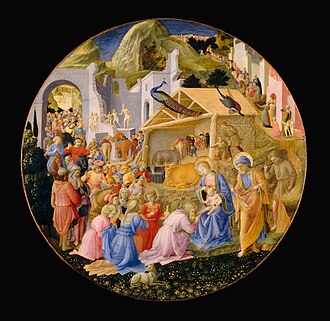 Adoration of the Magi - Fra Angelico (1430)