Die Geschichte von Virginia
Sandro Botticelli · 1505
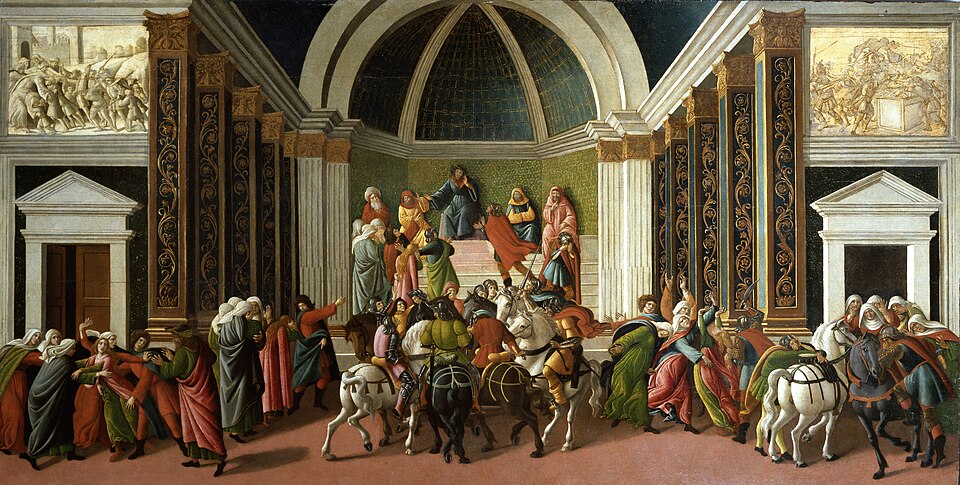
Read from left to right, one long panel unfolds a Roman tragedy in four acts: Botticelli's Story of Virginia is a late meditation on honour, power and a father's terrible choice.
The story behind the painting
The Story of Virginia, in Italian Storie di Virginia, is a tempera painting on panel by Sandro Botticelli, dated 1505 by Wikidata. It is described as one of the last works Botticelli made to illustrate virtue, a companion in spirit to his Story of Lucretia. The tale comes from ancient Rome. Virginia is assaulted by Marcus Claudius, who wants to force her to submit to Appius Claudius, a powerful man who then presides over a tribunal that declares her a slave. Her family pleads, but the story ends in tragedy. The painting today belongs to the Accademia Carrara in Bergamo, Italy.
What to look for
Like many early Renaissance works, the panel combines several scenes in one image, and they are read from left to right. First, Virginia, among other women, is seized by Marcus Claudius. Next, he carries her to the tribunal where Appius Claudius sits in judgement and declares her a slave. Then her father and her husband plead for mercy. Finally, the father, to preserve the family's honour, kills her and flees on horseback. All of this takes place within a setting of classical architecture. The figures are agitated, full of movement, and painted in vibrant colours across a wide panel roughly twice as long as it is tall.
Meaning and intent
The central theme of the painting is violated honour and fidelity in marriage. Botticelli shows how an abuse of power by one man spreads through a whole family, ending in a decision that the story presents as a defence of honour. Seen today, the painting is above all a record of injustice suffered by a young woman, told through the values of its time. Its linked sequence of scenes asks the viewer to slow down and follow the chain of events, one moment leading to the next, rather than to take in a single dramatic instant.
Legacy
The painting is kept in the Accademia Carrara in Bergamo. Sources record its measurements slightly differently: Wikipedia gives about 86 by 165 centimetres, while Wikidata lists 83.3 by 165.5 centimetres. They also place it differently in time. Wikipedia calls Botticelli an early Renaissance artist, while Wikidata classes this work as High Renaissance and labels its genre as mythological painting, though the subject is a Roman legend. Together with The Story of Lucretia, it shows the older Botticelli turning to stories of virtue and its violation.
Schon gewusst?
- Tempera on panel, dated 1505 by Wikidata.
- Accademia Carrara, Bergamo; about 86 x 165 cm (Wikipedia) or 83.3 x 165.5 cm (Wikidata).
- Four scenes are read from left to right.
- One of Botticelli's last works on the theme of virtue, like The Story of Lucretia.
Über den Künstler
Sandro Botticelli (1445-1510)
mythologische Malerei · Hochrenaissance
Mehr von Sandro Botticelli
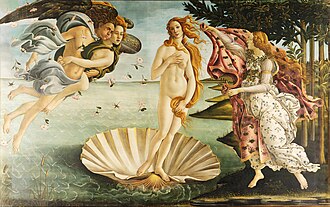 Die Geburt der Venus - Sandro Botticelli (c. 1485)
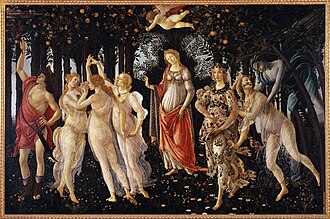 Primavera - Sandro Botticelli (1480s)
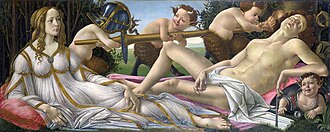 Venus und Mars - Sandro Botticelli (1485)
 Anbetung der Heiligen drei Könige - Sandro Botticelli (1470s)
 Madonna des Magnificat - Sandro Botticelli (1481)
 Die Verleumdung des Apelles - Sandro Botticelli (1490s)
.jpg) Minerva und der Kentaur - Sandro Botticelli (1482)
Minerva und der Kentaur - Sandro Botticelli (1482)%20-%20Google%20Art%20Project.jpg) Weibliches Idealbildnis - Sandro Botticelli (1480)
Weibliches Idealbildnis - Sandro Botticelli (1480)
Werke verwandter Künstler
 Mona Lisa - Leonardo da Vinci (1503-1519)
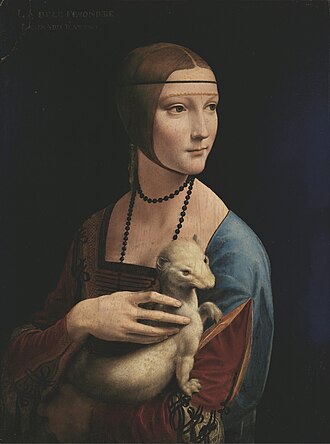 Dame mit dem Hermelin - Leonardo da Vinci (1490)
.jpg) Venus von Urbino - Titian (1538)
Venus von Urbino - Titian (1538)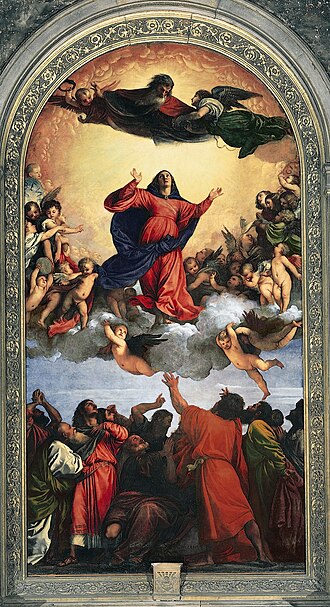 Mariä Himmelfahrt - Titian (1510s)
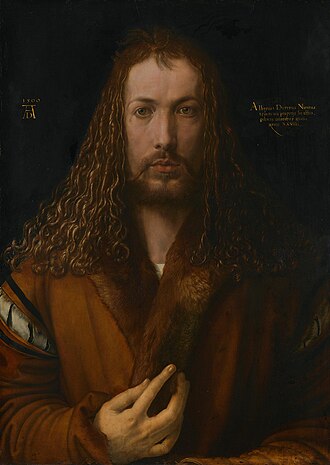 Selbstbildnis im Pelzrock - Albrecht Dürer (1500)
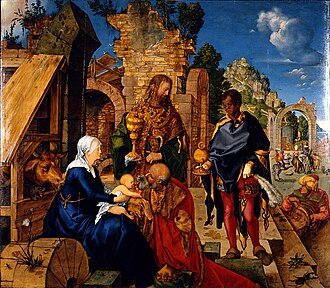 Anbetung der Könige - Albrecht Dürer (1504)