The Story of Nastagio Degli Onesti, part two
Sandro Botticelli · 1483
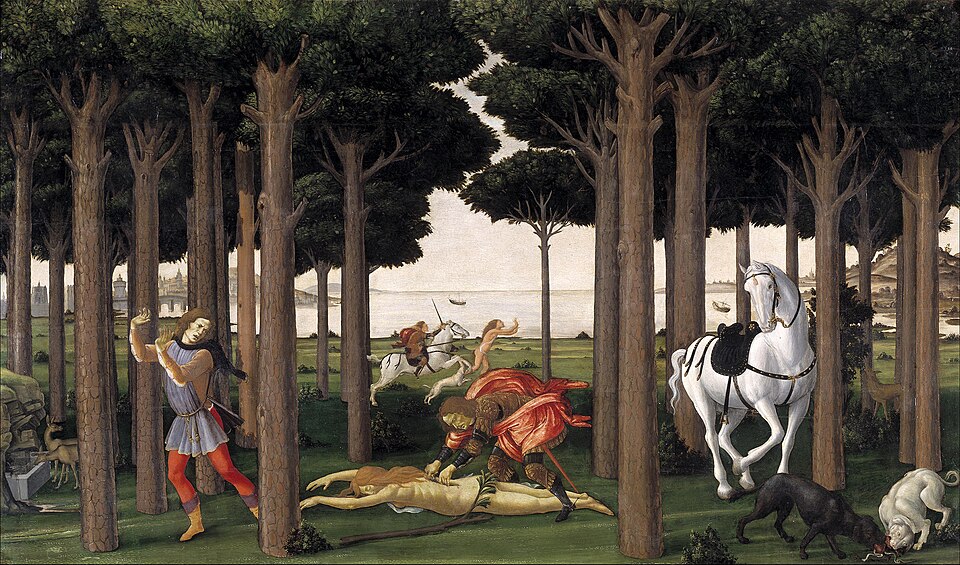
In a calm pine wood where deer drink at a spring, a knight tears out the heart of a woman and feeds it to his dogs, while young Nastagio turns away in horror. Botticelli set terror and tranquillity side by side.
The story behind the painting
The tale of Nastagio degli Onesti is the eighth story of the fifth day of Boccaccio's Decameron, written between 1348 and 1351, a day devoted to loves that begin unhappily and end well. This second panel, tempera on wood dated 1483, is known as the infernal hunt. Wikipedia gives 83 by 138 cm, Wikidata 82 by 138 cm. Rejected by the woman he loves, Nastagio wanders a pine wood near Ravenna and meets a woman chased by a knight and his dogs. The knight, Guido degli Anastagi, tells him not to interfere: both are dead souls under punishment. He killed himself for love of her, and she had been cruel to him. Every Friday he must hunt her down, kill her and feed her entrails to his dogs, and she rises again for an endless chase.
What to look for
In the foreground, among very straight, column-like trunks, deer drink at a spring on the left. Then comes Nastagio, turning away with his arms raised, appalled by the central scene: the naked woman lies face down while the knight pulls out her organs. On the right the waiting white horse looks on as two dogs fight over her heart. In the background the chase has already begun again, with the same two dogs biting her. Beyond the trees a stretch of water fills the centre, with a fortified town on the left bank and a wooded hill on the right. Compared with the first panel, the mountains and stumps are gone, and the horse now stands calm and noble.
Meaning and intent
The painting shows two successive moments at once, so the characters are doubled, a medieval way of telling a story that strengthens its narrative force. The source describes the tale as essentially pagan. What makes the panel unsettling is its contrast: the wood is calm, the deer drink, another one quietly eats leaves on the right, while at the centre a punishment repeats forever. Each Friday the young woman must suffer the killing and the rebuilding of her body, for as many years as the months she refused her suitor's love. The drama is paired with slender, graceful figures, in an atmosphere between fable and reality.
Legacy
The panel belongs to a series of four, commissioned by Lorenzo the Magnificent as a wedding gift for Giannozzo Pucci and Lucrezia Bini, probably for a bed head or a cassone; both families' coats of arms appear in the scenes. The four panels stayed in the Pucci palace in Florence until they were sold in 1868. They then passed through several collections; in 1929 Francisco de Asís Cambó bought three from the heirs of Joseph Spiridon and in 1941 gave them to the Prado. The fourth, the wedding banquet, was lost from view for centuries and reappeared in Florence in April 2004 at a Botticelli and Filippino Lippi exhibition at the Palazzo Strozzi; according to this source it may never have left the Pucci palace. Critics agree that Botticelli conceived all four scenes, but believe the execution was partly given to assistants, especially Bartolomeo di Giovanni for the first three and Jacopo del Sellaio for the last.
Schon gewusst?
- Tempera on wood, dated 1483.
- Known as the infernal hunt.
- Characters appear twice, showing two moments.
- Now in the Museo del Prado, Madrid.
Über den Künstler
Sandro Botticelli (1445-1510)
Museo del Prado · Frührenaissance
Mehr von Sandro Botticelli
 Die Geburt der Venus - Sandro Botticelli (c. 1485)
 Primavera - Sandro Botticelli (1480s)
 Venus und Mars - Sandro Botticelli (1485)
 Anbetung der Heiligen drei Könige - Sandro Botticelli (1470s)
 Madonna des Magnificat - Sandro Botticelli (1481)
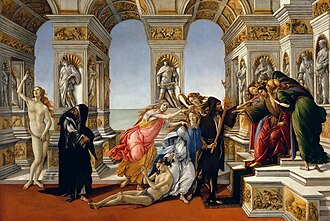 Die Verleumdung des Apelles - Sandro Botticelli (1490s)
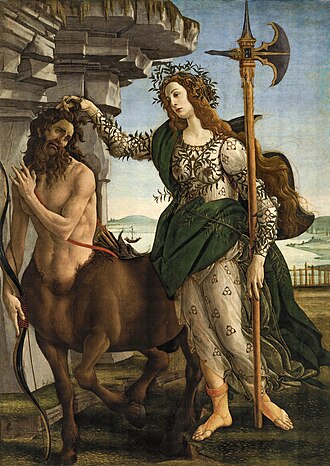 Minerva und der Kentaur - Sandro Botticelli (1482)
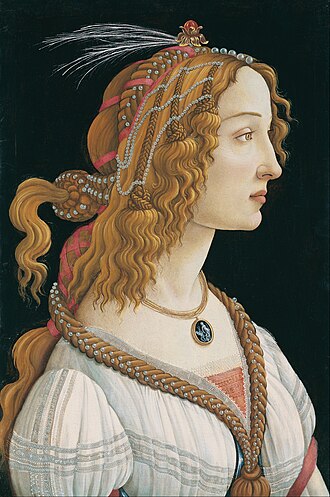 Weibliches Idealbildnis - Sandro Botticelli (1480)
Werke verwandter Künstler
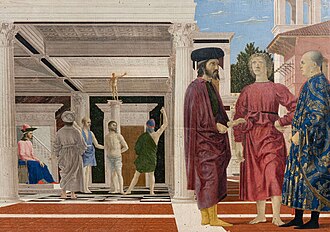 Die Geißelung Christi - Piero della Francesca (1450s)
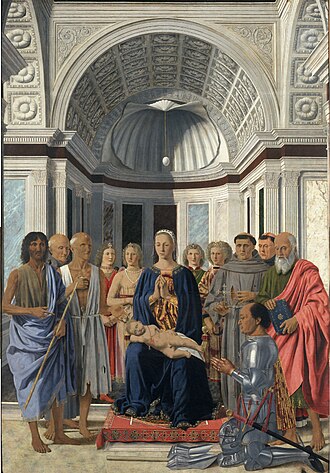 Madonna mit Kind, Heiligen, Engeln und Federico da Montefeltro (Altar des hl. Berhard} - Piero della Francesca (1472)
 Mona Lisa - Leonardo da Vinci (1503-1519)
 Dame mit dem Hermelin - Leonardo da Vinci (1490)
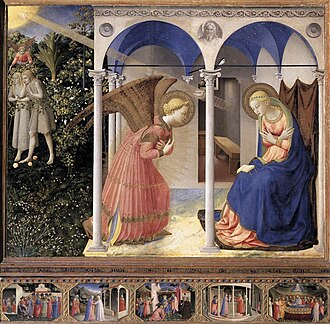 Verkündigung - Fra Angelico (1425)
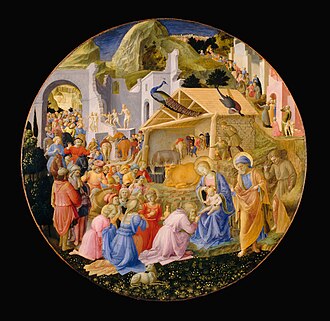 Die Anbetung der Könige, Tondo - Fra Angelico (1430)
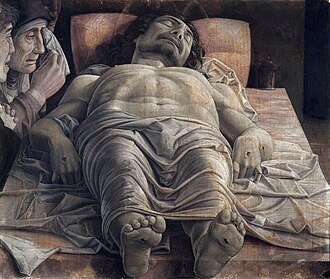 Beweinung Christi - Andrea Mantegna (1483)
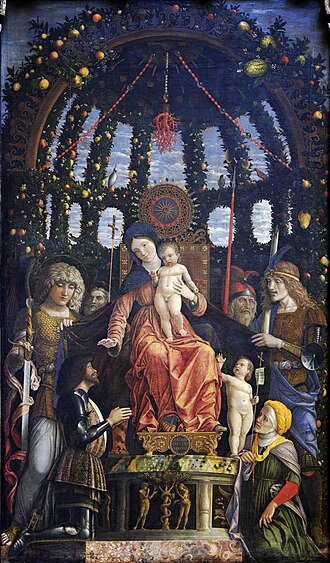 Madonna della Vittoria - Andrea Mantegna