The Resurrection
El Greco · 1577
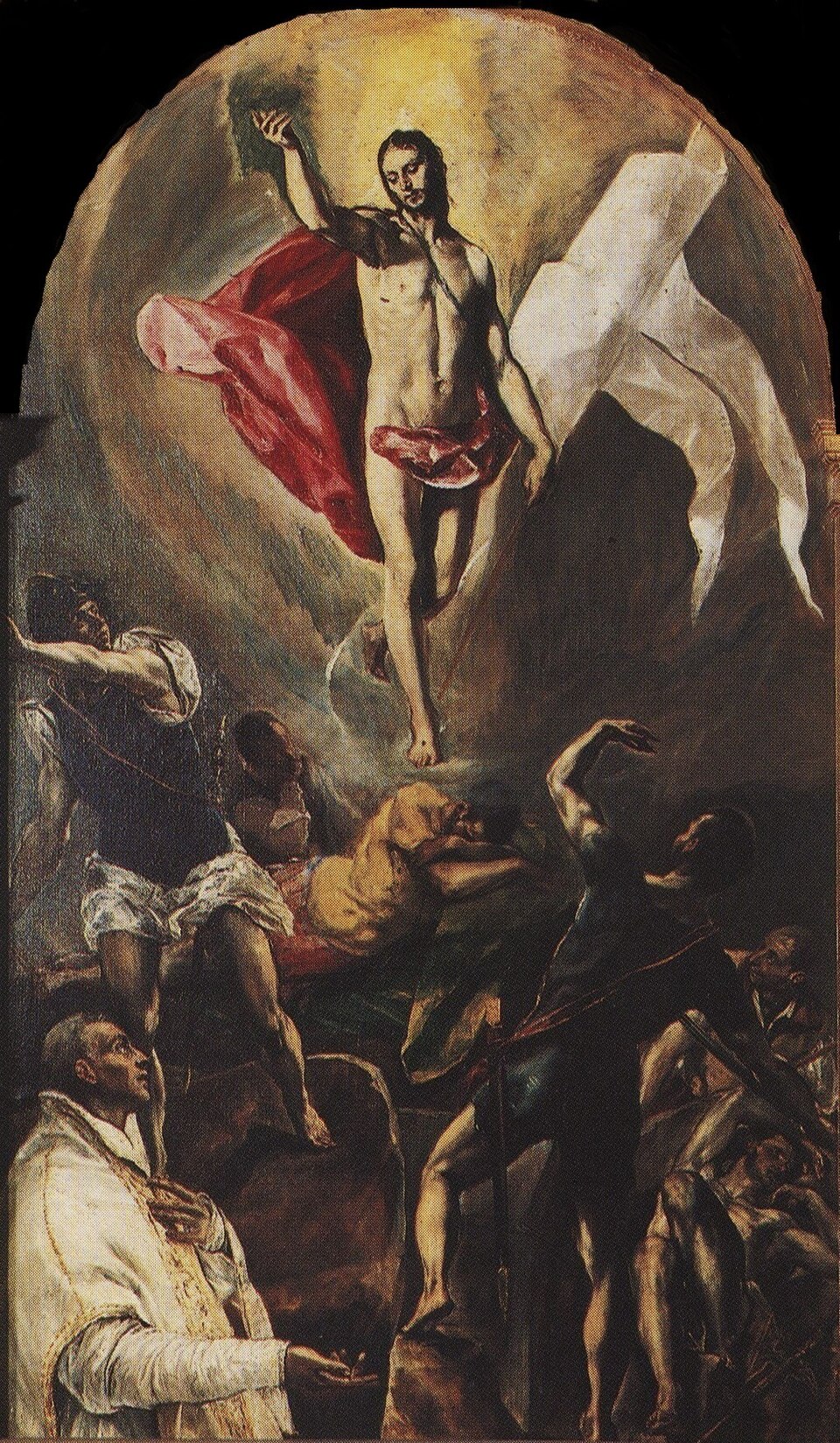
Christ rises with the banner of the Resurrection while soldiers below sleep, stir or shield their eyes from the light. El Greco painted this canvas at the very start of his Spanish career, for a convent church in Toledo, and it is one of his works that most recalls Michelangelo.
The story behind the painting
In spring 1577 El Greco signed an agreement with Diego de Castilla to paint, for the church of the convent of Santo Domingo el Antiguo, six pictures and models for the sculptures of a large main altarpiece, plus two paintings for side altars. The side altars were to show the beginning and the end of the life of Jesus. Under this plan the altar on the epistle side would show the Resurrection, and Saint Ildefonsus also had to appear in it. The oil on canvas, 210 by 128 cm, is dated 1577 to 1579; Wikidata gives 1577.
What to look for
Christ and his banner form a V, and the whole composition rests on a tall triangle with Christ at its peak, balanced by inverted triangles. An almost invisible mandorla surrounds his nearly nude body. There is no landscape at all. At lower left stands Saint Ildefonsus in white Easter vestments; his face very plausibly belongs to Diego de Castilla, an idea first put forward by Cossio. The tomb is half hidden by a rock and by a soldier, and the foreshortened nude soldier at lower right recalls Michelangelo's statue of Night in the Medici Chapel.
Meaning and intent
The soldiers react in different ways. Three sleep, one begins to rise, and two are aware of the miracle, looking at Christ and shielding themselves from the intense light with their hands. The painter suggests that each man is touched by the miracle to a different degree. Following the guidance of the theologian Johannes Molanus, the closed tomb with a soldier sleeping on it shows that Christ did not need to break its seals to rise. The twilight light creates an atmosphere of mystery, miracle and poetry.
Legacy
Harold Wethey, who lists it as number 8 in his catalogue of El Greco, found this canvas even more moving than The Trinity, painted for the same church; the figure of Christ, though less elongated, repeats the one in that picture. Jose Gudiol noted how the vertical format modifies the triangular scheme while the foreshortened soldiers create depth. The group of soldiers is described as a masterly lesson in how El Greco grades light and shadow. The painting remains in the side altar of the church of Santo Domingo el Antiguo, where it was made to hang.
Schon gewusst?
- Commissioned in 1577 for Santo Domingo el Antiguo in Toledo.
- Dated 1577-1579, oil on canvas, 210 x 128 cm.
- Saint Ildefonsus may carry the face of patron Diego de Castilla.
- A nude soldier recalls Michelangelo's Night.
Über den Künstler
El Greco (1541-1614)
religiöse Kunst · Jesus Christus · Zisterzienserinnenabtei Santo Domingo de Silos
Mehr von El Greco
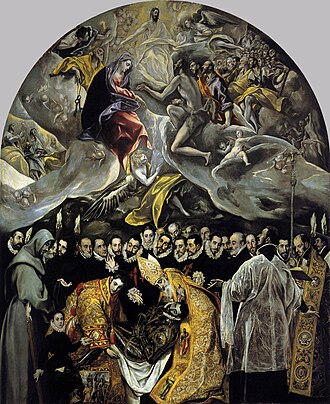 Begräbnis des Grafen von Orgaz - El Greco (1586)
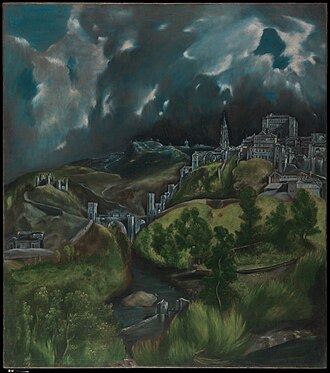 Ansicht von Toledo - El Greco (1596)
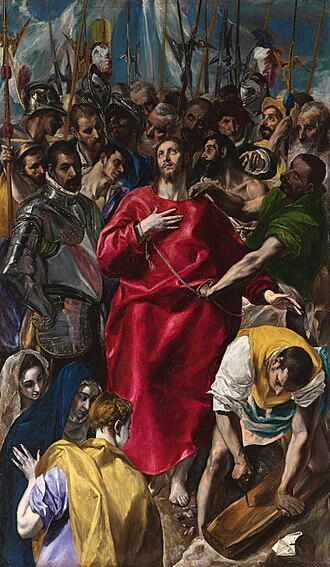 Die Entkleidung Christi - El Greco (1570s)
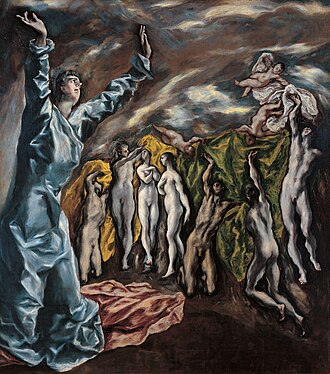 Die Öffnung des fünften Siegels - El Greco (1610)
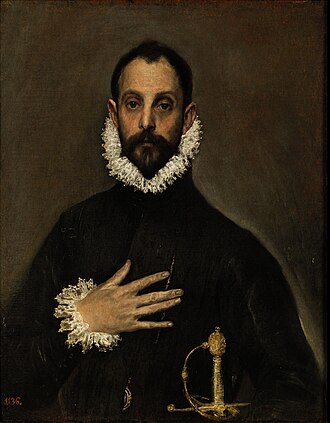 Bildnis eines Edelmanns mit der Hand auf der Brust - El Greco (1580)
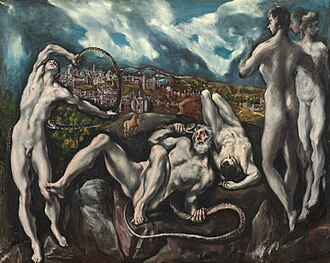 Laokoon - El Greco (1610s)
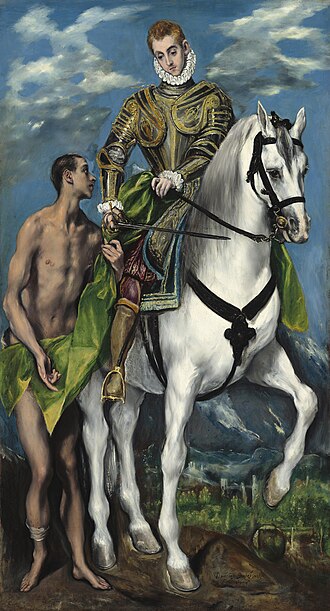 Der hl. Martin und der Bettler - El Greco (1597)
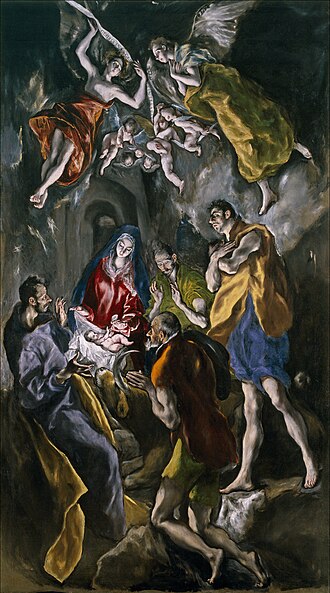 Anbetung der Hirten - El Greco (1612)
Werke verwandter Künstler
 Die Hochzeit zu Kana - Paolo Veronese (1560s)
 Das Gastmahl im Hause des Levi - Paolo Veronese (1573)
 Das letzte Abendmahl - Jacopo Tintoretto (1563)
 Der heilige Markus befreit den gefesselten Sklaven - Jacopo Tintoretto (1540s)
 Venus von Urbino - Titian (1538)
 Mariä Himmelfahrt - Titian (1510s)
 Das Abendmahl in Emmaus - Caravaggio (1601)
 Die Berufung des Hl. Matthäus - Caravaggio (1609)
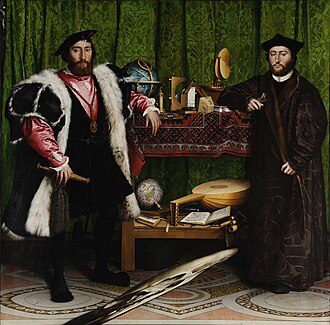 Die Gesandten - Hans Holbein the Younger (1533)
 Der Leichnam Christi im Grabe - Hans Holbein the Younger (1520s)