Die Zitrone
Édouard Manet · 1880
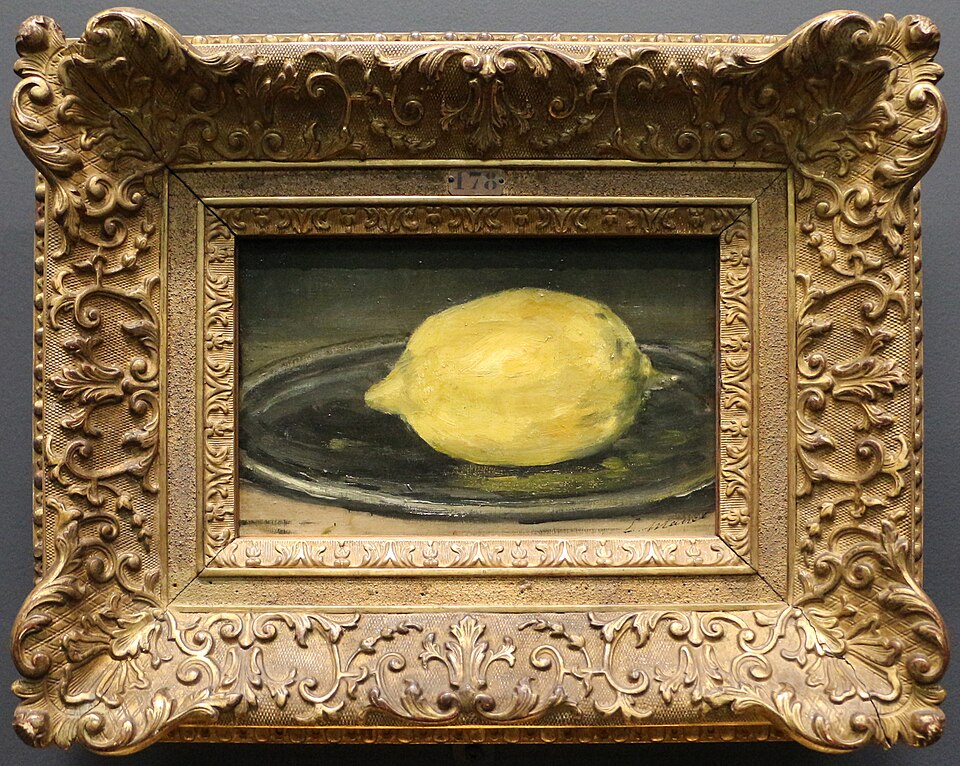
One lemon on a dark plate, nothing else. Manet painted it about three years before his death, and this tiny canvas, 14 by 22 cm, became one of his most powerful still lifes.
The story behind the painting
Manet painted The Lemon in oil on canvas around 1880. It belongs to his late work, when he made a series of Impressionist still lifes that often took a single object as their subject: a pear, a melon, an apple, a stalk of asparagus. Still lifes make up about a fifth of his work, and he called the genre the touchstone of the painter. The picture has no direct model, but it belongs to the tradition of Dutch and Spanish Baroque painting. The signature E. Manet, lower right, was added by his wife Suzanne after his death. It is in the Musee d'Orsay.
What to look for
The lemon lies sideways, close up and about life size, its ends pointing to the sides; a line between them rises slightly from left to right. Its yellow shifts through many shades. Francoise Cachin saw a harmony of grey and yellow, and Hans Korner placed its splendour in the nuances of lemon yellow. The plate looks metallic dark grey, its curved rim glinting silver, and the yellow is reflected in its smooth surface. Alfred Stevens called it a Japanese plate, and Carol Armstrong described it as pewter. Look for the loose, partly thick brushstrokes on the fruit and the dark strokes near the bottom edge that may suggest wood grain.
Meaning and intent
Because the view is so close, we cannot tell whether we are in a kitchen, a dining room or a restaurant. Earlier Manet lemons, in pictures such as Oysters or the portrait of Zacharie Astruc, belonged to meals; here, Carol Armstrong notes, the fruit cannot be tied to any context and is clearly not meant to be eaten. The familiar genre becomes a laboratory: the lemon isolated on a sober black plate, everything reduced to strident colour, texture and simplicity. Dutch still lifes often spoke of transience, but no such intention is known for Manet. For George Mauner, the very simplicity is a sign of his sophistication.
Legacy
The Lemon found no direct echo among Manet's contemporaries, yet art historians such as Ina Conzen think still lifes like it impressed other artists to a large degree. Whether Vincent van Gogh knew it cannot be verified, but his Still Life with Lemons on a Plate of 1887 shows plain lemons on an ordinary plate, as Manet did, with a more studied arrangement and a table edge that gives a sense of space. Conzen also believes Paul Cezanne's claim that he could astonish Paris with an apple was probably unthinkable without Manet. Lemons appear in Cezanne's still lifes too, though always within more complex compositions.
Schon gewusst?
- Painted around 1880, about three years before Manet's death.
- Only 14 by 22 cm.
- The signature was added by Manet's wife Suzanne after his death.
- Now in the Musee d'Orsay, Paris.
Über den Künstler
Édouard Manet (1832-1883)
Musée d’Orsay · Stillleben · Platte
Mehr von Édouard Manet
 Das Frühstück im Grünen - Édouard Manet (1863)
 Olympia - Édouard Manet (1863)
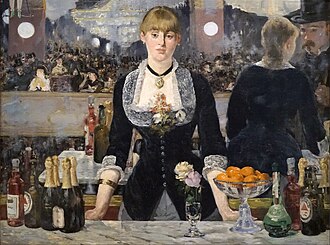 Bar in den Folies-Bergère - Édouard Manet (1882)
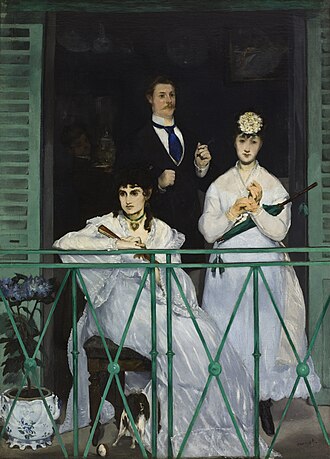 Der Balkon - Édouard Manet (1868)
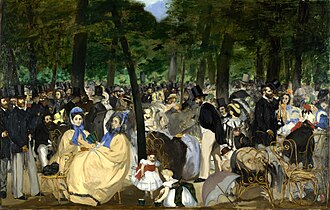 Musik im Tuileriengarten - Édouard Manet (1862)
 Der Pfeifer - Édouard Manet (1866)
 Die Eisenbahn - Édouard Manet (1873)
 Nana - Édouard Manet (1877)
Werke verwandter Künstler
 Impression, Sonnenaufgang - Claude Monet (1872)
 Seerosen - Claude Monet (1906)
 Tanz im Moulin de la Galette - Pierre-Auguste Renoir (1876)
 Das Frühstück der Ruderer - Pierre-Auguste Renoir (1881)
 Wiege - Berthe Morisot (1872)
 Sommertag - Berthe Morisot (1879)
 Der Absinth - Edgar Degas (1875)
 Die Bellelli Familie - Edgar Degas (1858)
 Der Kanal von Loing - Alfred Sisley (1892)
 The Watering Pond at Marly with Hoarfrost - Alfred Sisley (1876)
 Straße in Paris an einem regnerischen Tag - Gustave Caillebotte (1877)
 Die Parkettschleifer - Gustave Caillebotte (1875)