Das Schlaraffenland
Pieter Bruegel the Elder · 1550
%20-%20Das%20Schlaraffenland%20-%208940%20-%20Bavarian%20State%20Painting%20Collections.jpg)
Three men lie asleep like the spokes of a wheel under a tree hung with a table of food, while a roast pig trots by with a knife already in its side. Bruegel's land of plenty is a joke with a sting: a portrait of gluttony and sloth.
The story behind the painting
In Dutch the painting is Het Luilekkerland, literally the lazy-tasty land. In medieval tales Cockaigne was a mythical land of plenty, but Pieter Bruegel the Elder does not flatter it. He makes a comic picture of the spiritual emptiness thought to come from gluttony and sloth, two of the seven deadly sins. Wikipedia dates the oil painting to 1567, two years before Bruegel's death, while Wikidata gives 1550, a date that does not fit the rest of the record. The small panel, about 51.5 by 78 cm, is held by the Bavarian State Painting Collections by the Bavarian State Painting Collections.
What to look for
A clerk, a peasant and a soldier doze on the ground beneath a table tied around a tree. Their tools lie idle: the clerk's book, papers, ink and pen, the peasant's flail, the soldier's lance and gauntlet. A half-eaten egg in its shell runs between the peasant and the clerk. A roast fowl lays itself on a silver platter, and the pig runs with a carving knife under its skin. On the left a knight waits with open mouth under a roof tiled with pies, for a roast pigeon that was accidentally removed during restoration. On the right a man with a spoon has eaten his way through a mountain of pudding. The fence is woven of sausages.
Meaning and intent
The three sleepers, laid out around the tree, form the spokes of a wheel with the trunk as its hub, and the roast fowl lies where a fourth spoke might be. The scene is also stitched with proverbs: roofs covered with pies for abundance, grabbing the hen's egg and letting the goose egg go for a bad choice, and a pig stabbed through the belly for a done deal. The historian Ross Frank reads it as political satire on the first stage of the Dutch Revolt: the fowl stands for the failed nobility, and the sleepers for a people too comfortable to take risks for change.
Legacy
The painting has also been used to illustrate the oral stage in Freudian theory, a paradise where pleasure comes from eating and simply having things in the mouth. Whatever reading one prefers, the image keeps its humour: food that serves itself, a fence of sausages, a man tunnelling through pudding. Behind the laughter is Bruegel's familiar seriousness, the idea that abundance without effort leaves people asleep. Today it belongs to the Bavarian State Painting Collections, a small panel with a large and very human temptation at its centre.
Schon gewusst?
- Dated 1567 by Wikipedia, 1550 by Wikidata.
- Dutch title Het Luilekkerland, the lazy-tasty land.
- A roast pigeon was accidentally removed in restoration.
- Held by the Bavarian State Painting Collections.
Über den Künstler
Pieter Bruegel the Elder (1525-1569)
Genreszene · Bayerische Staatsgemäldesammlungen
Mehr von Pieter Bruegel the Elder
%20-%20Google%20Art%20Project.jpg) Die Jäger im Schnee - Pieter Bruegel the Elder (1565)
Die Jäger im Schnee - Pieter Bruegel the Elder (1565)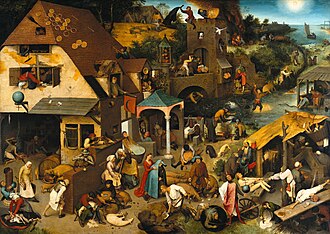 Die niederländischen Sprichwörter - Pieter Bruegel the Elder (1551)
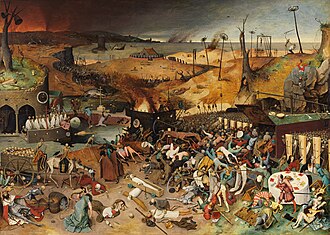 Der Triumph des Todes - Pieter Bruegel the Elder (1560s)
%20-%20Blind%20leading%20the%20blind%20Google%20Art%20Project.jpeg) Der Blindensturz - Pieter Bruegel the Elder (1568)
Der Blindensturz - Pieter Bruegel the Elder (1568)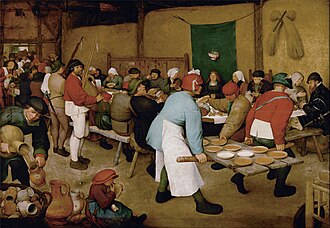 Die Bauernhochzeit - Pieter Bruegel the Elder (1560s)
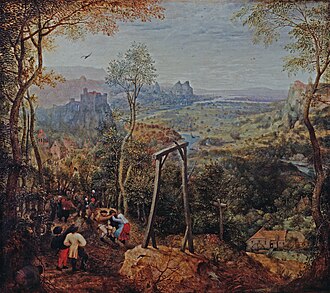 Die Elster auf dem Galgen - Pieter Bruegel the Elder (1568)
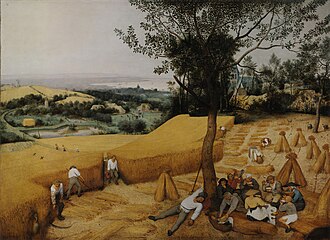 Die Kornernte - Pieter Bruegel the Elder (1565)
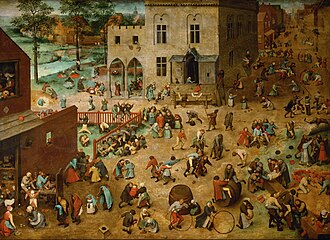 Die Kinderspiele - Pieter Bruegel the Elder (1560)
Werke verwandter Künstler
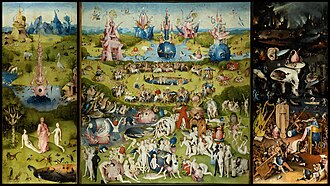 Der Garten der Lüste - Hieronymus Bosch
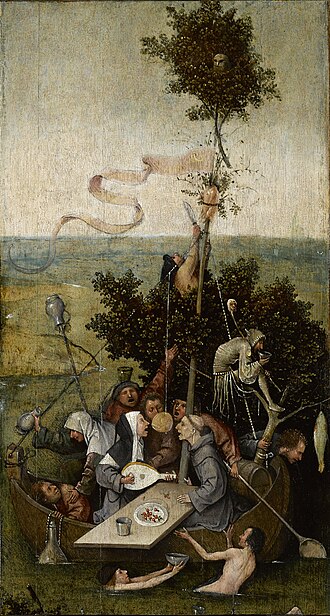 Das Narrenschiff - Hieronymus Bosch (1500s)
 Die Gesandten - Hans Holbein the Younger (1533)
 Der Leichnam Christi im Grabe - Hans Holbein the Younger (1520s)