Jagd auf Nilpferd und Krokodil
Peter Paul Rubens · 1615
.jpg)
A furious hippopotamus rears up and tramples a crocodile while horsemen drive their lances down and hounds leap in. Rubens painted this wild scene for a Bavarian palace, and of the four hunts he made for it, it is the only one that ever came back.
The story behind the painting
In 1615 Maximilian I, Elector of Bavaria, commissioned four large hunting scenes from Rubens to decorate Schleißheim Palace, the summer residence of the Wittelsbach princes: a lion hunt, a wolf hunt, a boar hunt and this hippopotamus and crocodile hunt. Rubens and his studio produced the four canvases in Antwerp in 1615 and 1616. Large hunting scenes were a long-standing genre, and his studio painted dozens of them for aristocratic patrons in the 1610s and 1620s. It has been suggested that Rubens may have travelled to Rome to see a dead hippopotamus preserved in brine and temporarily on display before he painted this picture.
What to look for
The hunt takes place on the banks of the Nile, which the palm tree in the background signals. Three hunters in orientalising costume ride Arabian horses and attack with lance and sword. Two attendants in rough jerkins are on foot, and one of them already lies dead, killed by the beasts. At the centre the enraged hippopotamus tramples the crocodile, while both are attacked by riders and hounds. Look at the animals themselves: their accurate appearance differs from other images of the time and reflects a growing interest in natural history and observation. The canvas is huge, about 248.3 by 321.3 cm.
Meaning and intent
Hippopotamuses and crocodiles were seen as dangerous nuisances, and killing them was considered a duty of noblemen, so the subject flattered the princely patrons who hunted. But the painting is also pure Rubens drama. The complex grouping of figures, the turbulent motion, the violent action, the high tension and the brilliant palette are all hallmarks of his style. Every body, human and animal, twists in a different direction, and the eye cannot rest. Rubens joins scientific curiosity about real animals with the theatre of struggle, turning a hunt into a storm of life and death.
Legacy
During the Napoleonic Wars the whole cycle was looted from Schleißheim. Only the Hippopotamus and Crocodile Hunt was returned to Munich, where it joined the Wittelsbach collection that formed the core of today's Alte Pinakothek, part of the Bavarian State Painting Collections; The Lion Hunt from the same cycle is also there now. Two centuries later the painter Eugène Delacroix studied it closely: in a note of January 25, 1847 he admired the crocodile as a masterpiece of execution, while remarking that its action could have been more interesting.
Schon gewusst?
- Commissioned in 1615 by Maximilian I of Bavaria for Schleißheim Palace.
- One of four hunting scenes; the cycle was looted in the Napoleonic Wars.
- The only one of the four returned to Munich.
- Now in the Alte Pinakothek, Munich.
Über den Künstler
Peter Paul Rubens (1577-1640)
Mann · Genreszene · Barock · Hauspferd · Bayerische Staatsgemäldesammlungen · Reiten · Tier in der Kunst · Speer · Jagd · Jagdhund
Mehr von Peter Paul Rubens
.jpg) Die Aufrichtung des Kreuzes - Peter Paul Rubens (1609)
Die Aufrichtung des Kreuzes - Peter Paul Rubens (1609)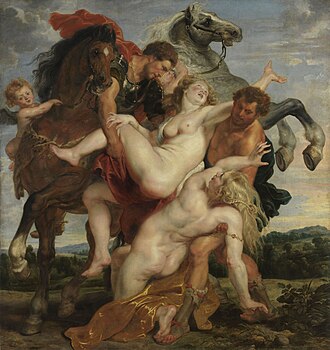 Der Raub der Töchter des Leukippos - Peter Paul Rubens (1618)
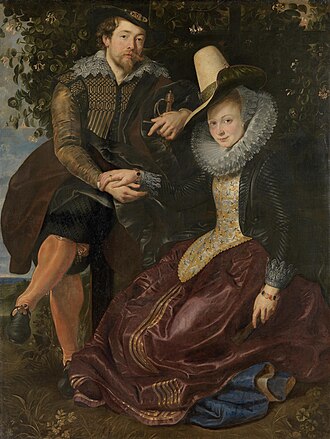 Rubens und Isabella Brant in der Geißblattlaube - Peter Paul Rubens (1600s)
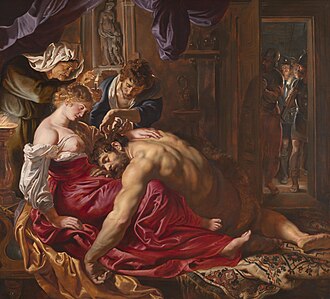 Samson und Delilah - Peter Paul Rubens (1600s)
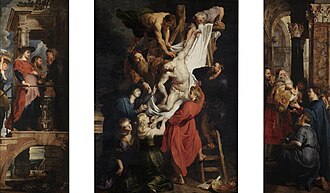 Kreuzabnahme - Peter Paul Rubens (1611)
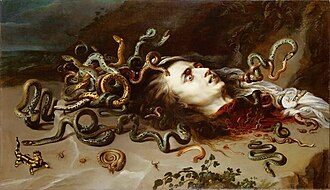 Haupt der Medusa - Peter Paul Rubens (1618)
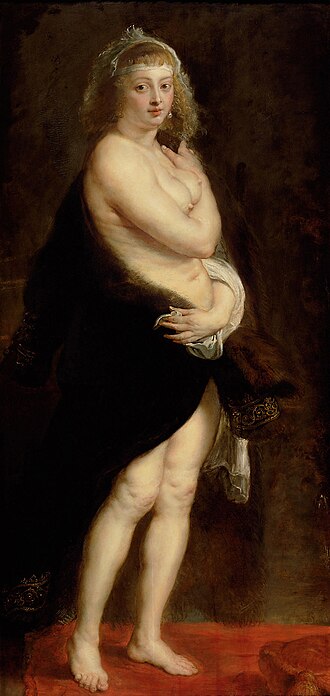 Helena Fourment - Peter Paul Rubens (1638)
.jpg) Der Liebesgarten - Peter Paul Rubens (1632)
Der Liebesgarten - Peter Paul Rubens (1632)
Werke verwandter Künstler
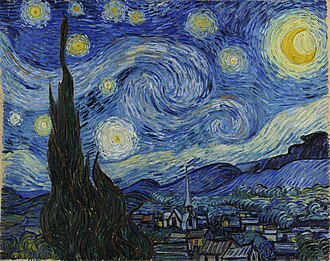 Die Sternennacht - Vincent van Gogh (1889)
.jpg) Caféterrasse am Abend - Vincent van Gogh (1888)
Caféterrasse am Abend - Vincent van Gogh (1888)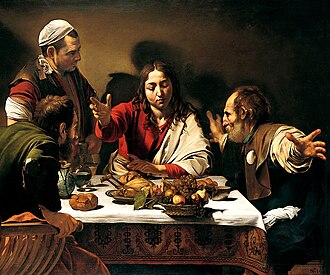 Das Abendmahl in Emmaus - Caravaggio (1601)
 Die Berufung des Hl. Matthäus - Caravaggio (1609)
 Las Meninas - Diego Velázquez (1656)
 Die Übergabe von Breda - Diego Velázquez (1635)
%20-%20Google%20Art%20Project.jpg) Dreifachporträt von Karl I. - Anthony van Dyck (1635)
Dreifachporträt von Karl I. - Anthony van Dyck (1635)%20with%20M.%20de%20St%20Antoine%20-%20Google%20Art%20Project.jpg) Karl I mit M. de St. Antoine - Anthony van Dyck (1636)
Karl I mit M. de St. Antoine - Anthony van Dyck (1636) Die Nachtwache - Rembrandt van Rijn (1642)
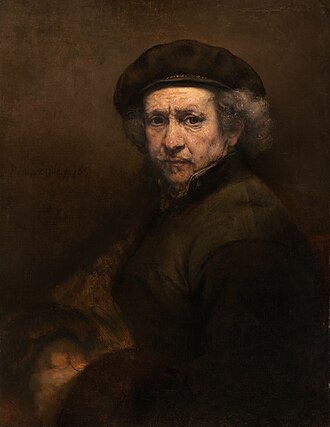 Selbstbildnis - Rembrandt van Rijn (1659)
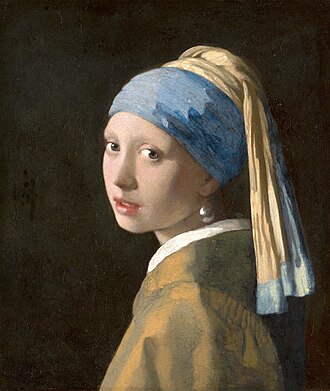 Das Mädchen mit dem Perlenohrgehänge - Johannes Vermeer (1665)
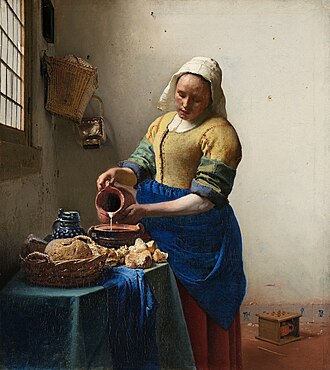 Dienstmagd mit Milchkrug - Johannes Vermeer (c. 1658)