Helena Fourment
Peter Paul Rubens · 1638
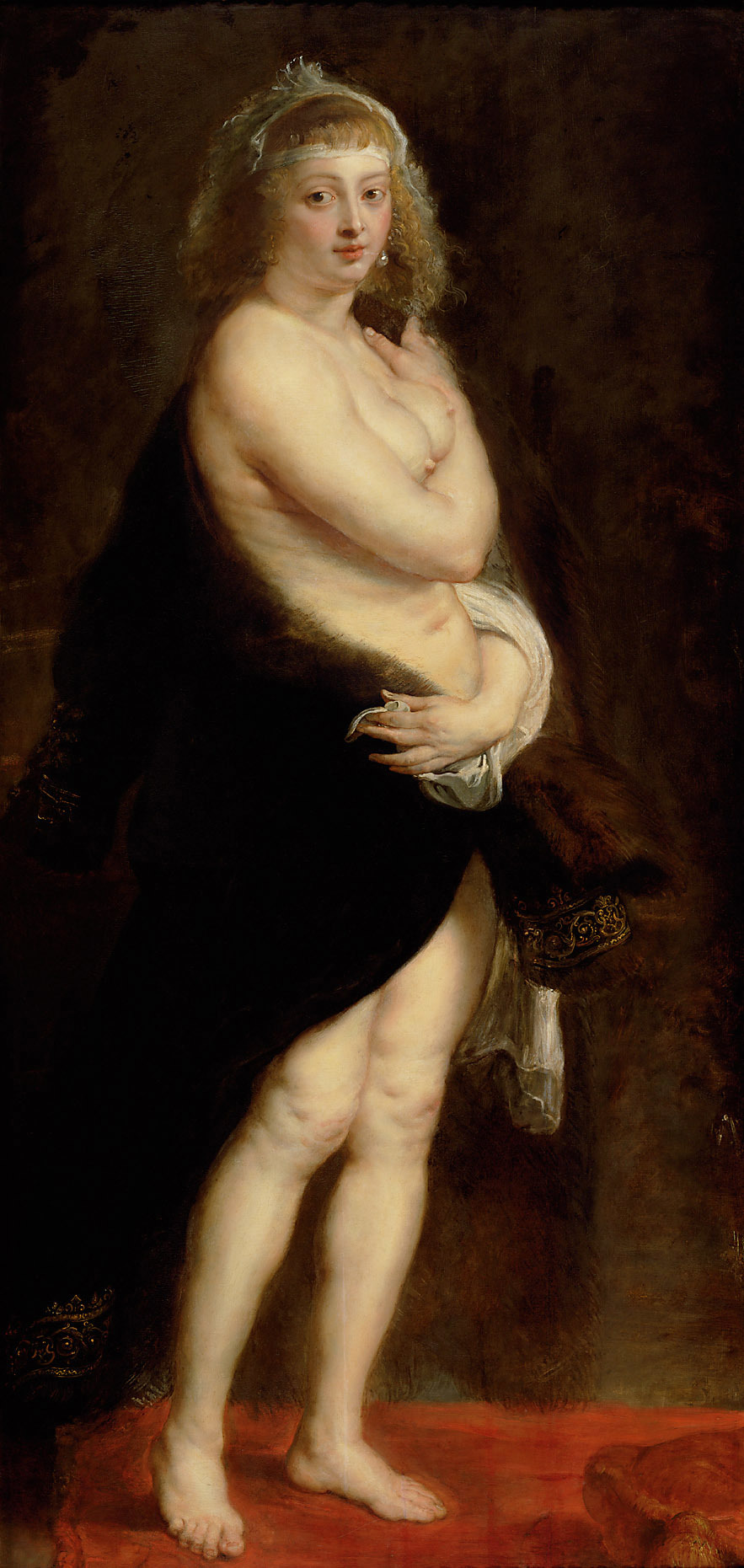
Rubens painted his young second wife stepping from her bath, wrapped only in a dark fur. He kept the picture for himself, and his will left it to her as a personal gift.
The story behind the painting
Het Pelsken, The Little Fur, is a life-size portrait by Peter Paul Rubens of his second wife, Helena Fourment, painted around 1636 to 1638; Wikidata gives 1638. According to the art historian Louis Hourticq, Rubens was too much in love with his young wife to hesitate to celebrate her beauty. He surprised her one day on the way to her bath, and she yielded to his wish to paint her as she was. Wikipedia describes her as eighteen in the picture.
What to look for
Helena stands, coming from the bath, half wrapped in a short black fur mantle loosely gathered around her shoulders and hips, which hides her nudity only imperfectly. Her head turns to us, and Émile Michel saw no sign of embarrassment in her face. Her right arm presses and lifts her breasts, her left hand holds a fold of the thick fur over her belly. Look at the contrasts: the black fur, the red carpet and the brown background set off the brilliance of her skin. The canvas is 176 by 83 cm.
Meaning and intent
The pose recalls the Venus pudica of ancient sculpture, the modest goddess shielding herself as she prepares to bathe. Another model is Titian's Girl in a Fur, which Rubens knew and copied in the collection of Charles I of England. Unlike Titian, Rubens shows dimpled knees and folds of flesh, joining classicism with realism. Michel thought this too exact, noting marks left by a bodice and garters. Andrew Morrall saw it differently: neither simply a portrait nor a goddess, this intensely private work became one of the most celebrated erotic images in Western art.
Legacy
The picture is mentioned in Rubens's will in 1640. A tradition reported by Michel says that after his death Helena hesitated to sell some of his pictures, and a special clause gave The Little Fur to her as a personal gift. It appears in her own will in 1658. By 1730 it was documented in the gallery in Vienna, and it remains in the Kunsthistorisches Museum, still one of the most intimate images Rubens ever made.
Schon gewusst?
- A life-size portrait of Rubens's second wife, Helena Fourment.
- Painted around 1636-1638; Wikidata gives 1638.
- Left to Helena in Rubens's will as a personal gift.
- In Vienna since at least 1730.
Über den Künstler
Peter Paul Rubens (1577-1640)
Frau · Porträt · Akt · langes Haar · Nacktheit · Kunsthistorisches Museum Wien · Stehen · weibliche Brust · rothaarig · Pelz
Mehr von Peter Paul Rubens
.jpg) Die Aufrichtung des Kreuzes - Peter Paul Rubens (1609)
Die Aufrichtung des Kreuzes - Peter Paul Rubens (1609) Der Raub der Töchter des Leukippos - Peter Paul Rubens (1618)
 Rubens und Isabella Brant in der Geißblattlaube - Peter Paul Rubens (1600s)
 Samson und Delilah - Peter Paul Rubens (1600s)
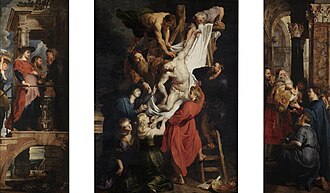 Kreuzabnahme - Peter Paul Rubens (1611)
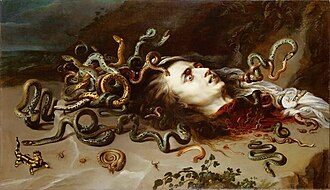 Haupt der Medusa - Peter Paul Rubens (1618)
.jpg) Der Liebesgarten - Peter Paul Rubens (1632)
Der Liebesgarten - Peter Paul Rubens (1632)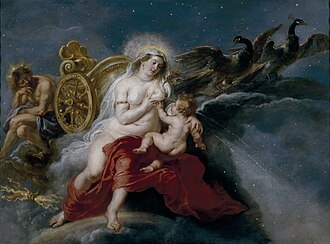 The Origin of the Milky Way - Peter Paul Rubens (1630s)
Werke verwandter Künstler
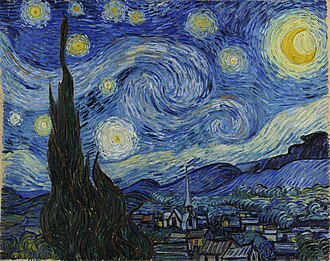 Die Sternennacht - Vincent van Gogh (1889)
.jpg) Caféterrasse am Abend - Vincent van Gogh (1888)
Caféterrasse am Abend - Vincent van Gogh (1888) Das Abendmahl in Emmaus - Caravaggio (1601)
 Die Berufung des Hl. Matthäus - Caravaggio (1609)
 Las Meninas - Diego Velázquez (1656)
 Die Übergabe von Breda - Diego Velázquez (1635)
%20-%20Google%20Art%20Project.jpg) Dreifachporträt von Karl I. - Anthony van Dyck (1635)
Dreifachporträt von Karl I. - Anthony van Dyck (1635)%20with%20M.%20de%20St%20Antoine%20-%20Google%20Art%20Project.jpg) Karl I mit M. de St. Antoine - Anthony van Dyck (1636)
Karl I mit M. de St. Antoine - Anthony van Dyck (1636)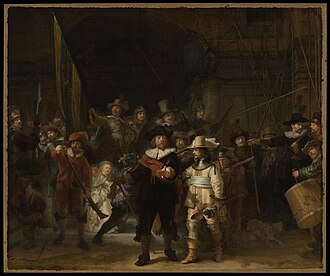 Die Nachtwache - Rembrandt van Rijn (1642)
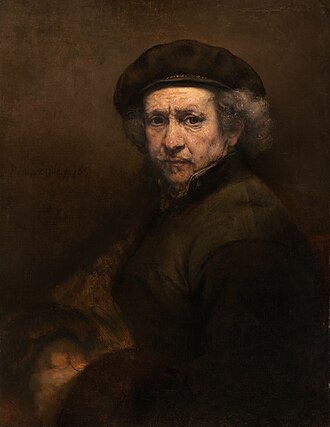 Selbstbildnis - Rembrandt van Rijn (1659)
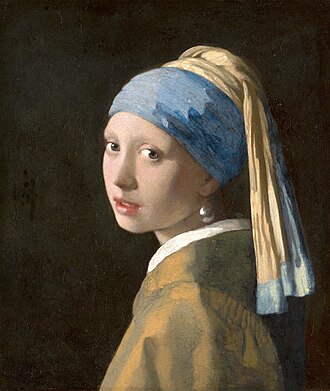 Das Mädchen mit dem Perlenohrgehänge - Johannes Vermeer (1665)
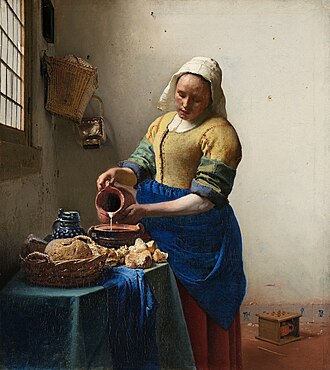 Dienstmagd mit Milchkrug - Johannes Vermeer (c. 1658)