Kreuzabnahme
Peter Paul Rubens · 1600s
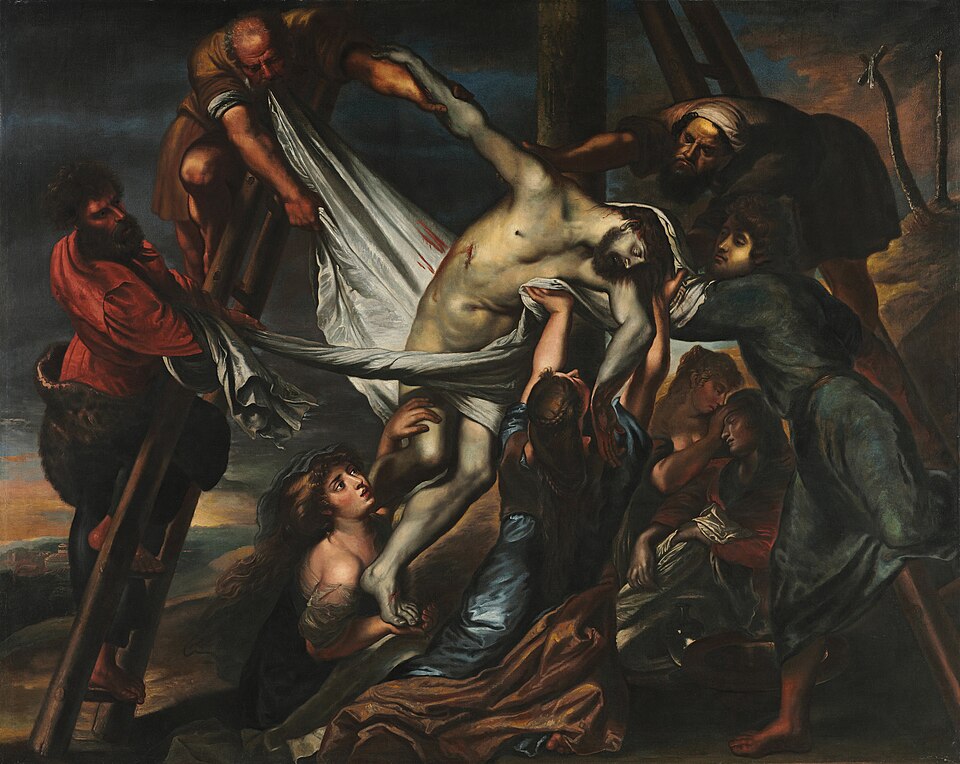
Long before his famous Antwerp altarpiece, a young Rubens painted the body of Christ being taken down for the private chapel of a duchess. The canvas then slipped into obscurity for four centuries, until a Rubens specialist recognised it in 2001.
The story behind the painting
This large altarpiece, oil on canvas, was painted between 1600 and 1602 and is described as Rubens' first major commissioned work. It was made for the private chapel of Eleonora de' Medici Gonzaga, duchess of Mantua, who lived from 1567 to 1611. Rubens fitted the picture exactly to the dimensions of the reredos it was meant for. The painting stayed somewhat obscure until 2001, when the German art historian Justus Müller-Hofstede, a specialist in Rubens' early work, discovered it. Today it hangs in the Siegerlandmuseum in the Oberes Schloss, the Upper Palace, in Siegen.
What to look for
Look for the kneeling lady in the foreground. She is read as a symbolic embodiment of the duchess herself, receiving the body of Christ like a lover at supper, an idea tied to the Gospel of John. Above and around her the body is lowered from the cross. Stylistically the painting is close to another early Rubens of the same years, The Elevation of the Cross made for the chapel of Santa Croce in Gerusalemme in Rome, which shows the mourning group of women from the same angle. It is a young painter's work, but already ambitious in scale.
Meaning and intent
The source describes the altarpiece as revolutionising the usual images of the Descent from the Cross from the Italian Cinquecento and deepening the idea of the holy Eucharist. Rubens knew Michelangelo's sculpted Pietà Bandini, either from seeing it in Rome or from an engraving by Cherubino Alberti. Working for the duchess, he entered into a paragone, a contest between painting and sculpture, with Michelangelo, and answered him with a new composition of his own. The picture is therefore both a devotional image for a private chapel and a young artist measuring himself against a giant.
Legacy
Rubens' authorship is proven in the archives. In 1611, after the duchess died, the court painter Francesco Marcoleoni copied it for the church of Santa Maria Assunta in Susano, and a document describes his copy as taken from an original by Pietro Paolo the Fleming in the chapel of Santa Croce at court. After early drafts now in the Hermitage in Saint Petersburg, Rubens returned to the subject again and again, in the famous triptych in Antwerp and in works in Lille, Saint Petersburg and Arras. Wikidata dates this painting only to the 1600s.
Schon gewusst?
- Painted 1600-1602 for Eleonora de' Medici Gonzaga, duchess of Mantua.
- Rubens' first major commissioned work.
- Rediscovered in 2001 by Justus Müller-Hofstede.
- Now in the Siegerlandmuseum, Siegen.
Über den Künstler
Peter Paul Rubens (1577-1640)
religiöse Kunst · Jesus Christus
Mehr von Peter Paul Rubens
.jpg) Die Aufrichtung des Kreuzes - Peter Paul Rubens (1609)
Die Aufrichtung des Kreuzes - Peter Paul Rubens (1609)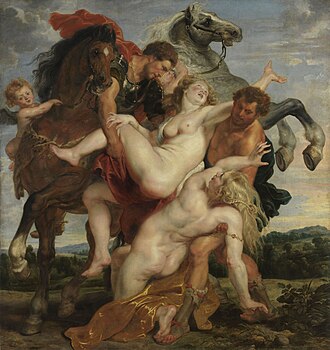 Der Raub der Töchter des Leukippos - Peter Paul Rubens (1618)
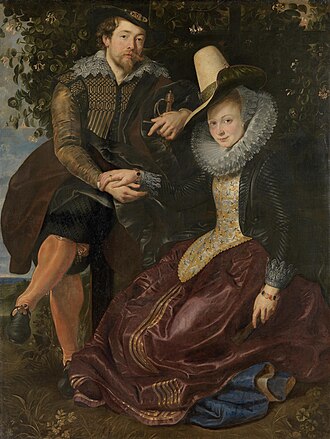 Rubens und Isabella Brant in der Geißblattlaube - Peter Paul Rubens (1600s)
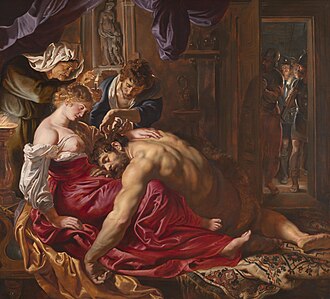 Samson und Delilah - Peter Paul Rubens (1600s)
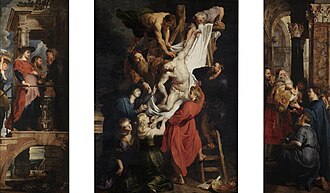 Kreuzabnahme - Peter Paul Rubens (1611)
 Haupt der Medusa - Peter Paul Rubens (1618)
 Helena Fourment - Peter Paul Rubens (1638)
.jpg) Der Liebesgarten - Peter Paul Rubens (1632)
Der Liebesgarten - Peter Paul Rubens (1632)
Werke verwandter Künstler
 Die Sternennacht - Vincent van Gogh (1889)
.jpg) Caféterrasse am Abend - Vincent van Gogh (1888)
Caféterrasse am Abend - Vincent van Gogh (1888) Das Abendmahl in Emmaus - Caravaggio (1601)
 Die Berufung des Hl. Matthäus - Caravaggio (1609)
 Las Meninas - Diego Velázquez (1656)
 Die Übergabe von Breda - Diego Velázquez (1635)
%20-%20Google%20Art%20Project.jpg) Dreifachporträt von Karl I. - Anthony van Dyck (1635)
Dreifachporträt von Karl I. - Anthony van Dyck (1635)%20with%20M.%20de%20St%20Antoine%20-%20Google%20Art%20Project.jpg) Karl I mit M. de St. Antoine - Anthony van Dyck (1636)
Karl I mit M. de St. Antoine - Anthony van Dyck (1636)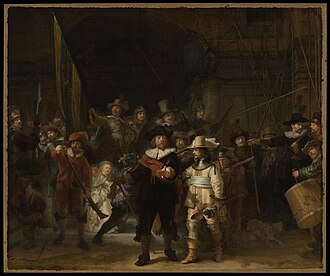 Die Nachtwache - Rembrandt van Rijn (1642)
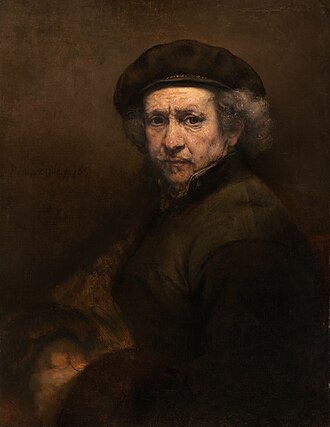 Selbstbildnis - Rembrandt van Rijn (1659)
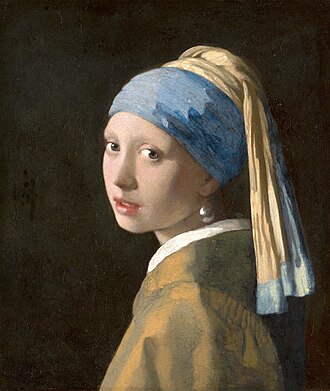 Das Mädchen mit dem Perlenohrgehänge - Johannes Vermeer (1665)
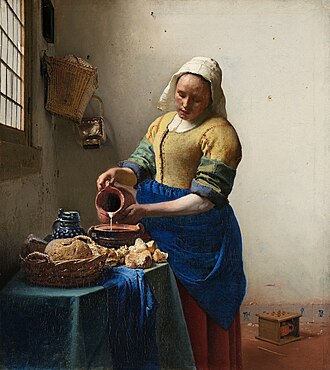 Dienstmagd mit Milchkrug - Johannes Vermeer (c. 1658)