The Dead Christ with Angels
Édouard Manet · 1864
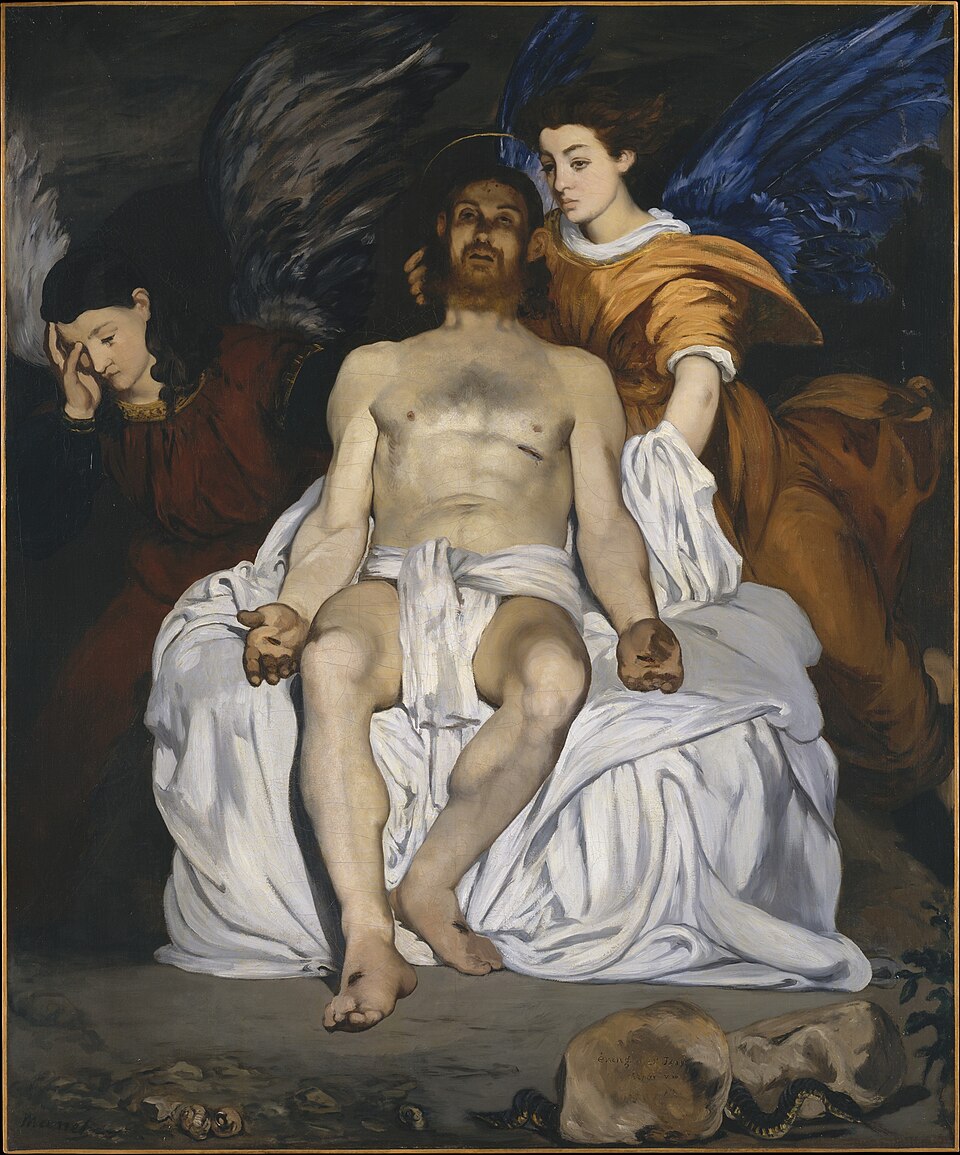
Two angels in bright red and orange hold up the body of Christ, still lying in the tomb. Manet, a painter of modern Paris, sent this rare religious picture to the Salon of 1864, and it left viewers puzzled.
The story behind the painting
Édouard Manet seldom painted religious subjects; he tended to focus on contemporary life. The Dead Christ with Angels, painted in 1864, is an exception. It refers to the Gospel of John, chapter 20, where Mary Magdalene enters the tomb and sees two angels, but finds the body of Jesus gone. The scholar John Hunisak suggests Manet may have wanted to show a religious work at the Salon of 1864 because of the hostile reaction to his recent paintings of modern subjects, hoping that a traditional theme with a contemporary twist would please both supporters and critics. The large canvas, about 179 by 150 cm, is now in the Metropolitan Museum of Art in New York.
What to look for
Start with the angels. The Gospel describes them dressed in white, but Manet painted them in bright red and orange, a choice Vladimir Gurewich suggests was meant to heighten the drama. Their strong colours stand out against the neutral background, and the two figures are not aligned with each other. Then look at Christ. Unlike the gospel scene, the body is still there, pale and heavy, the hands and feet painted with a characteristic blurring that suggests movement. Find the stone at lower right, inscribed with the chapter of John. Finally, check the side of his body: the spear wound is on the wrong side, a slip Manet only noticed after submitting the picture to the Salon.
Meaning and intent
The inscription has sparked its own debate: depending on how a lowercase v is read, as a Roman numeral or an abbreviation for verse, the picture refers to John 20:5-12 or to John 20:12. Some art historians have read the misplaced wound as a deliberate mirror image, but historical accounts state it was accidental, so that reading remains speculation. The painting is often associated with Ernest Renan's Life of Jesus, published in 1863, which denies the resurrection and uses John 20:12 as a key argument. Here the angels grieve over death rather than joyfully announce the resurrection, which some see as evidence of Renan's influence on Manet.
Legacy
At the Salon, the work sparked controversy and confusion. Critics, and many of Manet's own supporters, were puzzled by the new direction he seemed to take. Yet the article notes that its contradictions, brightly coloured angels against a neutral ground, figures out of alignment, cloth both realistic and abstract, are typical of Manet's continuing exploration of discordance. In 1866 or 1867 Manet made an etching with aquatint after the painting, and impressions are held in many collections, including the Art Institute of Chicago and the Cleveland Museum of Art. The painting remains a fascinating meeting point between old sacred tradition and a modern painter's questions.
Schon gewusst?
- Painted in 1864 and shown at the Salon that year; now in the Metropolitan Museum of Art.
- The angels wear red and orange, though the Gospel describes them in white.
- Christ's spear wound is on the wrong side, a mistake Manet noticed only after submitting the work.
- Manet made an etching with aquatint of the composition in 1866 or 1867.
Über den Künstler
Édouard Manet (1832-1883)
religiöse Kunst · Mann · Jesus Christus · Metropolitan Museum of Art · Engel · Leichnam · Oberkörper frei
Mehr von Édouard Manet
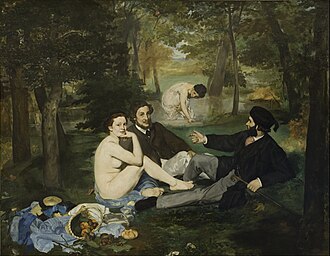 Das Frühstück im Grünen - Édouard Manet (1863)
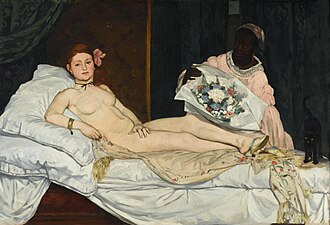 Olympia - Édouard Manet (1863)
%20(33539037428).jpg) Bar in den Folies-Bergère - Édouard Manet (1882)
Bar in den Folies-Bergère - Édouard Manet (1882)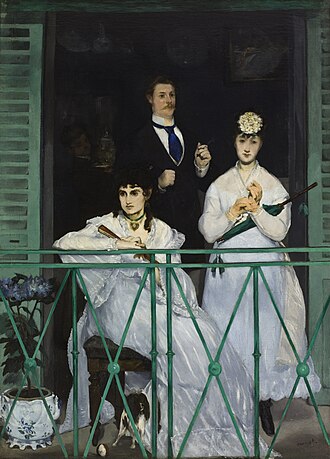 Der Balkon - Édouard Manet (1868)
.jpg) Musik im Tuileriengarten - Édouard Manet (1862)
Musik im Tuileriengarten - Édouard Manet (1862).jpg) Der Pfeifer - Édouard Manet (1866)
Der Pfeifer - Édouard Manet (1866) Die Eisenbahn - Édouard Manet (1873)
 Berthe Morisot mit Veilchenstrauß - Édouard Manet (1872)
Werke verwandter Künstler
 Impression, Sonnenaufgang - Claude Monet (1872)
 Seerosen - Claude Monet (1906)
 Tanz im Moulin de la Galette - Pierre-Auguste Renoir (1876)
 Das Frühstück der Ruderer - Pierre-Auguste Renoir (1881)
 Die Sternennacht - Vincent van Gogh (1889)
.jpg) Caféterrasse am Abend - Vincent van Gogh (1888)
Caféterrasse am Abend - Vincent van Gogh (1888) Die letzte Fahrt der Temeraire - J. M. W. Turner (1839)
 Rain, Steam and Speed - The Great Western Railway - J. M. W. Turner (1844)
 Woher kommen wir? Wer sind wir? Wohin gehen wir? - Paul Gauguin (1897-1898)
%201889.jpg) Der gelbe Christus - Paul Gauguin (1889)
Der gelbe Christus - Paul Gauguin (1889)