Der Hornist
Édouard Manet · 1882
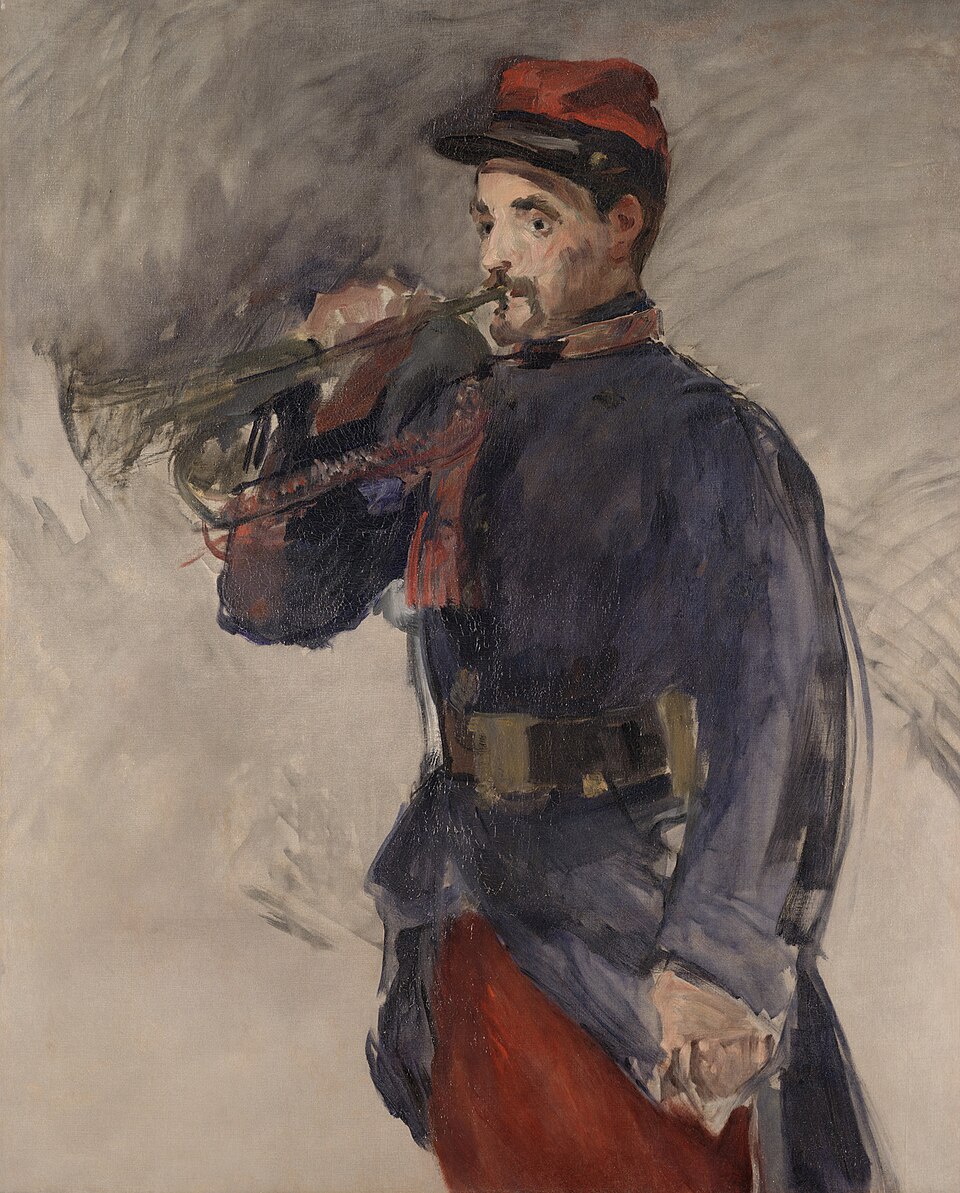
A French infantry bugler raises his horn to his lips, his face bright against a bare grey-beige ground. Manet meant him for the Salon of 1883, but illness stopped the brush, and he died the day before the Salon opened.
The story behind the painting
In autumn 1882, in his studio on the rue d'Amsterdam, Manet began the paintings he planned for the Paris Salon of the following year. Notes by Léon Leenhoff record two projects: The Amazon, a woman in riding dress, and The Bugler. Manet was already seriously ill and could hardly stand at the easel. His friend, the military painter Henri Dupray, may have suggested the subject, and lent the uniform, the instrument and the model. Manet died on 30 April 1883, one day before the Salon opened, with the canvas still in his studio.
What to look for
The soldier stands in almost pure profile, turned to the left, filling nearly the whole 101 by 81 cm canvas and cut off at the thighs. His left arm hangs down while his right hand holds the horn to his mouth. He wears a blue coat with a black belt, red trousers and a red and black kepi. The face is the most finished part: forehead, nose and cheekbones built up in several thin layers, wide open eyes, bushy brows, a neat beard and skin in many shades.
Meaning and intent
The painting is unsigned and unfinished, and several authors call it a sketch, though it is not clear how far it was from completion. Its loose brushwork is not only a sign of unfinished work: Manet painted the same way in other pictures of his last years. The author Richard R. Brettell suggested he wanted to catch a passing glance itself. With quick handling and strong contrasts of red, dark blue and black, Manet moved away from academic rules and toward Impressionism.
Legacy
The Bugler belongs to a short line of Manet's soldiers. In 1866 he painted The Fifer, a young guardsman with a piccolo, which the Salon jury refused; his pupil Eva Gonzalès later took it as a model for her own bugler, shown standing still rather than playing. Today the painting belongs to the art collection of the Pauline Allen Gill Foundation and is on long-term loan to the Dallas Museum of Art, an open view into how Manet worked in his final months.
Schon gewusst?
- Begun in autumn 1882 for the Paris Salon of 1883.
- Left unfinished and unsigned at Manet's death on 30 April 1883.
- Uniform, horn and model were lent by the painter Henri Dupray.
- On long-term loan to the Dallas Museum of Art.
Über den Künstler
Édouard Manet (1832-1883)
Mehr von Édouard Manet
 Das Frühstück im Grünen - Édouard Manet (1863)
 Olympia - Édouard Manet (1863)
 Bar in den Folies-Bergère - Édouard Manet (1882)
 Der Balkon - Édouard Manet (1868)
 Musik im Tuileriengarten - Édouard Manet (1862)
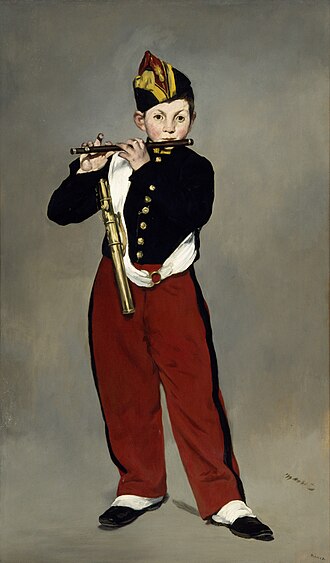 Der Pfeifer - Édouard Manet (1866)
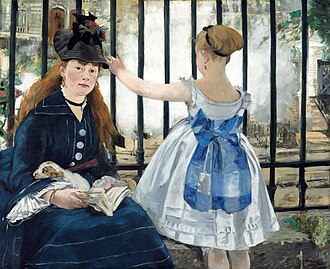 Die Eisenbahn - Édouard Manet (1873)
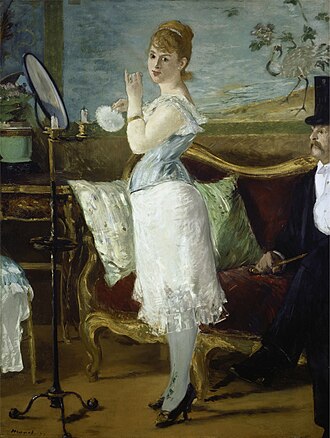 Nana - Édouard Manet (1877)
Werke verwandter Künstler
 Impression, Sonnenaufgang - Claude Monet (1872)
 Seerosen - Claude Monet (1906)
 Tanz im Moulin de la Galette - Pierre-Auguste Renoir (1876)
 Das Frühstück der Ruderer - Pierre-Auguste Renoir (1881)
 Wiege - Berthe Morisot (1872)
 Sommertag - Berthe Morisot (1879)
 Der Absinth - Edgar Degas (1875)
 Die Bellelli Familie - Edgar Degas (1858)
 Der Kanal von Loing - Alfred Sisley (1892)
 The Watering Pond at Marly with Hoarfrost - Alfred Sisley (1876)
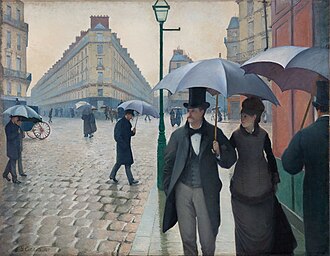 Straße in Paris an einem regnerischen Tag - Gustave Caillebotte (1877)
 Die Parkettschleifer - Gustave Caillebotte (1875)