Wildschweinjagd
Peter Paul Rubens · 1610s
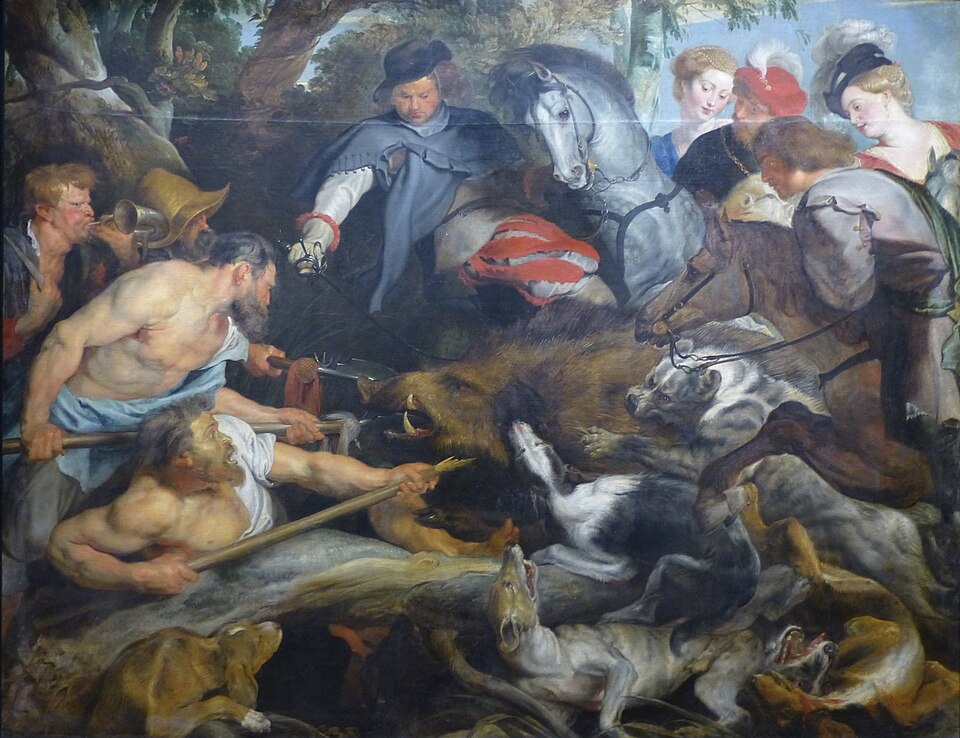
Dogs and riders dressed as nobles corner a wild boar, while men in togas raise their spears. Rubens built this furious hunt on the memory of a lost Leonardo, for a Bavarian prince.
The story behind the painting
The Boar Hunt was one of four large hunting scenes, with The Tiger Hunt, The Hippopotamus and Crocodile Hunt and The Lion Hunt, commissioned by the Elector Maximilian I of Bavaria between 1615 and 1616. Rubens, back in his Antwerp workshop since late 1608 after eight years in Italy, painted the four soon after The Wolf and Fox Hunt, which Maximilian probably knew through his contacts at the court in Brussels. It is not known whether the subjects came from the patron or from Rubens. Wikipedia dates the painting between 1615 and 1617, while Wikidata gives only the 1610s.
What to look for
The canvas, about 250 by 320 cm, is a mounted hunt in full cry. Dogs and riders dressed as nobles drive a wild boar into a corner, and on the left men dressed in togas brandish spears. The whole tangle of horses, dogs and bodies follows the composition of Leonardo da Vinci's Battle of Anghiari, the famous fresco in the Palazzo Vecchio in Florence, already gone by Rubens's time. In Italy Rubens had studied copies and a print of it and made at least two drawings. Hunting prints by the Flemish engraver Philips Galle also influenced him.
Meaning and intent
Hunting was a favourite theme from the mid 16th to the 18th century, close to the battle scene, and Rubens is counted among the artists who renewed it. In his first hunting period, from 1616 to 1621, he deliberately used the codes of court painting to glorify the nobility, for whom the hunt was a sign of status and land. Rubens knew these pictures sold well to ruling families, yet the source says money alone does not explain the creativity in them. The four scenes for Maximilian are considered the best examples of his skill at showing wild animals in heroic poses.
Legacy
The four hunts hung in the Altes Schloss at Schleissheim and are recorded there in 1637, later moving to the Neues Schloss. In August 1800 they were sent from Munich to Paris among 72 works, and a letter signed by Napoleon Bonaparte called them gifts. Thought to be copies, they arrived at the Louvre in November 1800 and were then dispersed: The Boar Hunt to the Musée des Beaux Arts in Marseille, the hippopotamus hunt to Munich, the tiger hunt to Rennes, the lion hunt to Bordeaux, where it burned in 1870. Assistants such as Van Dyck may have helped, and Frans Snyders worked on all four.
Schon gewusst?
- One of four hunts commissioned by Maximilian I of Bavaria in 1615 to 1616.
- The composition follows Leonardo's lost Battle of Anghiari.
- Sent from Munich to Paris in 1800.
- Now in the Musée des Beaux Arts, Marseille.
Über den Künstler
Peter Paul Rubens (1577-1640)
Mehr von Peter Paul Rubens
.jpg) Die Aufrichtung des Kreuzes - Peter Paul Rubens (1609)
Die Aufrichtung des Kreuzes - Peter Paul Rubens (1609)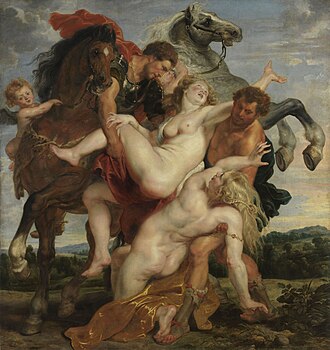 Der Raub der Töchter des Leukippos - Peter Paul Rubens (1618)
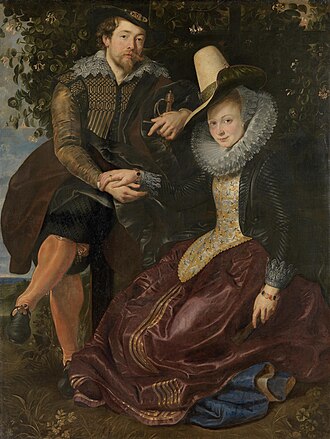 Rubens und Isabella Brant in der Geißblattlaube - Peter Paul Rubens (1600s)
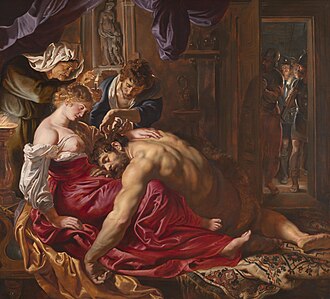 Samson und Delilah - Peter Paul Rubens (1600s)
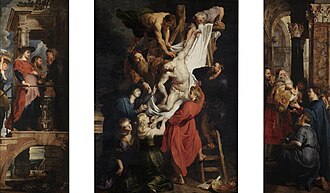 Kreuzabnahme - Peter Paul Rubens (1611)
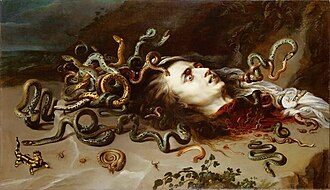 Haupt der Medusa - Peter Paul Rubens (1618)
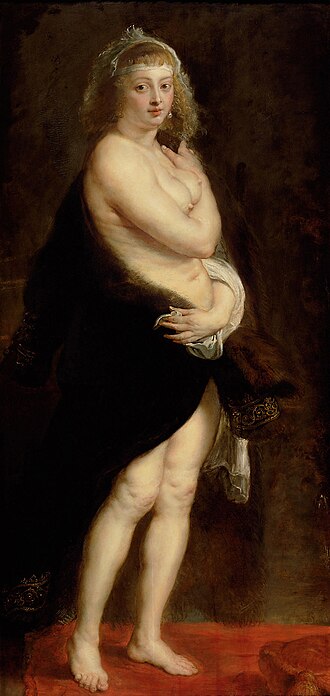 Helena Fourment - Peter Paul Rubens (1638)
.jpg) Der Liebesgarten - Peter Paul Rubens (1632)
Der Liebesgarten - Peter Paul Rubens (1632)
Werke verwandter Künstler
 Die Sternennacht - Vincent van Gogh (1889)
.jpg) Caféterrasse am Abend - Vincent van Gogh (1888)
Caféterrasse am Abend - Vincent van Gogh (1888)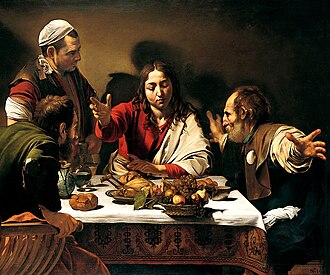 Das Abendmahl in Emmaus - Caravaggio (1601)
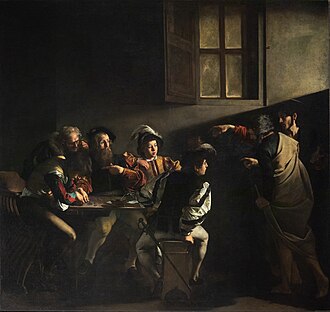 Die Berufung des Hl. Matthäus - Caravaggio (1609)
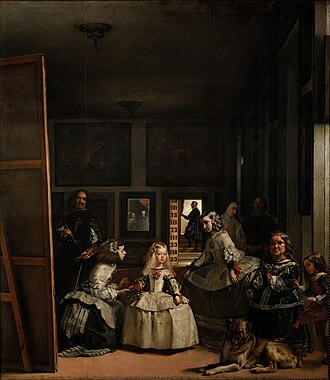 Las Meninas - Diego Velázquez (1656)
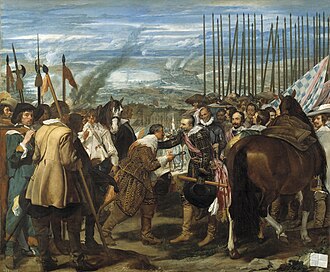 Die Übergabe von Breda - Diego Velázquez (1635)
%20-%20Google%20Art%20Project.jpg) Dreifachporträt von Karl I. - Anthony van Dyck (1635)
Dreifachporträt von Karl I. - Anthony van Dyck (1635)%20with%20M.%20de%20St%20Antoine%20-%20Google%20Art%20Project.jpg) Karl I mit M. de St. Antoine - Anthony van Dyck (1636)
Karl I mit M. de St. Antoine - Anthony van Dyck (1636)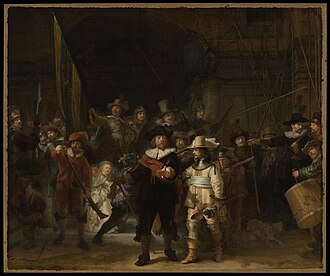 Die Nachtwache - Rembrandt van Rijn (1642)
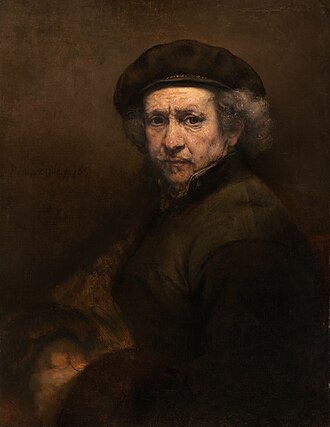 Selbstbildnis - Rembrandt van Rijn (1659)
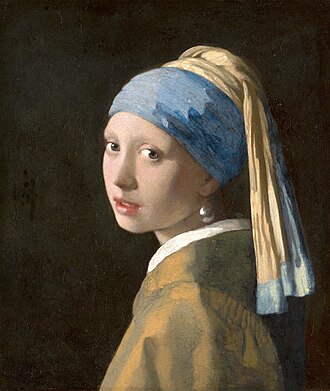 Das Mädchen mit dem Perlenohrgehänge - Johannes Vermeer (1665)
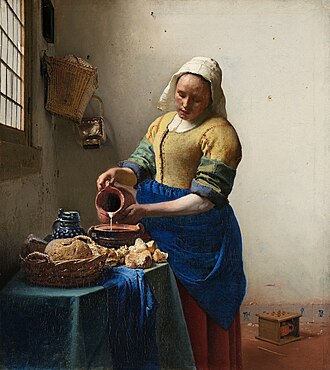 Dienstmagd mit Milchkrug - Johannes Vermeer (c. 1658)