Stephanus Geeraerdts, Schöffe in Haarlem
Frans Hals · 1644
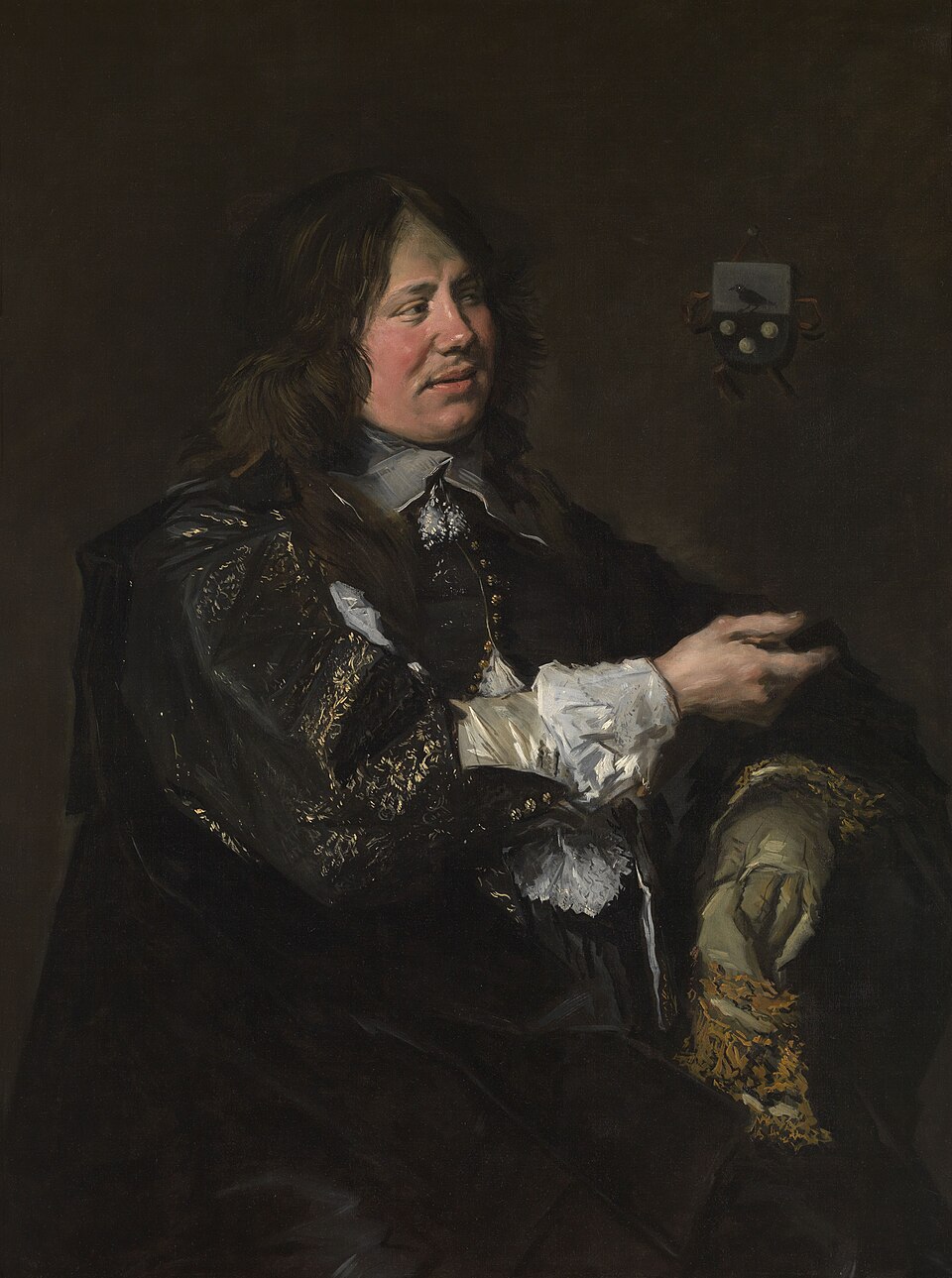
A Haarlem alderman leans out of his frame, smiling, hand open to take a rose. The rose is in another painting: his wife's portrait, separated from his since 1886.
The story behind the painting
This is one of a pair of wedding portraits by Frans Hals, made when the painter was about 70. Stephanus Geraerdts, an alderman of Haarlem, was designed to hang on the left, and his wife Isabella Coymans on the right. The couple married in 1644. Wikipedia says Hals probably painted the pair around 1650 to 1652, six or seven years after the wedding, while Wikidata dates this portrait 1644, the year of the marriage. Isabella came from one of the wealthiest merchant dynasties in Holland. Geraerdts died in Amsterdam on 27 January 1671.
What to look for
Geraerdts sits and stretches out his arm with a smile. Hals probably painted that smile straight onto the canvas with a brush, leaving no preliminary studies. The hand is worked more roughly than the face, held in a sleeve that art historians call virtuoso. The deep black cloak with gold embroidery is made of fast, straight, almost impressionistic strokes, once compared to the style of Manet. Look at the dark palette, the thin paint and the broad brushwork, and at how relaxed the pose is for a Dutch regent, who was usually shown far less spontaneously.
Meaning and intent
Placed side by side, the two portraits come alive: the alderman smiles at his wife and reaches for the rose she offers him, and the viewer feels the tension between their smiles and gestures. The gestures were conventional, a sign of marriage, but here they suggest a bond of love. As was customary, Hals shows the husband slightly larger and closer to the viewer. The expensive clothing is displayed openly, and the portrait gives insight into how the 17th century elite wished to see themselves. Arnold Houbraken wrote that Hals added his bold strokes last, as the master's mark.
Legacy
The portraits have been separated since 1886, so the bond that held them is broken: Isabella's portrait is in a private collection in Paris, while this one is in the Royal Museum of Fine Arts Antwerp, which considers it Hals' most valuable painting in the Low Countries. It may be Hals' only painting in Flanders. The portrait also marks a turning point, the starting point of the mature style of his last years, which leads to later works such as The Regentesses.
Schon gewusst?
- Left half of a pair of wedding portraits; the wife's portrait is in a private collection in Paris.
- The couple married in 1644; Wikipedia dates the painting c. 1650-1652, Wikidata 1644.
- Separated from its pendant since 1886.
- Held by the Royal Museum of Fine Arts Antwerp.
Über den Künstler
Frans Hals (1591-1666)
Porträt · Königliches Museum der Schönen Künste
Mehr von Frans Hals
 Ein Schütze einen Berkemeyer haltend, bekannt als „Der fröhliche Trinker" - Frans Hals (1620s)
 Der lachende Kavalier - Frans Hals (1624)
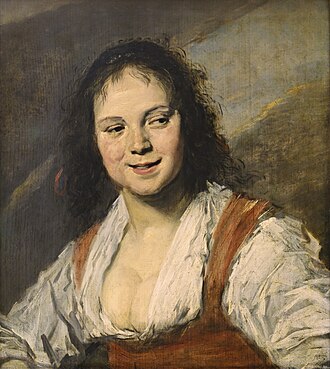 La Bohémienne - Frans Hals (1628)
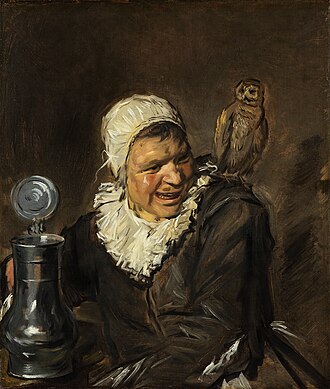 Malle Babbe - Frans Hals (1640s)
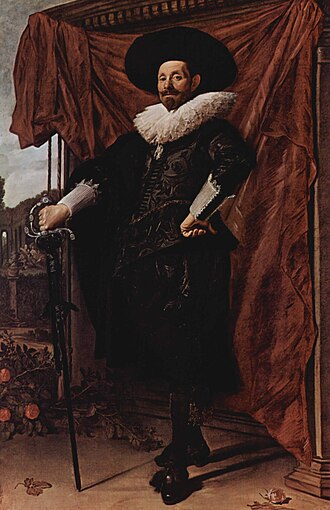 Willem van Heythuysen - Frans Hals (1625)
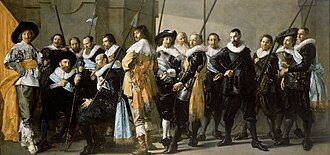 Schützen XI. Bezirks unter Leitung Kapitän Reynier Reael gen. ‘Magere compagnie’ - Frans Hals (1630s)
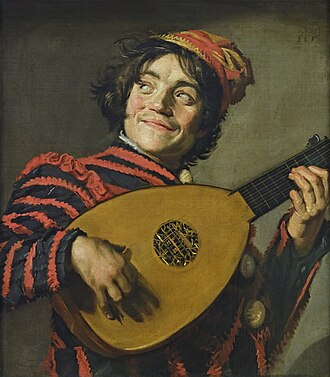 Der Lautenspieler - Frans Hals (1623)
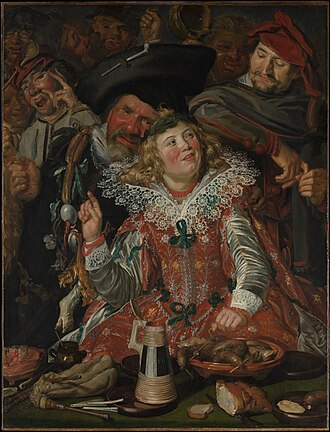 Lustige Gesellschaft - Frans Hals (1610s)
Werke verwandter Künstler
 Die Nachtwache - Rembrandt van Rijn (1642)
 Selbstbildnis - Rembrandt van Rijn (1659)
 Das Mädchen mit dem Perlenohrgehänge - Johannes Vermeer (1665)
 Dienstmagd mit Milchkrug - Johannes Vermeer (c. 1658)
 Fest des hl.Nikolaus - Jan Steen (1660s)
 Mädchen mit Austern. - Jan Steen (1658)
 Die Mühle von Wijk - Jacob van Ruisdael (1670)
 Judenfriedhof - Jacob van Ruisdael (1650s)
 Hof eines Hauses in Delft - Pieter de Hooch (1658)
 A Woman Peeling Apples - Pieter de Hooch (1663)