Willem van Heythuysen
Frans Hals · 1625
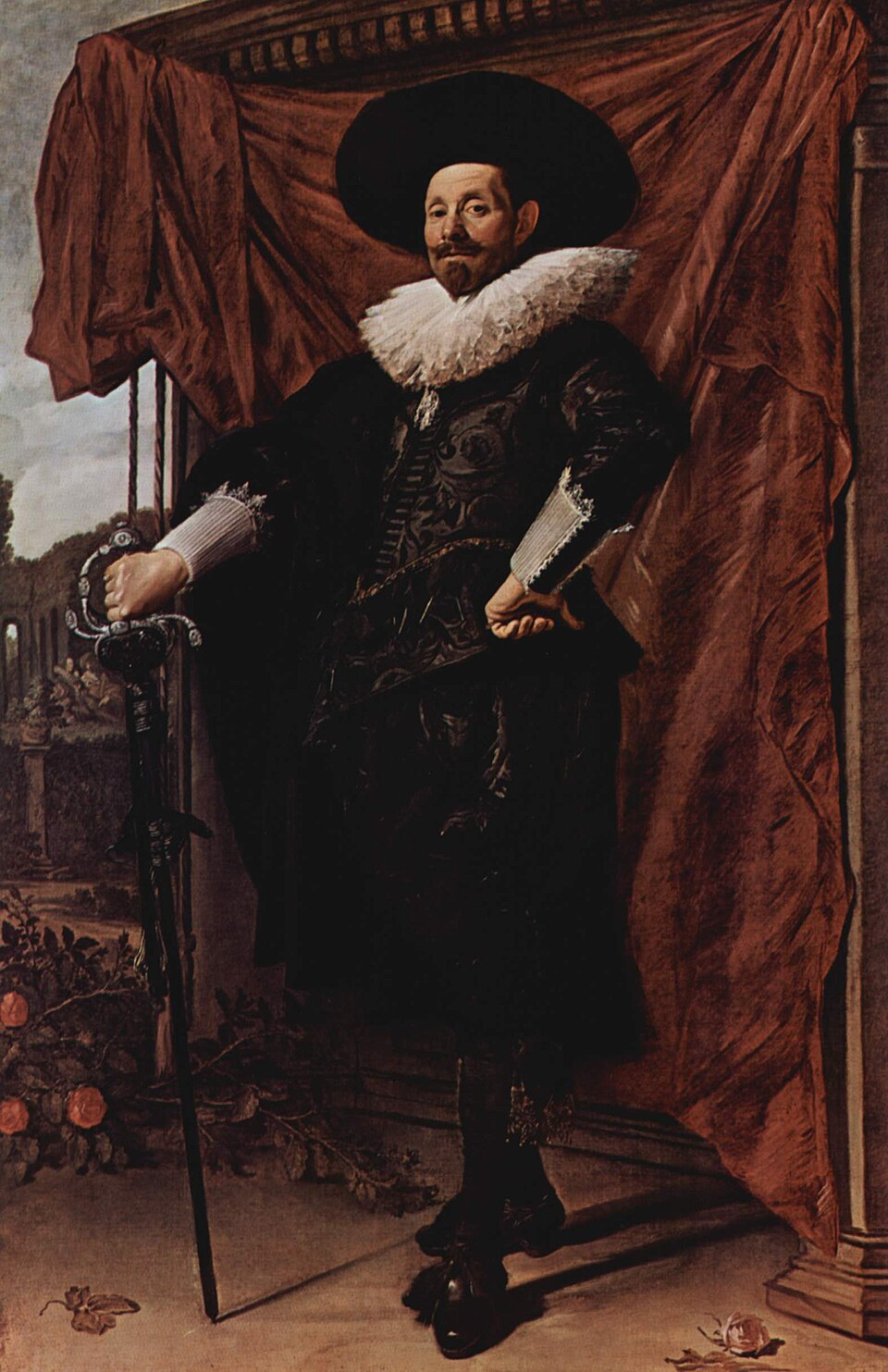
A Haarlem cloth merchant stands life-size, hand on hip, a rapier planted at his feet, roses scattered on the ground. Frans Hals gave a man of trade the pose of a hero, and painters have borrowed that swagger ever since.
The story behind the painting
Willem van Heythuysen was a cloth merchant in Haarlem, and Frans Hals painted him at full length in a theatrical pose with a rapier. The picture is now in the Alte Pinakothek in Munich, part of the Bavarian State Painting Collections. Its date has moved: Hofstede de Groot placed it around 1635, but in the catalogue of the 1989 international Frans Hals exhibition Seymour Slive argued that it was painted ten years earlier. Wikipedia gives 1625 to 1630, and Wikidata gives 1625.
What to look for
The canvas is about 204 by 134 cm, and the man is life-size. He stands with his left foot forward, body turned three-quarters to the left, his head almost facing us and his eyes on ours. His left hand presses against his side; his right hand grips the hilt of a sword whose point rests on the ground. He wears a broad-brimmed hat, a lace-trimmed white ruff and a richly trimmed dark blue costume with wide lace cuffs. Behind him, lilac-brown drapery hangs on fantastic architecture, a French garden with a couple opens at the left, and roses lie at his feet.
Meaning and intent
The art historian Claus Grimm noticed that the drapery looks like the iridescent dress in Hals's portrait of Aletta Hannemans, and he placed the two in the same year. Since Heythuysen was a cloth merchant, both fabrics may have come from workshops under his control, so the portrait may show the source of his wealth as well as a romantic vision of himself as a bachelor. He faces left, which tells us this is not a wedding pendant, because Hals always placed the wife on the right facing left. Heythuysen never married and died a bachelor.
Legacy
The painting was first recorded by Adriaan Loosjes, who mentioned it in his 1789 tribute to Hals, in the collection of Gerrit Willem van Oosten de Bruyn. Ernst Wilhelm Moes later included it in his Iconographia Batavia. It inspired others beyond Loosjes's poetry. Judith Leyster made a copy in her own time but swapped the rapier for a walking stick. Several people have since posed in the same stance in costume, and most recently Kehinde Wiley painted a young black man in exactly this pose.
Schon gewusst?
- Shows the Haarlem cloth merchant Willem van Heythuysen.
- Dated 1625 by Slive, earlier thought to be about 1635.
- Now in the Alte Pinakothek, Munich.
- Judith Leyster copied it with a walking stick instead of a sword.
Über den Künstler
Frans Hals (1591-1666)
Porträt · Mann · Stehen · Hut · Bayerische Staatsgemäldesammlungen · Schwert · Schnurrbart · Halskrause
Mehr von Frans Hals
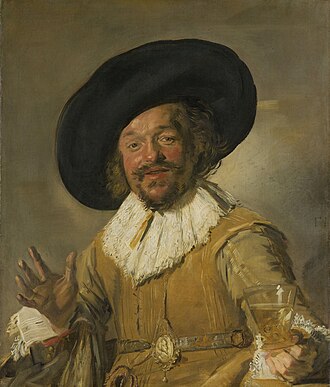 Ein Schütze einen Berkemeyer haltend, bekannt als „Der fröhliche Trinker" - Frans Hals (1620s)
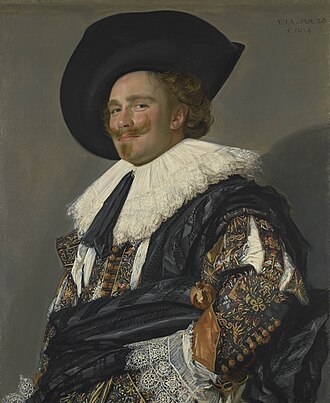 Der lachende Kavalier - Frans Hals (1624)
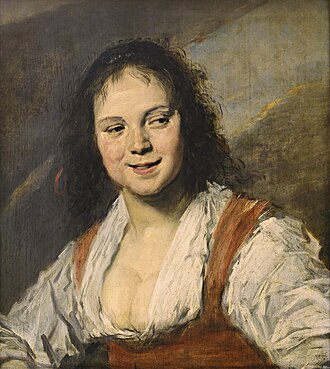 La Bohémienne - Frans Hals (1628)
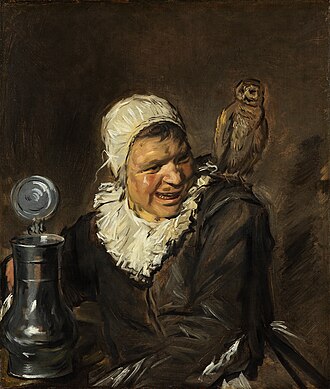 Malle Babbe - Frans Hals (1640s)
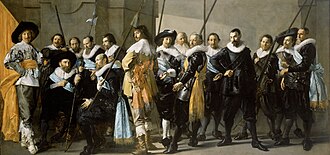 Schützen XI. Bezirks unter Leitung Kapitän Reynier Reael gen. ‘Magere compagnie’ - Frans Hals (1630s)
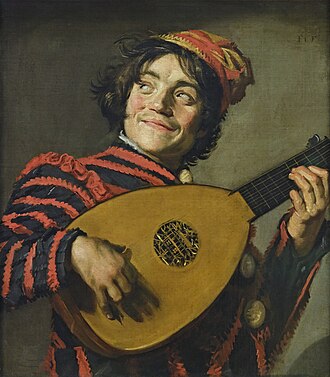 Der Lautenspieler - Frans Hals (1623)
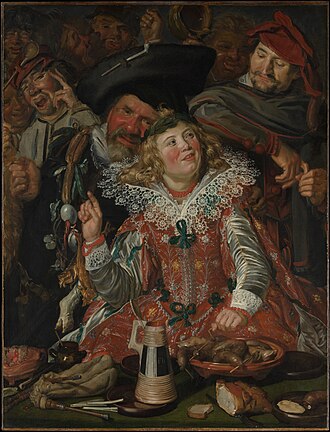 Lustige Gesellschaft - Frans Hals (1610s)
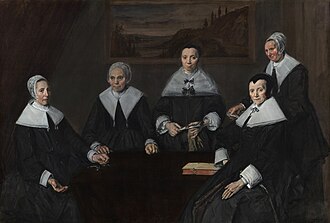 Regentinnen des Altenmännerhauses in Haarlem - Frans Hals (1664)
Werke verwandter Künstler
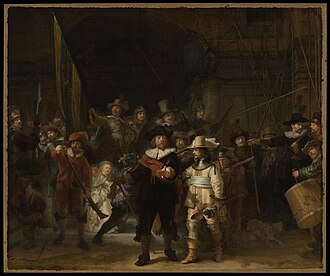 Die Nachtwache - Rembrandt van Rijn (1642)
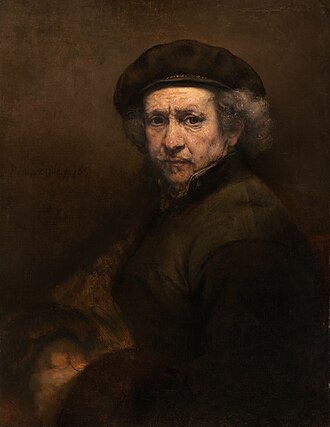 Selbstbildnis - Rembrandt van Rijn (1659)
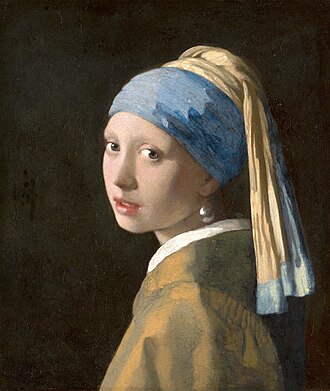 Das Mädchen mit dem Perlenohrgehänge - Johannes Vermeer (1665)
 Dienstmagd mit Milchkrug - Johannes Vermeer (c. 1658)