Schützen XI. Bezirks unter Leitung Kapitän Reynier Reael gen. ‘Magere compagnie’
Frans Hals · 1630s
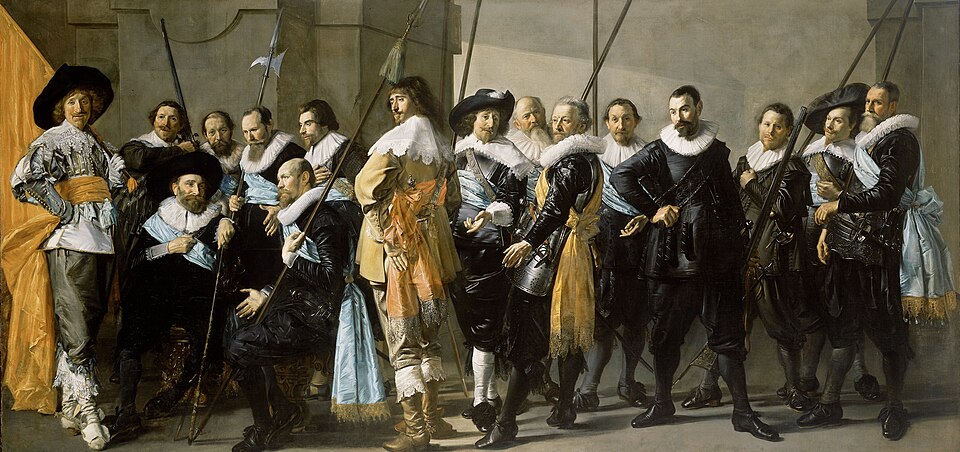
A standard-bearer in pearl grey, ribbons of soft blue, a sash of orange. Van Gogh wrote that he had seldom seen a more divinely beautiful figure. Frans Hals began this Amsterdam group portrait, then refused to finish it.
The story behind the painting
The Meagre Company, or The Company of Captain Reinier Reael and Lieutenant Cornelis Michielsz Blaeuw, is the only militia group portrait Frans Hals painted outside Haarlem. He was commissioned in 1633, after the success of his Officers of the St Adrian Militia Company. But Hals disliked commuting to Amsterdam and, unlike his earlier group portraits, could not deliver on time. In 1636 he was called to Amsterdam to finish it and refused, offering instead to receive the sitters in his Haarlem studio for short sittings. The offer was turned down, and Pieter Codde was hired to complete the work.
What to look for
Begin at the far left with the flag bearer, Nicolaes van Bambeeck, painted flamboyantly from hat to boots in a cut-sleeve jacket with lace, holding a flag the colour of his sash. Seated beside him are Captain Reael with hat and commander's staff, and Lieutenant Blaeuw, balding and holding a spontoon. The light falls from the left, where the most important figures sit. The men are shown full length, in the Amsterdam manner, rather than cut off at the knee as was usual in Haarlem. The further right you look, the less the painting resembles Hals's earlier group.
Meaning and intent
Each sitter paid for his own portrait, so Hals probably started with the most important men to sell canvas space to others. The flamboyant full-length flag bearer may have been meant to prove he could work in the Amsterdam style. Visiting the new Rijksmuseum in 1885, Vincent van Gogh wrote to his brother Theo that this figure was painted in a single pearl grey, enlivened with blue, orange and white, the national colours of the time, and that the painting alone made the trip to Amsterdam worthwhile, especially for a colourist.
Legacy
The painting once hung in the archers' hall on the Singel, the Voetboogdoelen, until the building was demolished for the University of Amsterdam library. It belongs to the Amsterdam Museum and is on permanent loan to the Rijksmuseum, where it hangs in the Gallery of Honour across from Van der Helst's militia portrait of 1639 and near Rembrandt's Night Watch of 1642. Viewers noticed how much fatter later officers looked, which gave this one its nickname; it seems first used by the 18th-century writer Jan van Dijk. Codde never received another militia commission.
Schon gewusst?
- The only militia group portrait Hals painted outside Haarlem, commissioned 1633.
- Pieter Codde finished it after Hals refused to return in 1636.
- Van Gogh praised the grey, blue and orange standard-bearer in 1885.
- Owned by the Amsterdam Museum, on loan to the Rijksmuseum.
Über den Künstler
Frans Hals (1591-1666)
Rijksmuseum · Amsterdam-Museum · schutterstuk
Mehr von Frans Hals
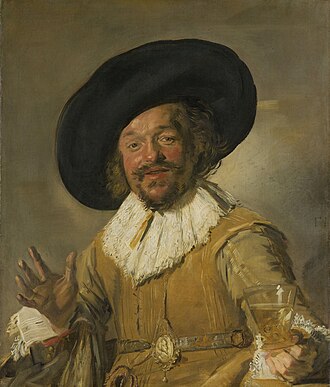 Ein Schütze einen Berkemeyer haltend, bekannt als „Der fröhliche Trinker" - Frans Hals (1620s)
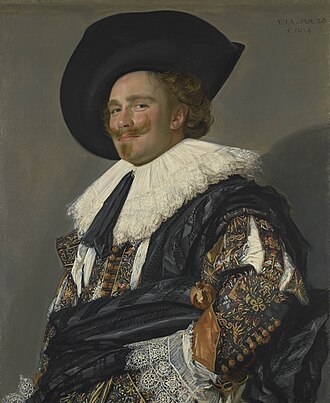 Der lachende Kavalier - Frans Hals (1624)
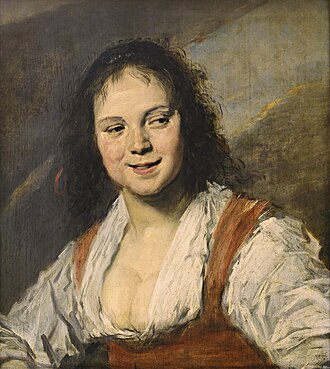 La Bohémienne - Frans Hals (1628)
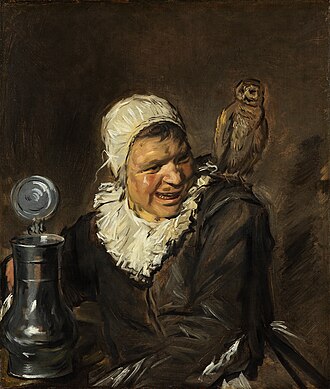 Malle Babbe - Frans Hals (1640s)
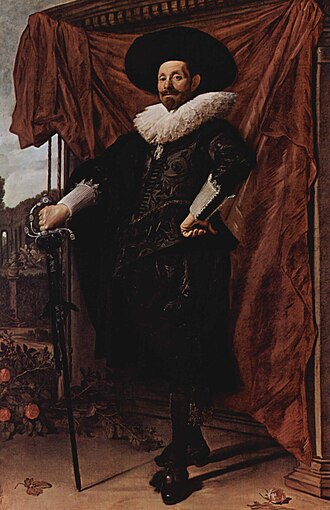 Willem van Heythuysen - Frans Hals (1625)
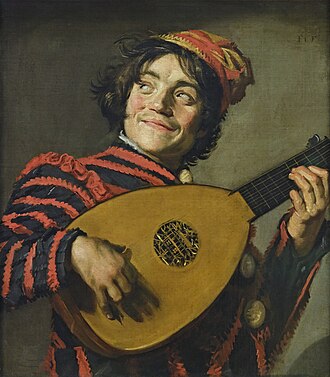 Der Lautenspieler - Frans Hals (1623)
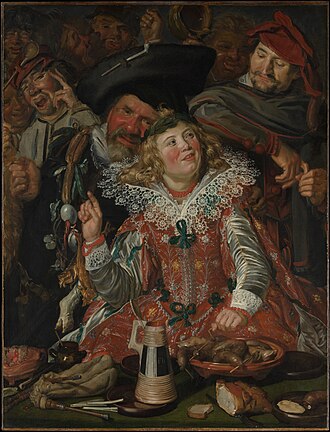 Lustige Gesellschaft - Frans Hals (1610s)
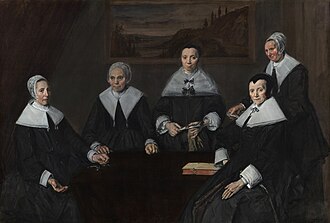 Regentinnen des Altenmännerhauses in Haarlem - Frans Hals (1664)
Werke verwandter Künstler
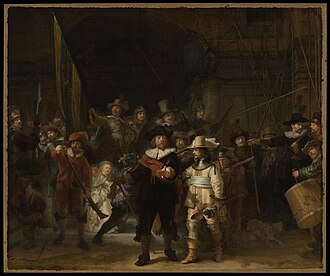 Die Nachtwache - Rembrandt van Rijn (1642)
 Selbstbildnis - Rembrandt van Rijn (1659)
 Das Mädchen mit dem Perlenohrgehänge - Johannes Vermeer (1665)
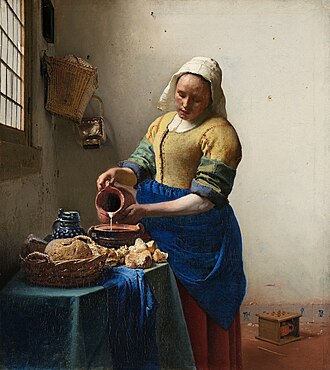 Dienstmagd mit Milchkrug - Johannes Vermeer (c. 1658)