Heiliger Markus
Frans Hals · 1625
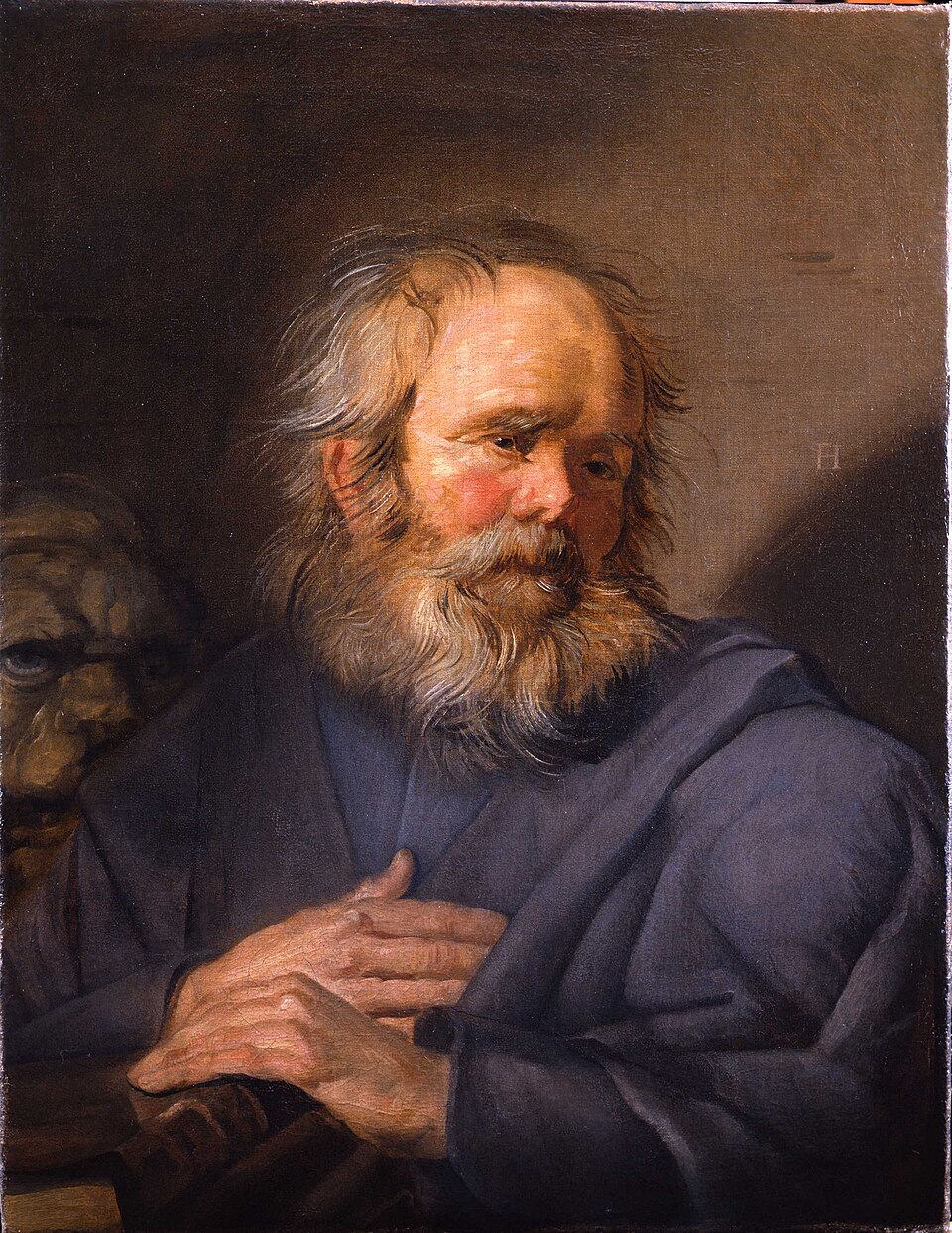
For two centuries this old evangelist hid under a painted collar and another painter's name. Cleaned, he became Frans Hals's St Mark again, a lion's head at his elbow and his books under his arm.
The story behind the painting
Frans Hals painted St Mark in 1625 as one of four Evangelists: Luke, Matthew, Mark and John. Art historians Seymour Slive and Klaus Grimm agree that the series dates from the mid-1620s. Nothing is known about who commissioned it. The small size suggests a private chapel, perhaps the hidden Catholic church in Haarlem or a private house, rather than a large church. Hals may even have painted them for himself, as Hendrick ter Brugghen did with a similar cycle. The canvases stayed in Holland until the 18th century.
What to look for
Mark appears in the traditional way, a grey-haired old man in a rough cloak, leaning on a pile of books, the life of Christ he wrote. At his elbow shows the head of a lion, his indispensable attribute. The figure is cut at the waist and the canvas is small, about 68 by 52 cm. The room is barely marked, so all attention falls on the sharply characterised face and hands. The warm colours, with brown dominating, match the palette of the Dutch Golden Age.
Meaning and intent
With so little space around him, Mark becomes a portrait of a person rather than an icon of a saint. The pile of books carries the weight of his own words, and the lion at his elbow quietly announces who he is. The intimate format, meant for private devotion, invites the viewer close, to meet the evangelist face to face as one would an old man in a Haarlem room.
Legacy
Hofstede de Groot documented the four evangelists in 1910 from sales of 1760 and 1771, and at the time they were lost. This one was rediscovered in the 1970s, when Claus Grimm identified it. It then had a collar painted over the beard and robe and was attributed to Luca Giordano. Slive's 1989 catalogue printed a photograph of the before state to show why it had been lost so long. In 2013 Alisher Usmanov bought it from the London dealer Colnaghi and donated it to the Pushkin Museum in Moscow, where it hangs.
Schon gewusst?
- Painted in 1625, one of Hals's Four Evangelists.
- Once overpainted with a collar and attributed to Luca Giordano.
- Identified by Claus Grimm in the 1970s.
- Donated to the Pushkin Museum, Moscow, in 2013.
Über den Künstler
Frans Hals (1591-1666)
religiöse Kunst · Mann · Puschkin-Museum · Markus
Mehr von Frans Hals
 Ein Schütze einen Berkemeyer haltend, bekannt als „Der fröhliche Trinker" - Frans Hals (1620s)
 Der lachende Kavalier - Frans Hals (1624)
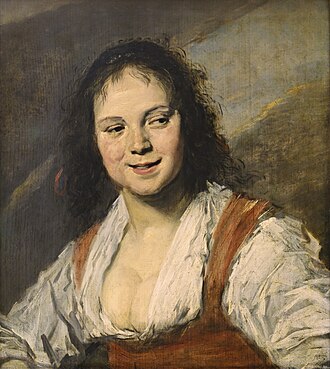 La Bohémienne - Frans Hals (1628)
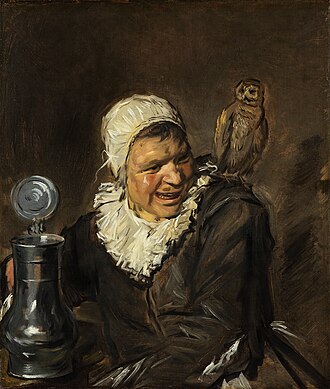 Malle Babbe - Frans Hals (1640s)
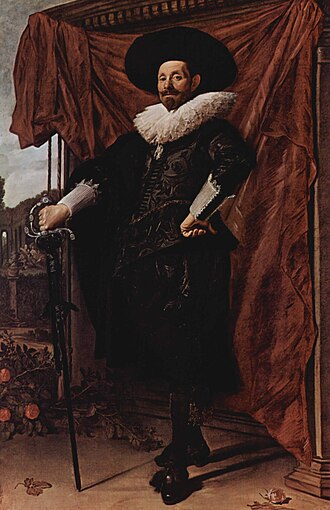 Willem van Heythuysen - Frans Hals (1625)
 Schützen XI. Bezirks unter Leitung Kapitän Reynier Reael gen. ‘Magere compagnie’ - Frans Hals (1630s)
 Der Lautenspieler - Frans Hals (1623)
 Lustige Gesellschaft - Frans Hals (1610s)
Werke verwandter Künstler
 Die Nachtwache - Rembrandt van Rijn (1642)
 Selbstbildnis - Rembrandt van Rijn (1659)
 Das Mädchen mit dem Perlenohrgehänge - Johannes Vermeer (1665)
 Dienstmagd mit Milchkrug - Johannes Vermeer (c. 1658)
 Fest des hl.Nikolaus - Jan Steen (1660s)
 Mädchen mit Austern. - Jan Steen (1658)
 Die Mühle von Wijk - Jacob van Ruisdael (1670)
 Judenfriedhof - Jacob van Ruisdael (1650s)
 Hof eines Hauses in Delft - Pieter de Hooch (1658)
 A Woman Peeling Apples - Pieter de Hooch (1663)