Hirtin
Jean-François Millet · 1863
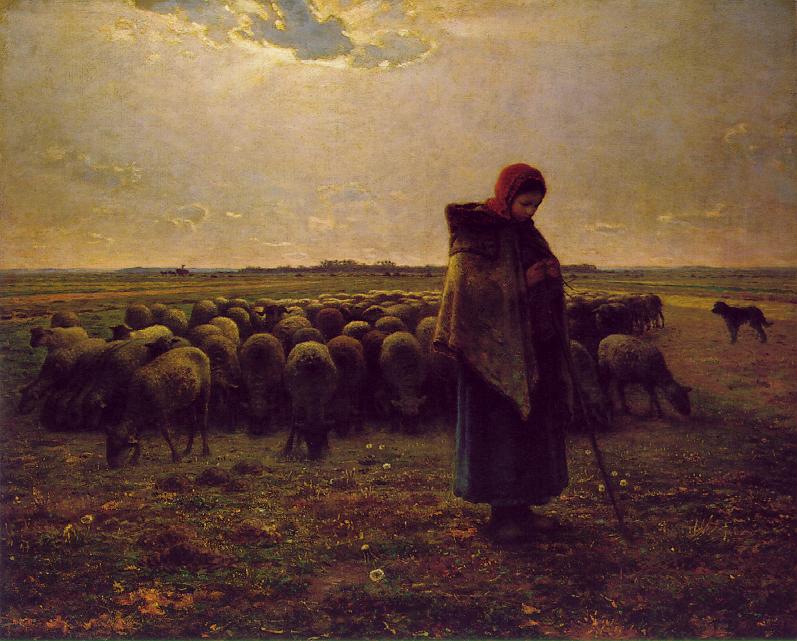
A young shepherdess stands quietly knitting while her sheep graze behind her in the golden light of evening. Millet carried this image in his mind for years, and at the Salon of 1864 Paris called it a masterpiece.
The story behind the painting
Millet spoke of wanting to paint a shepherdess with her flock as early as 1862. His friend Alfred Sensier said the theme obsessed the artist's mind until he finally showed the work at the Paris Salon of 1864. Wikipedia dates it to about 1863, and Wikidata gives 1863. Perhaps, Wikipedia suggests, the model was the painter's own daughter. Millet chose not a scene of hard field labour but a calm image of a girl alone with her flock, a subject he returned to in his mind for a long time.
What to look for
The canvas, 81 by 101 cm, places the girl just right of centre, shown three-quarter length, intent on her knitting needles. She wears modest clothes, a woolly hat and a red hood. Behind her the flock grazes in a meadow dotted with flowers, and at the far right a black dog keeps watch, a lively counterweight to the compact mass of sheep. Look at the light: clouds hide the sun and flood the scene with diffuse gold, the backlight catching the girl's blouse, the grass and above all the woolly backs of the sheep, which shine brightest of all. Paths and trails lead the eye toward the flat horizon.
Meaning and intent
The mood is calm and harmonious, yet melancholic. The colour plays on blue, red and gold, and Wikipedia notes that Millet's study of backlight here anticipates the future directions of Impressionism by almost a decade. The girl is not caught in heavy labour but in a still, patient moment, one with the flock and the land around her. The dog, the sheep and the girl seem bound together by the same warm light, and the wide, quiet plain stretches out around them into the distance.
Legacy
At the Salon of 1864 the painting was a great success, called a refined canvas by some and a masterpiece by others. It was especially loved by the Paris middle classes, who, according to Wikipedia, preferred idealised scenes of rural life to the hard reality of peasants' lives. The state tried to buy it, but Millet sold it instead to the collector Paul Tesse. In 1909 it entered the Louvre through the legacy of Alfred Chauchard, and in 1986 it moved to the Musée d'Orsay in Paris.
Schon gewusst?
- Millet wanted to paint this subject from 1862.
- Shown at the Paris Salon of 1864 to great success.
- Entered the Louvre in 1909 through the Chauchard legacy.
- In the Musée d'Orsay since 1986.
Wikipedia · Wikidata · Wikipedia
Frau · Genreszene · Musée d’Orsay · ländlicher Raum · Hausschaf · Schäfer
Mehr von Jean-François Millet
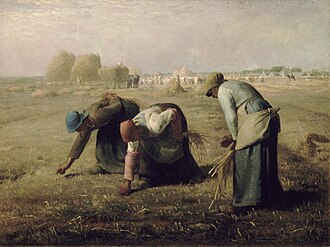 Die Ährenleserinnen - Jean-François Millet (1857)
.jpg) Angelusgebet - Jean-François Millet (1858)
Angelusgebet - Jean-François Millet (1858).jpg) The Winnower - Jean-François Millet (1848)
The Winnower - Jean-François Millet (1848)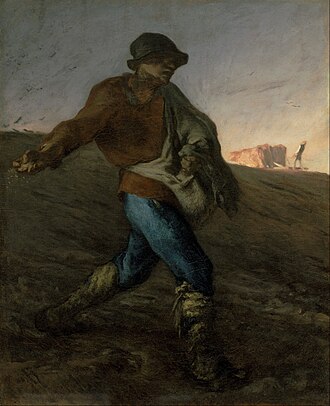 Sämann - Jean-François Millet (1850)
.jpg) Mann mit Hacke - Jean-François Millet (1860s)
Mann mit Hacke - Jean-François Millet (1860s)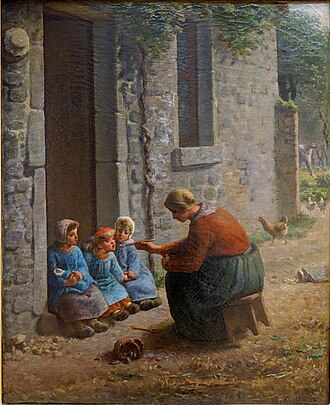 The Beaked - Jean-François Millet (1860)
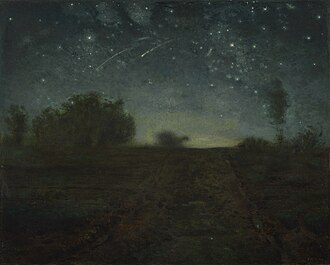 Starry Night - Jean-François Millet (1850s)
Werke verwandter Künstler
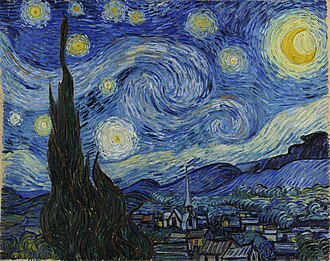 Die Sternennacht - Vincent van Gogh (1889)
.jpg) Caféterrasse am Abend - Vincent van Gogh (1888)
Caféterrasse am Abend - Vincent van Gogh (1888)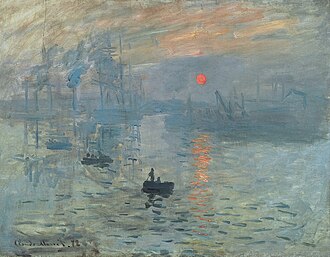 Impression, Sonnenaufgang - Claude Monet (1872)
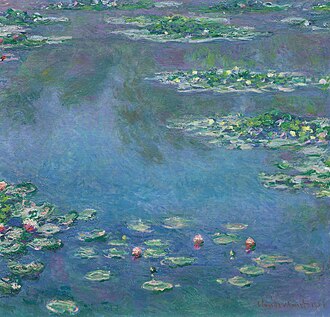 Seerosen - Claude Monet (1906)