Saint Thomas
Diego Velázquez · 1618
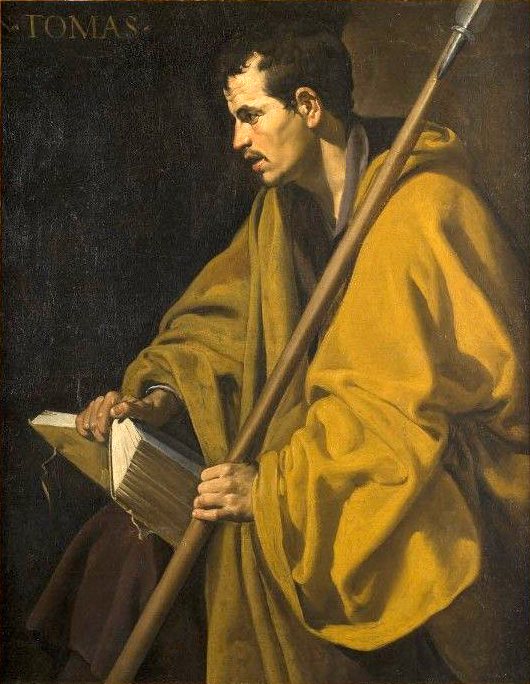
A young man in profile, a book in one hand and a pike on his shoulder, lit hard from the left. For decades this Saint Thomas hung in Orléans as a Murillo, until a scholar recognised the hand of the young Velázquez.
The story behind the painting
Velázquez painted Saint Thomas in Seville between 1618 and 1620, in his early period; Wikidata gives 1618. Since at least 1843 it has been in the museum in Orléans, where it was attributed to Murillo. In 1925 Manuel Gómez-Moreno declared it a Velázquez by comparing it with the Saint Paul in Barcelona, which has a similar inscription at the top. Its earlier provenance is unknown, but Antonio Ponz in 1772 described a series of apostles by Velázquez in a room beside the prior's cell at the Carthusian monastery of Las Cuevas in Seville. With Democritus in Rouen, it is one of only two works by Velázquez in French museums.
What to look for
The saint is seen in profile, wrapped in a heavy orange-brown cloak with deep folds. Julián Gállego praised the hands, studied from life: the right holds an open book bound in parchment, the left a pike resting on the shoulder. The model is the same young man as in Saint John on Patmos: a budding beard and strong cheekbones, here perhaps sharpened to stress an ascetic character. Intense light from the left has led many to speak of Caravaggesque naturalism and a Tenebrist lighting. At the top, the inscription S. TOMAS names him.
Meaning and intent
Thomas is usually shown with a set square, so the inscription is what identifies him. The pike may echo some of El Greco's apostles, or the lance of Longinus, recalling his doubts about the Resurrection until he put his hand into Christ's side, or the weapon of his martyrdom, since Isidore of Seville says he died by a lance. Velázquez borrows from El Greco the idea of the apostle series, young and vigorous, without halos, in a realism close to Ribera and Caravaggio. He shows a simple man with flaws raised to holiness, a model for the pious viewer.
Legacy
The painting is an essential marker in the artist's development and shows his many sources of inspiration. Its profile view makes it harder to pair with the near frontal Saint Paul in Barcelona, so whether they belong to one series remains open. The circumstances of the commission and its original destination are still unknown. Its legibility had been spoiled by overpaint and dirty varnish, and in 2018 it was restored by Cinzia Pasquali, so visitors in Orléans can now see the young apostle as clearly as Velázquez first lit him.
Schon gewusst?
- Painted in Seville between 1618 and 1620.
- Attributed to Murillo until Gómez-Moreno named Velázquez in 1925.
- One of two Velázquez paintings in French museums.
- Restored by Cinzia Pasquali in 2018.
Über den Künstler
Diego Velázquez (1599-1660)
Mehr von Diego Velázquez
 Las Meninas - Diego Velázquez (1656)
 Die Übergabe von Breda - Diego Velázquez (1635)
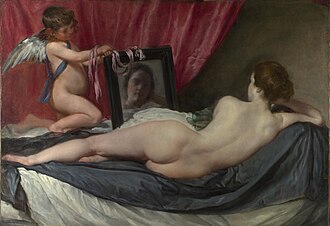 Venus vor dem Spiegel - Diego Velázquez (1644)
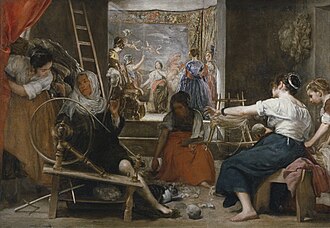 Die Spinnerinnen - Diego Velázquez
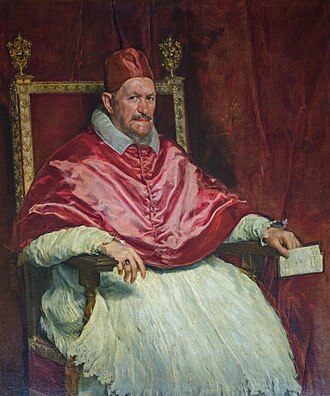 Bildnis Innozenz X. - Diego Velázquez
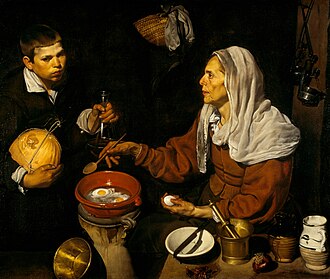 Eine alte Frau brät Eier - Diego Velázquez (1618)
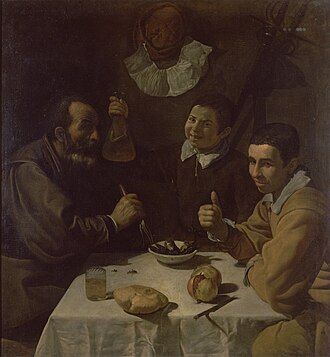 Drei Männer am Tisch - Diego Velázquez (1617)
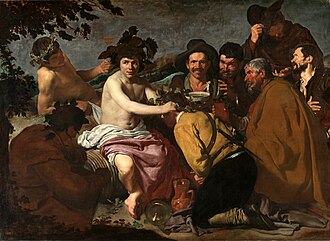 Der Triumph des Bacchus - Diego Velázquez (1628)
Werke verwandter Künstler
 Das Abendmahl in Emmaus - Caravaggio (1601)
 Die Berufung des Hl. Matthäus - Caravaggio (1609)
 Saint Francis in Meditation - Francisco de Zurbarán (1639)
 The Immaculate Conception - Francisco de Zurbarán (1661)
 Dreifachporträt von Karl I. - Anthony van Dyck (1635)
 Karl I mit M. de St. Antoine - Anthony van Dyck (1636)
 Die Aufrichtung des Kreuzes - Peter Paul Rubens (1609)
 Der Raub der Töchter des Leukippos - Peter Paul Rubens (1618)
 Die Nachtwache - Rembrandt van Rijn (1642)
 Selbstbildnis - Rembrandt van Rijn (1659)
 Ein Schütze einen Berkemeyer haltend, bekannt als „Der fröhliche Trinker" - Frans Hals (1620s)
 Der lachende Kavalier - Frans Hals (1624)