Bildnis Innozenz X.
.jpg)
Many artists and critics call it the finest portrait ever painted. Legend says that when the pope saw it, he cried out: 'It's too true!'
The story behind the painting
Velázquez, court painter to the King of Spain, painted this portrait during his second journey to Italy, between 1649 and 1651. It is usually dated to about 1650; the pope's light linen vestments suggest a summer sitting, most likely that year. His sitter was Giovanni Battista Pamphilj, who reigned as Pope Innocent X from 1644 to 1655. Two stories explain how the commission came about. In one, the wary pope asked for proof of the famous Spaniard's skill, and Velázquez answered by painting his own servant, Juan de Pareja. In the other, which experts find more convincing, the pope agreed because Velázquez had already painted members of his inner court with great success, including the papal barber. Either way, the result became a turning point in the painter's career.
What to look for
Start with the face: an aging, highly intelligent, shrewd man, observed without flattery. The eyes search; the art dealer René Gimpel, writing in 1923, called the face a whirlpool of flesh, blood and life. Then let your gaze widen into the reds. The pope's upper cape, his head-dress and the heavy curtains behind him are all variations on a deep, rich red, set against the pale light linen of his vestments below. It is a symphony played almost in a single colour, yet never monotonous. Finally, look down at his hands. In one he holds a folded paper, and on it Velázquez placed his own signature, though the date written there can no longer be read. The canvas measures about 141 by 119 centimetres.
Meaning and intent
What makes this portrait so arresting is its honesty. Velázquez painted the most powerful man in the Catholic world not as an idealised saintly figure, but as a living, calculating human being. Legend has it that the pope, seeing the finished work, exclaimed in Italian that it was too true, while still acknowledging its extraordinary quality. Experts doubt the story, yet it captures something real about the picture: the sense that the painter saw through ceremony to character. The red that floods the canvas speaks of papal dignity, but it also seems to warm the flesh of the face into vivid life. Power and vulnerability, office and individual, sit together in one unblinking image, and viewers have argued about the balance ever since.
Legacy
The Pamphilj family kept the portrait private, and for much of the 17th and 18th centuries it was known only to a few connoisseurs. It still hangs in the family's Galleria Doria Pamphilj in Rome; a smaller version is in the Metropolitan Museum of Art in New York, and a study is at Apsley House in London. The French historian Hippolyte Taine called it the masterpiece among all portraits. In the 20th century Francis Bacon turned it into an obsession, producing more than forty-five distorted variants, the so-called Screaming Popes, including Study after Velázquez's Portrait of Pope Innocent X of 1953, while deliberately avoiding seeing the original. The Peruvian painter Herman Braun-Vega also referred to it in at least a dozen works.
Schon gewusst?
- Velázquez signed the portrait on the paper the pope holds, but the date written there is unreadable.
- Before sitting, the pope was reportedly shown Velázquez's portrait of his servant Juan de Pareja, though experts debate this story.
- Francis Bacon made more than forty-five variants of this portrait yet avoided seeing the original.
- A smaller version hangs in the Metropolitan Museum of Art, and a study is at Apsley House in London.
Über den Künstler
Diego Velázquez (1599-1660)
Mehr von Diego Velázquez
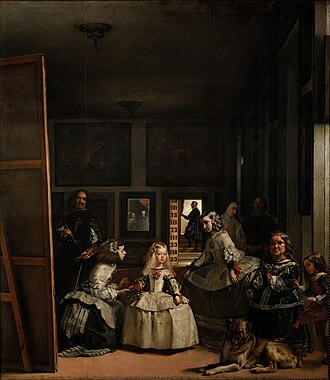 Las Meninas - Diego Velázquez (1656)
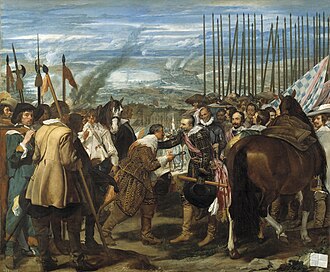 Die Übergabe von Breda - Diego Velázquez (1635)
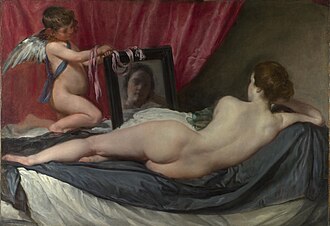 Venus vor dem Spiegel - Diego Velázquez (1644)
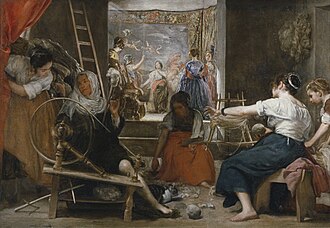 Die Spinnerinnen - Diego Velázquez
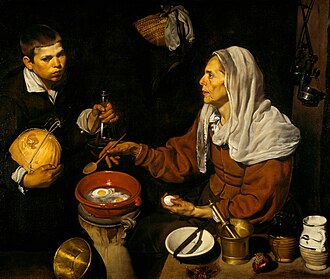 Eine alte Frau brät Eier - Diego Velázquez (1618)
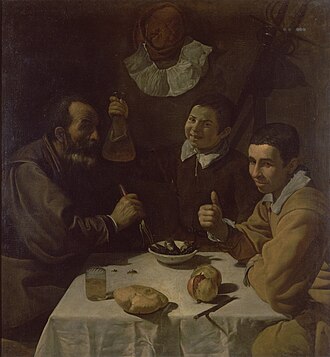 Drei Männer am Tisch - Diego Velázquez (1617)
.jpg) Der Triumph des Bacchus - Diego Velázquez (1628)
Der Triumph des Bacchus - Diego Velázquez (1628).jpg) Apollo in der Schmiede Vulkans - Diego Velázquez (1630)
Apollo in der Schmiede Vulkans - Diego Velázquez (1630)
Werke verwandter Künstler
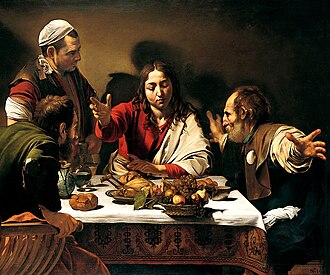 Das Abendmahl in Emmaus - Caravaggio (1601)
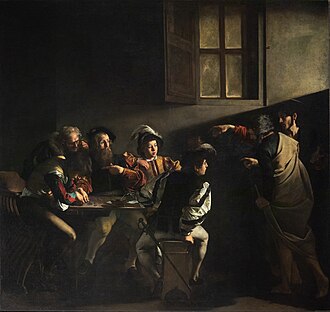 Die Berufung des Hl. Matthäus - Caravaggio (1609)
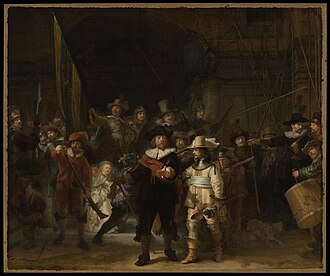 Die Nachtwache - Rembrandt van Rijn (1642)
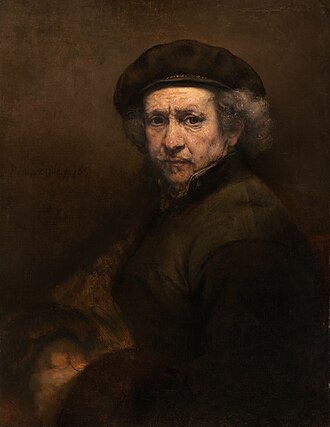 Selbstbildnis - Rembrandt van Rijn (1659)
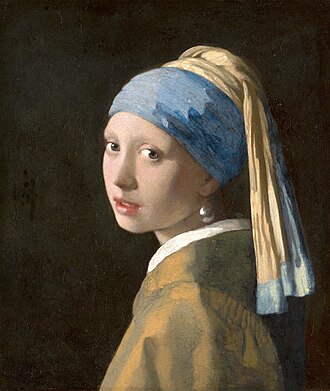 Das Mädchen mit dem Perlenohrgehänge - Johannes Vermeer (1665)
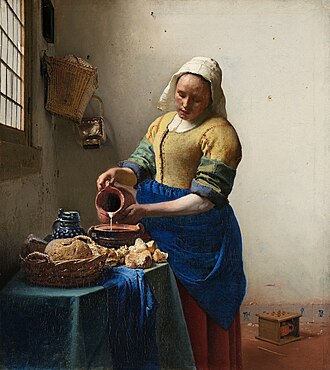 Dienstmagd mit Milchkrug - Johannes Vermeer (c. 1658)