Petrus und Paulus
El Greco · 1595
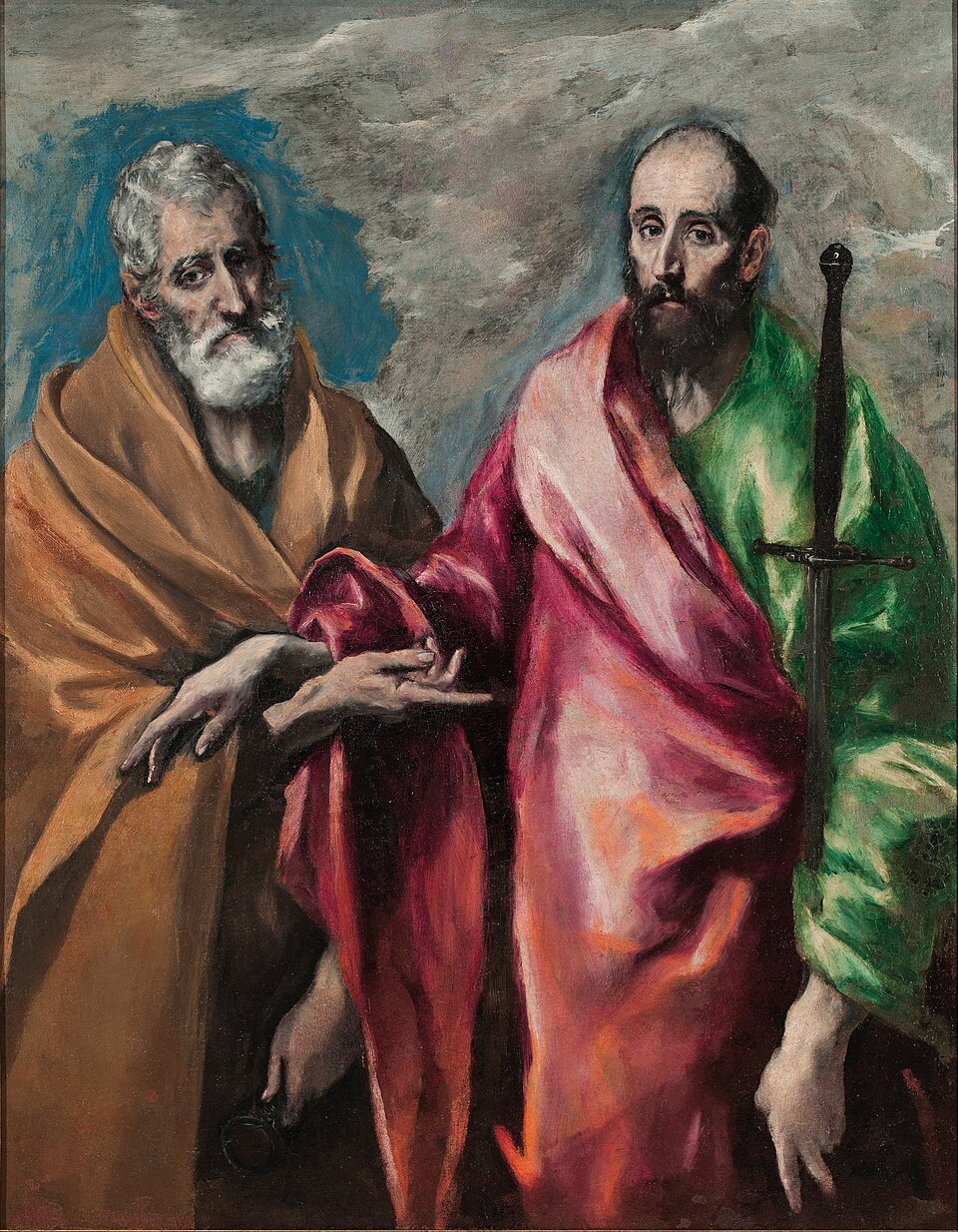
Two apostles stand side by side, their hands crossing without touching. El Greco painted Peter and Paul in Toledo as two men caught in a quiet disagreement, under a sudden opening of blue sky.
The story behind the painting
El Greco completed this painting between 1590 and 1600, while living in Toledo, and Wikidata gives 1595, in the middle of that range. He was returning to a theme he had painted before, in a work now in the Hermitage. Born around 1541 in what is now Heraklion, Crete, Doménikos Theotokópoulos studied under Titian in Venice in the 1560s and settled in Toledo in 1577, where he died in April 1614. His nickname is Italian and means the Greek.
What to look for
Peter stands on the left, older, holding the keys of heaven in his left hand. Paul stands on the right, holding a sword. Behind their heads, El Greco opened an intense patch of blue in the clouds, so that the sky itself becomes a kind of halo. Watch the hands: they cross in front of the two figures but never actually touch. Peter gestures toward Paul. The museum's guide speaks of a painting enriched by a modern use of colour, the fruit of the lessons the artist had learned in Venice.
Meaning and intent
The keys recall Jesus's words to Peter in the Gospel of Matthew: on this rock I will build my church, and I will give you the keys of the kingdom of heaven. Paul's sword is the symbol of his martyrdom; born Jewish, he was converted after the risen Jesus appeared to him on the road. The crossed hands that do not touch suggest a possible disagreement between the two founders, and Peter's gesture toward Paul suggests a sign of surrender. El Greco turned theology into a moment between two people.
Legacy
The Museu Nacional d'Art de Catalunya bought the painting in 1932 as part of the collection of the Catalan politician Lluís Plandiura, one of the most important in Spain at the time, with almost 2000 works including paintings, sculptures and archaeological pieces. It remains on display in Barcelona. El Greco himself is today seen as a major influence on Cubism and Expressionism and on artists such as Picasso and Cézanne, and the bold colour and expressive hands in this picture help explain why.
Schon gewusst?
- Painted in Toledo between 1590 and 1600; Wikidata gives 1595.
- An earlier version of the theme is in the Hermitage.
- Peter holds the keys, Paul holds a sword.
- Bought by the Barcelona museum in 1932 with the Plandiura collection.
Über den Künstler
El Greco (1541-1614)
religiöse Kunst · Mann · Petrus · Paulus von Tarsus · Museu Nacional d’Art de Catalunya
Mehr von El Greco
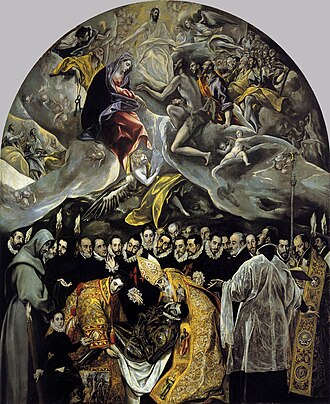 Begräbnis des Grafen von Orgaz - El Greco (1586)
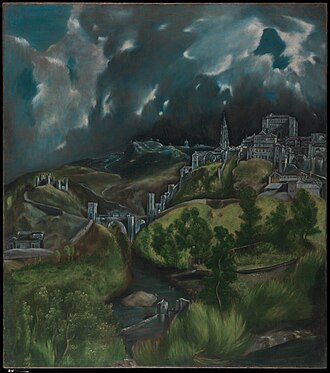 Ansicht von Toledo - El Greco (1596)
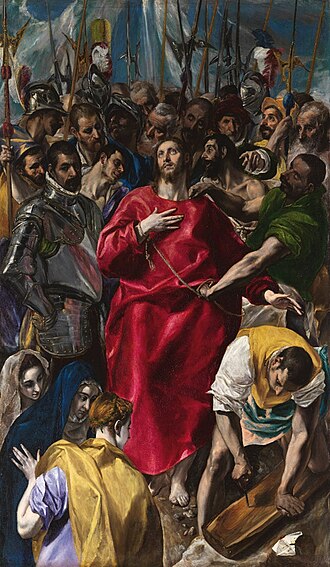 Die Entkleidung Christi - El Greco (1570s)
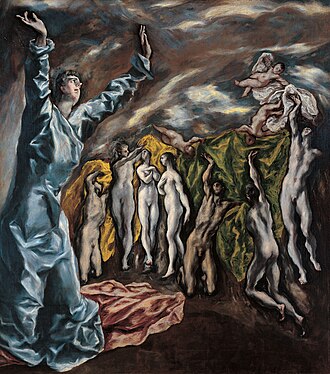 Die Öffnung des fünften Siegels - El Greco (1610)
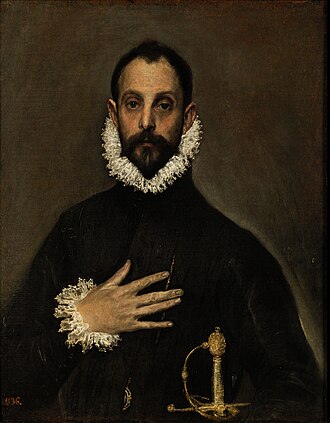 Bildnis eines Edelmanns mit der Hand auf der Brust - El Greco (1580)
%20-%20Laoco%C3%B6n%20-%20Google%20Art%20Project.jpg) Laokoon - El Greco (1610s)
Laokoon - El Greco (1610s)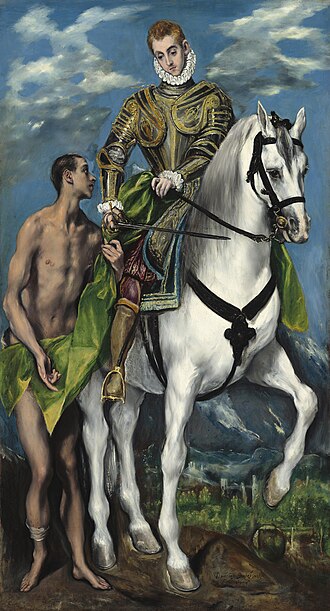 Der hl. Martin und der Bettler - El Greco (1597)
.jpg) Anbetung der Hirten - El Greco (1612)
Anbetung der Hirten - El Greco (1612)
Werke verwandter Künstler
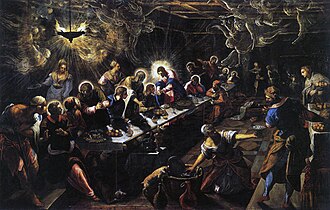 Das letzte Abendmahl - Jacopo Tintoretto (1563)
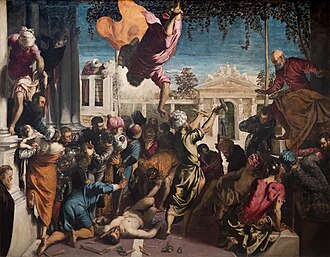 Der heilige Markus befreit den gefesselten Sklaven - Jacopo Tintoretto (1540s)
.jpg) Venus von Urbino - Titian (1538)
Venus von Urbino - Titian (1538)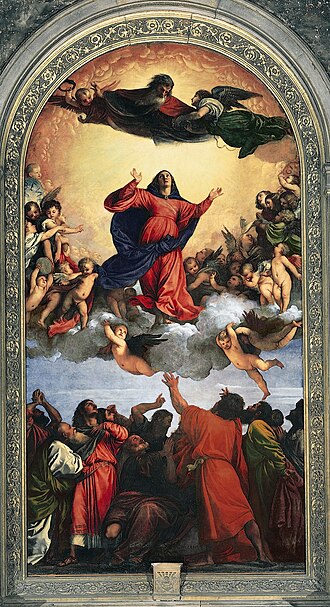 Mariä Himmelfahrt - Titian (1510s)
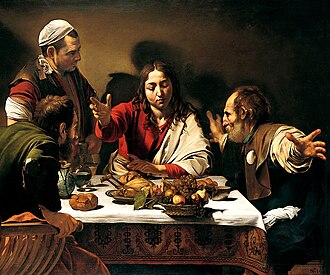 Das Abendmahl in Emmaus - Caravaggio (1601)
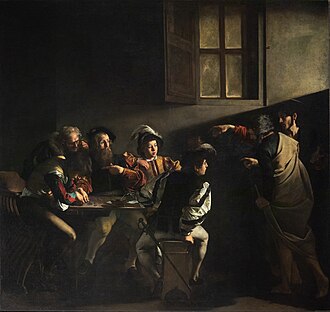 Die Berufung des Hl. Matthäus - Caravaggio (1609)
 Die Gesandten - Hans Holbein the Younger (1533)
 Der Leichnam Christi im Grabe - Hans Holbein the Younger (1520s)