Saint Paul
Diego Velázquez · 1618
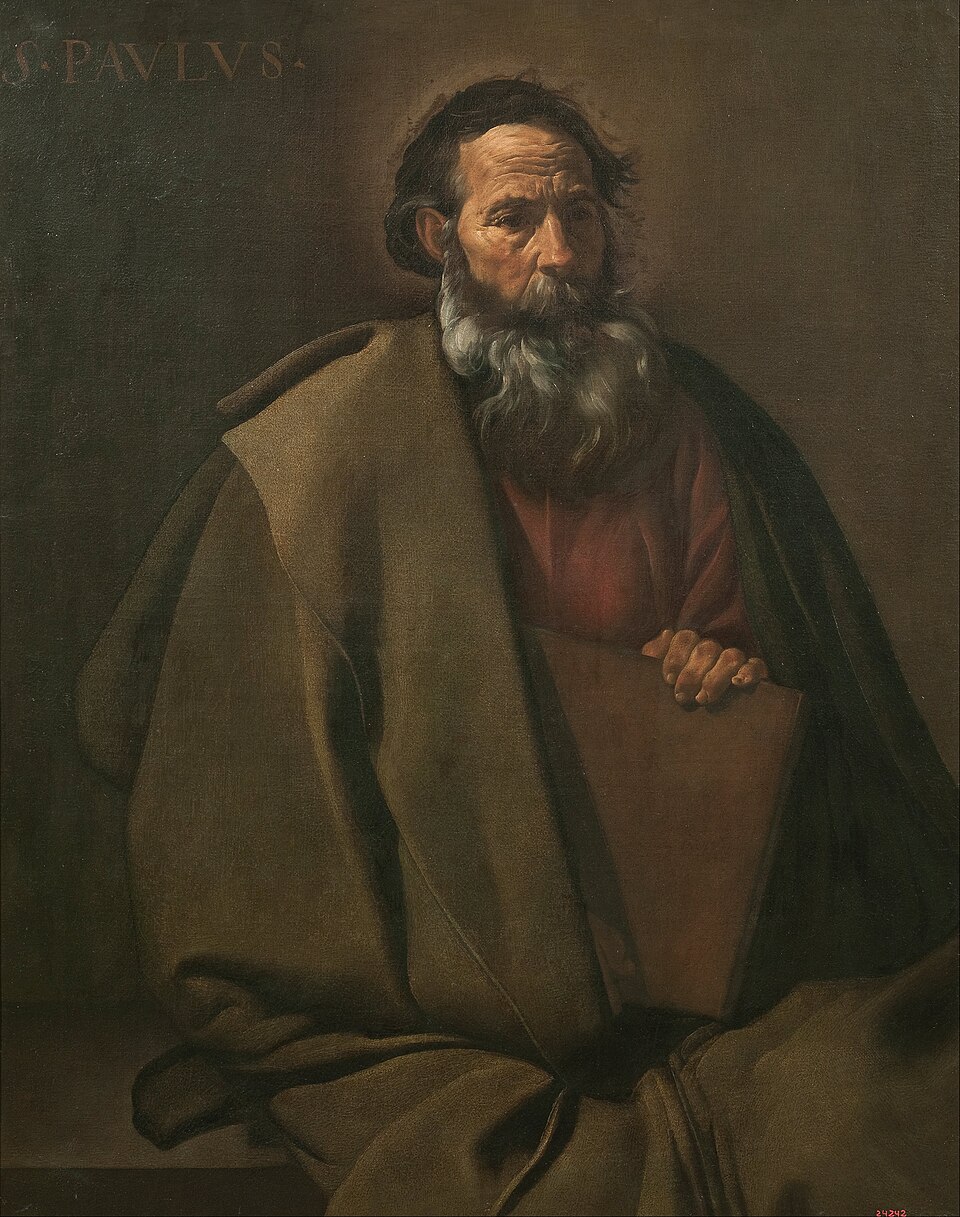
A man in a heavy brown cloak sits against the dark, clutching a thick book, his eyes blank. Velázquez painted this Saint Paul in Seville early in his career, and the model may be the same man who sold water in its streets.
The story behind the painting
Velázquez painted Saint Paul around 1619, before he left Seville in 1623 to become court painter to Philip IV. Wikidata gives 1618. In 1921 August Mayer identified it as his work. It and a Saint Thomas now in Orléans are believed to have come from the Carthusian monastery of Las Cuevas in Seville. The historian Xavier Bray suggests that the two, similar in size, may belong to a series of the twelve apostles painted in Seville, the rest of which are lost. The painting is now in the Museu Nacional d'Art de Catalunya in Barcelona.
What to look for
The saint sits on a stone plinth that melts into the background, wrapped in a wide robe whose folds are almost sculptural, over a reddish brown tunic. The fingers of his left hand grip a thick book. Dramatic light lifts him from a dark ground, in the manner of Tenebrism, with earthy colours. Perhaps to hide his limits, Velázquez tucked the legs and most of the hands under the folds. Paul usually has brown hair; here his black hair has a hint of grey. Top left, the inscription S. PAVLVS names him. A halo glows round his head, and the sword, his usual attribute, is absent.
Meaning and intent
Paul was struck blind by a light on the road to Damascus and regained his sight three days later. The blank stare may recall that loss. The heavy cloak suggests his pilgrimage, and the Gospel book marks him as an apostle who spread the faith. Velázquez departs from tradition by giving him a book instead of the sword of his martyrdom. The figure also evokes the philosophers painted by Ribera. Painted directly from a model, it is a somber study of human emotion, one of the figure paintings Velázquez made between 1618 and 1622.
Legacy
The work is considered a key to understanding how Caravaggio's pictorial realism reached Spain. José López-Rey found the head sharply drawn and the surface somewhat rubbed and darkened, typical of the early works, and compared the mix of rough and smooth strokes more to Titian than to Caravaggio. The historian Peter Cherry sees a resemblance between this saint and the old man in The Waterseller of Seville, and believes Velázquez used the same model. Only about twenty works survive from these early years, which makes this quiet apostle all the more precious.
Schon gewusst?
- Painted in Seville around 1619; Wikidata gives 1618.
- Identified as Velázquez's work by August Mayer in 1921.
- Possibly from a lost series of twelve apostles.
- The model may be the same as in The Waterseller of Seville.
Über den Künstler
Diego Velázquez (1599-1660)
religiöse Kunst · Museu Nacional d’Art de Catalunya
Mehr von Diego Velázquez
 Las Meninas - Diego Velázquez (1656)
 Die Übergabe von Breda - Diego Velázquez (1635)
 Venus vor dem Spiegel - Diego Velázquez (1644)
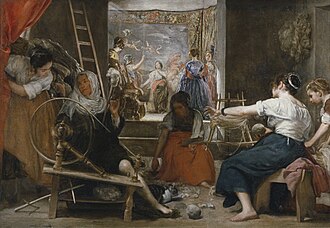 Die Spinnerinnen - Diego Velázquez
.jpg) Bildnis Innozenz X. - Diego Velázquez
Bildnis Innozenz X. - Diego Velázquez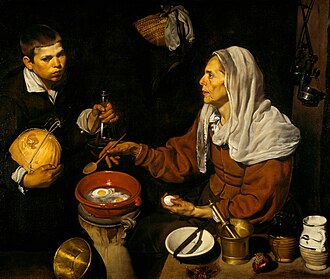 Eine alte Frau brät Eier - Diego Velázquez (1618)
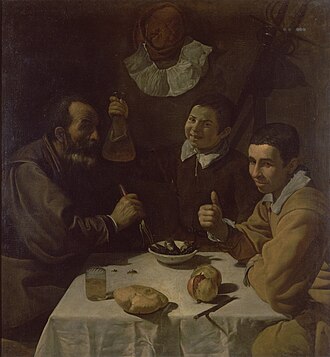 Drei Männer am Tisch - Diego Velázquez (1617)
.jpg) Der Triumph des Bacchus - Diego Velázquez (1628)
Der Triumph des Bacchus - Diego Velázquez (1628)
Werke verwandter Künstler
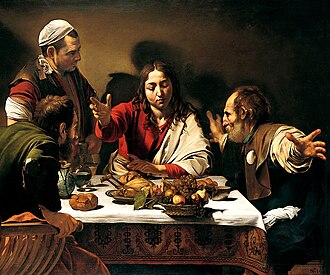 Das Abendmahl in Emmaus - Caravaggio (1601)
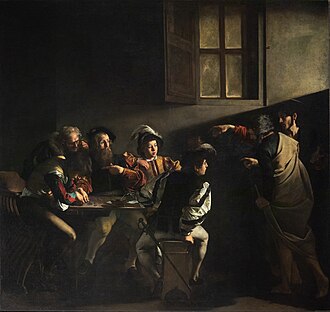 Die Berufung des Hl. Matthäus - Caravaggio (1609)
.jpg) Die Aufrichtung des Kreuzes - Peter Paul Rubens (1609)
Die Aufrichtung des Kreuzes - Peter Paul Rubens (1609)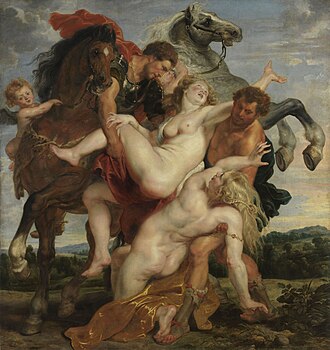 Der Raub der Töchter des Leukippos - Peter Paul Rubens (1618)
%20-%20Google%20Art%20Project.jpg) Dreifachporträt von Karl I. - Anthony van Dyck (1635)
Dreifachporträt von Karl I. - Anthony van Dyck (1635)%20with%20M.%20de%20St%20Antoine%20-%20Google%20Art%20Project.jpg) Karl I mit M. de St. Antoine - Anthony van Dyck (1636)
Karl I mit M. de St. Antoine - Anthony van Dyck (1636)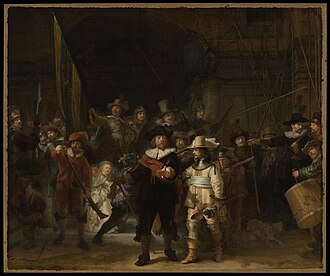 Die Nachtwache - Rembrandt van Rijn (1642)
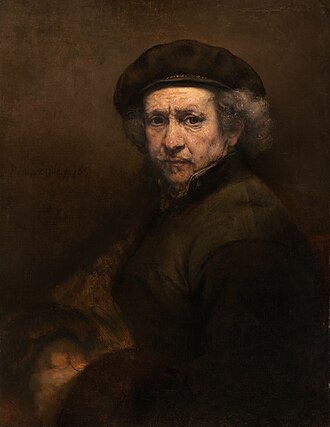 Selbstbildnis - Rembrandt van Rijn (1659)
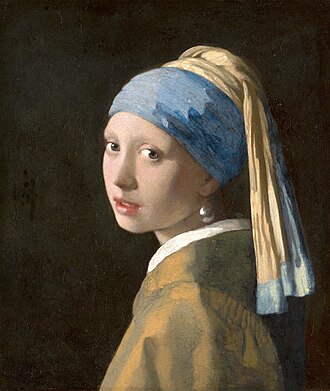 Das Mädchen mit dem Perlenohrgehänge - Johannes Vermeer (1665)
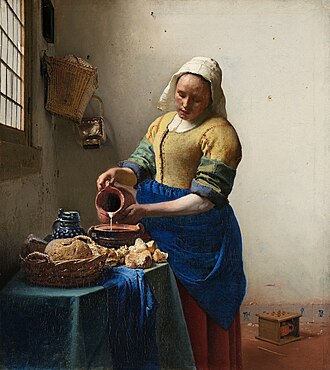 Dienstmagd mit Milchkrug - Johannes Vermeer (c. 1658)