Apollo in der Schmiede Vulkans
Diego Velázquez · 1630
.jpg)
A god in a laurel crown steps into a smoky forge with terrible news, and every hammer stops: Velázquez turns a myth into a moment of very human surprise.
The story behind the painting
In 1629 Diego Velázquez made his first journey to Italy. In Rome, working without a commission, he painted two large canvases in the house of the Spanish ambassador to the Papal States: Joseph's Tunic and this scene of Apollo in the Forge of Vulcan. According to the source, the work was made at the request of Peter Paul Rubens, who had also visited Spain in 1629. Critics agree it should be dated to 1630, the same year as its companion. Velázquez took inspiration from an engraving by Antonio Tempesta but changed it greatly, centring the story on Apollo's arrival. When he returned to Spain, he brought both canvases with him in his luggage, and they entered the royal collections within a short time.
What to look for
This is a big picture, 223 by 290 centimetres, and the figures are arranged across it like a frieze. At the left stands Apollo, recognisable by his laurel crown and surrounded by a soft aura, in a striking orange toga. Facing him is Vulcan, shown as a plain blacksmith, with his assistants, their athletic bodies posed to show their muscles. Look at their faces: surprise, some mouths open. Then let your eyes wander to the metal, the armour, the anvil, the hammers and the red-hot iron, painted with near-photographic realism, and to the forge objects in the background. Notice how figures overlap one another, a device sometimes called space sandwiching, to build depth. The laurel, once green, now looks almost blue because a pigment changed.
Meaning and intent
The story comes from Ovid's Metamorphoses. Apollo has come to tell Vulcan that his wife, Venus, is having an affair with Mars, the god of war, and the irony is that Vulcan is forging armour for Mars at that very moment. Velázquez treats the scene as a strictly human event. Unlike Italian painters, he does not idealise the gods: Vulcan is almost ugly, his helpers look like labourers, and even Apollo's face is not idealised. The source suggests he wanted to show his command of the serene, sculptural nude while also expressing feelings such as sorrow and surprise. Influences mingle here: Guido Reni and Greco-Roman statuary, Guercino in Apollo's clear tones, Venetian colour, and Michelangelo in the muscular bodies.
Legacy
Apollo in the Forge of Vulcan has been called one of the most important works of Velázquez's first Italian journey, and one of his most successful compositions for the unified, natural interaction of its figures. It also marks a turning point: depictions of the nude increased in his work after that trip of 1629 to 1631, and his brushwork grew lighter and freer, with the subtle greys, greens and cool mauves that would remain constant in his palette. Though neither it nor its companion was commissioned by the king, both soon joined the royal collections. Since 1819 the painting has belonged to the Museo del Prado in Madrid, where the stunned workshop still holds its breath.
Schon gewusst?
- Painted in Rome in 1630, during Velázquez's first visit to Italy.
- Companion piece to Joseph's Tunic, painted in the Spanish ambassador's house.
- 223 × 290 cm; in the Museo del Prado, Madrid, since 1819.
- Subject from Ovid's Metamorphoses; Apollo's laurel wreath was originally green.
Über den Künstler
Diego Velázquez (1599-1660)
Museo del Prado · mythologische Malerei · Rüstung
Mehr von Diego Velázquez
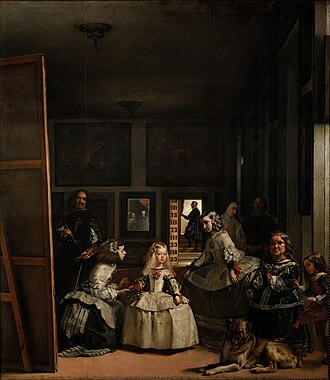 Las Meninas - Diego Velázquez (1656)
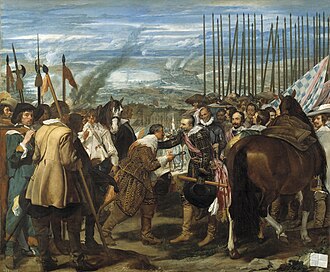 Die Übergabe von Breda - Diego Velázquez (1635)
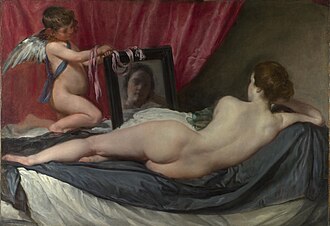 Venus vor dem Spiegel - Diego Velázquez (1644)
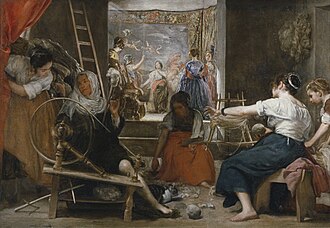 Die Spinnerinnen - Diego Velázquez
.jpg) Bildnis Innozenz X. - Diego Velázquez
Bildnis Innozenz X. - Diego Velázquez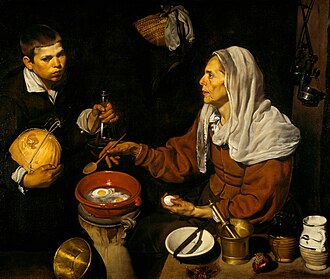 Eine alte Frau brät Eier - Diego Velázquez (1618)
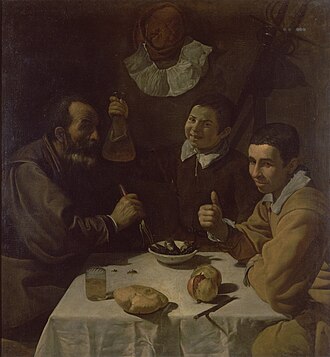 Drei Männer am Tisch - Diego Velázquez (1617)
.jpg) Der Triumph des Bacchus - Diego Velázquez (1628)
Der Triumph des Bacchus - Diego Velázquez (1628)
Werke verwandter Künstler
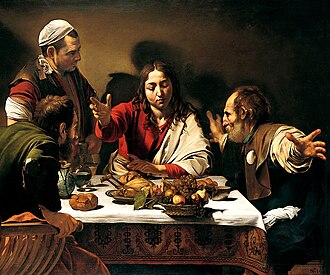 Das Abendmahl in Emmaus - Caravaggio (1601)
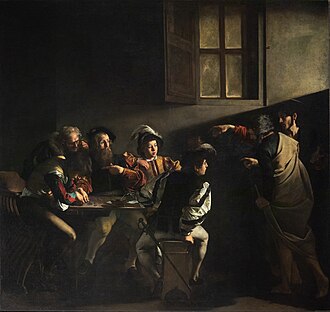 Die Berufung des Hl. Matthäus - Caravaggio (1609)
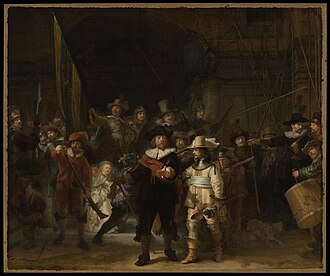 Die Nachtwache - Rembrandt van Rijn (1642)
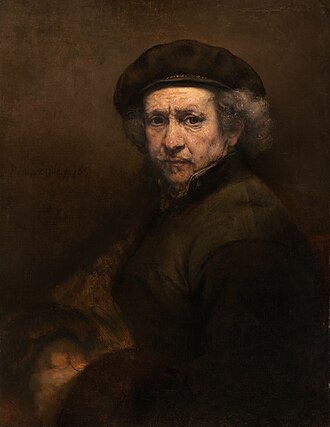 Selbstbildnis - Rembrandt van Rijn (1659)
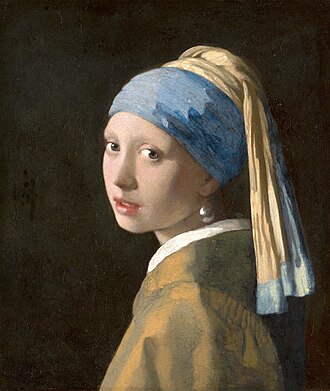 Das Mädchen mit dem Perlenohrgehänge - Johannes Vermeer (1665)
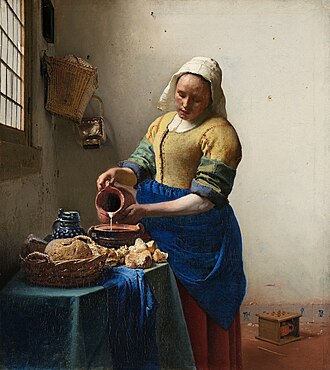 Dienstmagd mit Milchkrug - Johannes Vermeer (c. 1658)