Portrait of Frances Sherborne Ridley Watts
John Singer Sargent · 1877
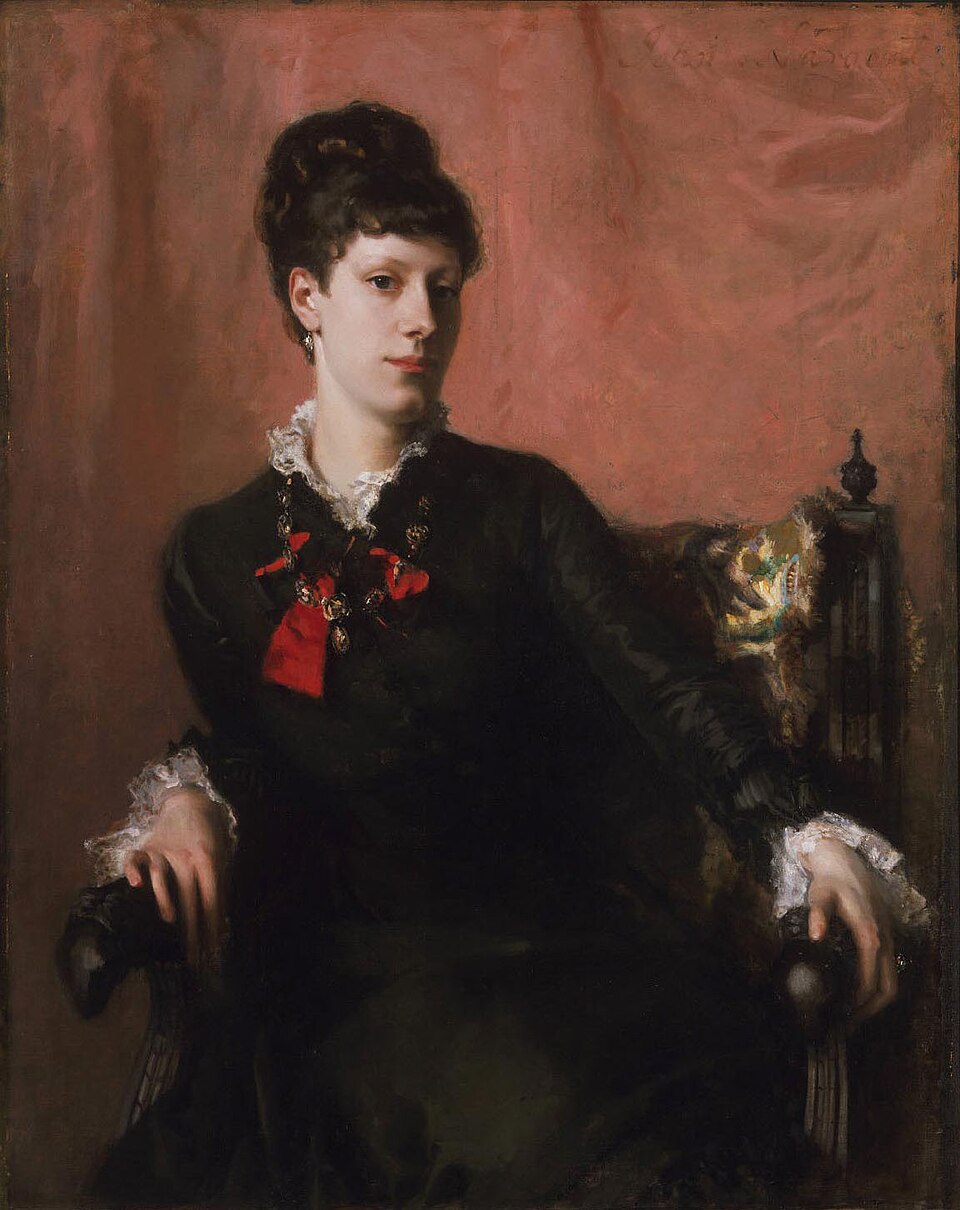
A young woman in a modest black dress sits half turned in a carved wooden chair, looking relaxed, but not quite. John Singer Sargent painted his childhood friend in 1877, and his father called it his first serious work.
The story behind the painting
Frances Sherborne Ridley Watts was an American whose family had settled in Europe. She and Sargent were childhood friends who probably met in Nice or Florence during the Sargent family's travels. Sargent and his sister Emily stayed in touch with her for a long time, and in 1907 it was Sargent who walked her down the aisle when she married Colonel Frederick White. He painted this portrait in the winter and early spring of 1877. His father, Dr Fitzwilliam Sargent, considered it his son's first serious work, his opus magnum. It is also known as Portrait of Mlle W.
What to look for
Frances is shown in three quarter view, seated in a carved wooden armchair against a coloured background. She wears a modest black dress, brightened by touches of red and white. Sargent gave her an informal attitude, but the ease is a performance: her pose is tense, and you can feel her holding it. Look at the hands, where the painter shows his strict academic training, and then at the colour and the brushwork, where the quality of his studies and his virtuosity come through. The canvas measures about 106 by 81 cm.
Meaning and intent
This first formal portrait carries the strong mark of Sargent's teacher, Carolus-Duran. A similar posture appears in Carolus-Duran's portrait of the Countess de Pourtalès, shown at the Salon of 1874. So the picture sits between two things: a young painter proving he has mastered his master's lessons, and a friend he had known since childhood. The tension between the casual pose and the stiff body may be the most human detail in it, a young woman trying to look at ease while being looked at.
Legacy
Portrait of Mlle W. was exhibited at the Salon of 1877 and again at the Exposition Universelle of 1878. Sargent kept returning to Frances: he had already made a pencil study of her in 1876 wearing a Breton headdress, and in the 1880s he painted her again in watercolour, once more seated. The painting is now in the Philadelphia Museum of Art. Wikidata gives its size as 105.9 by 81.3 cm.
Schon gewusst?
- Painted by John Singer Sargent in the winter and spring of 1877.
- Shown at the Salon of 1877 and the Exposition Universelle of 1878.
- Sargent gave Frances away at her wedding in 1907.
- Now in the Philadelphia Museum of Art.
Über den Künstler
John Singer Sargent (1856-1925)
Porträt · Philadelphia Museum of Art
Mehr von John Singer Sargent
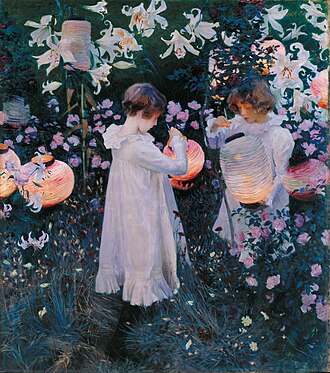 Nelke, Lilie, Lilie, Rose - John Singer Sargent (1885-1886)
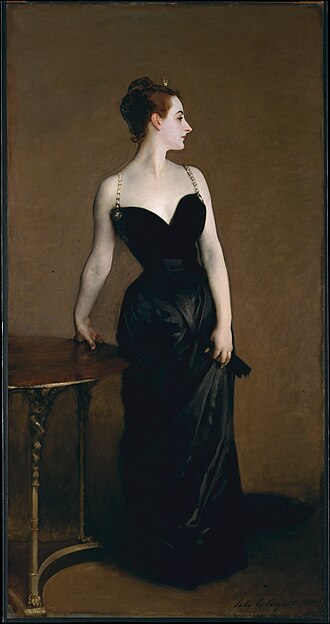 Madame X - John Singer Sargent (1884)
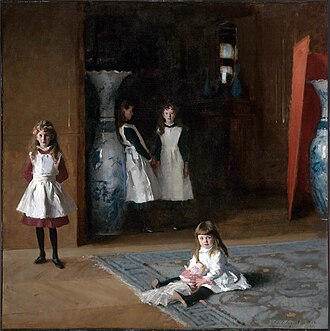 Die Töchter des Edward Darley Boit - John Singer Sargent (1882)
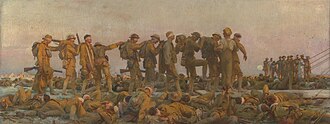 Gassed - John Singer Sargent (1919)
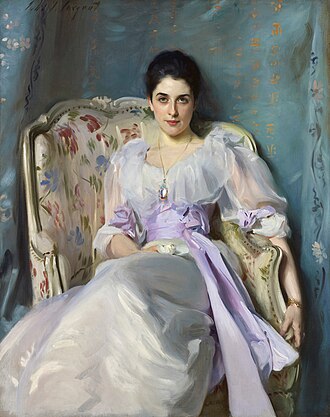 Lady Agnew of Lochnaw - John Singer Sargent (1892)
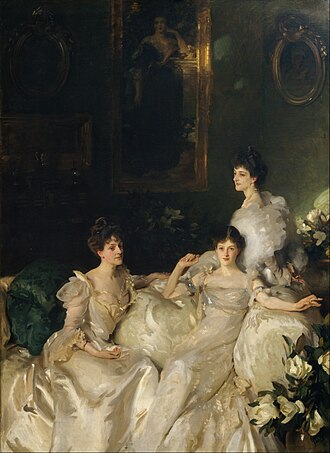 The Wyndham Sisters: Lady Elcho, Mrs. Adeane, and Mrs. Tennant - John Singer Sargent (1899)
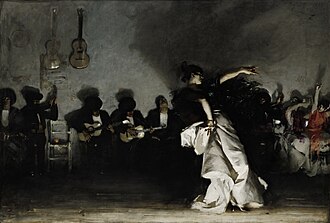 El Jaleo - John Singer Sargent (1882)
 Straße in Venedig - John Singer Sargent (1882)
Werke verwandter Künstler
 Pollice verso - Jean-Léon Gérôme (1872)
 Der Sklavenmarkt - Jean-Léon Gérôme (1866)
 Das Frühstück im Grünen - Édouard Manet (1863)
 Olympia - Édouard Manet (1863)
 Der Ursprung der Welt - Gustave Courbet (1866)
 Ein Begräbnis in Ornans - Gustave Courbet (2020)
 Die Freiheit führt das Volk - Eugène Delacroix (1830)
 Der Tod des Sardanapal - Eugène Delacroix (1827)
 Der Tod des Sokrates - Jacques-Louis David (1787)
 Der Schwur der Horatier - Jacques-Louis David (1784)
 Die Schwestern Waldegrave - Joshua Reynolds (1780)
 Porträt des Colonel George K. H. Coussmaker vom Regiment der Garde-Grenadiere - Joshua Reynolds (1782)