John Singer Sargent
1856-1925
John Singer Sargent, an American born in Florence and raised on the move across Europe, became the leading portrait painter of his generation, a man who could draw with a loaded brush as others draw with a pencil.
Origins
Sargent was born in Florence on 12 January 1856, almost by accident: his American parents had stopped there because of a cholera epidemic. His father, FitzWilliam, had been an eye surgeon in Philadelphia; his mother, Mary Newbold Singer, had suffered a breakdown after the death of their first daughter, and the couple went abroad to recover and never truly settled again. The family moved with the seasons between France, Germany, Italy and Switzerland, living modestly. Formal schooling kept failing, so museums and churches became the boy's classroom. His mother, a capable amateur artist, gave him sketchbooks; his father was a skilled medical illustrator. At thirteen he took watercolour lessons from the German landscape painter Carl Welsch. By 1874 he was studying in Paris with the brilliant young portraitist Carolus-Duran, passed the entrance exam to the École des Beaux-Arts on his first attempt, drew with Adolphe Yvon and took some lessons from Léon Bonnat.
Life and turning points
In Carolus-Duran's studio Sargent quickly became the star pupil. His first major portrait, of his friend Fanny Watts, was also his first Salon admission in 1877, followed by the luminous Oyster Gatherers of Cancale. In 1879, at twenty-three, he painted his teacher, a tribute that doubled as an advertisement for commissions. He travelled to Spain to study Velázquez, a journey that also inspired El Jaleo in 1882, and to Italy for Venetian street scenes. Commissions poured in, and for some twenty-five years he worked with steady, almost workmanlike stamina. Then came 1884 and Portrait of Madame X. Its reception in Paris was so hostile that French commissions dried up, and he even considered abandoning painting for music or business. Instead he moved to London in 1886, settling in Chelsea, and rebuilt a brilliant career. In later life, weary of formal portraits, he devoted himself to murals and to painting outdoors. He died on 15 April 1925.
Style and technique
From the start, Sargent's hallmark was astonishing technical facility, above all his ability to draw directly with the brush. Carolus-Duran taught him the alla prima method derived from Velázquez: no careful underdrawing, but paint laid straight onto the canvas with a loaded brush, relying on the exact placement of tones. It freed him for spontaneous flourishes of colour. His formal commissions follow the grand manner of portraiture, while his informal studies and landscapes show a clear familiarity with Impressionism. His best portraits reveal the personality of the sitter so sharply that admirers compare him only with Velázquez, whose Las Meninas echoes in The Daughters of Edward Darley Boit of 1882, with its daring composition and haunting light. He made roughly 900 oil paintings and more than 2,000 watercolours, recording travels from Venice and the Tyrol to Corfu, Capri, Spain, the Middle East, Montana, Maine and Florida.
Stories and anecdotes
Madame X was not commissioned; Sargent pursued the sitter, Madame Pierre Gautreau, writing to an acquaintance that she might be told he was a man of prodigious talent. The first version showed one dress strap slipping from her shoulder. After the uproar at the 1884 Salon he repainted it in place, but the damage was done. Even so, he kept the picture prominently in his London studio, calling it in 1915 perhaps the best thing he had done, and sold it to the Metropolitan Museum of Art in 1916. Henry James wrote that the young Sargent offered the slightly uncanny spectacle of a talent with nothing more to learn. Julian Alden Weir found his drawings like the old masters. Music was his second gift: he was a skilled accompanist and a champion of Gabriel Fauré. Through Paul César Helleu he met Degas, Rodin, Monet and Whistler, and he mentored his friend Emil Fuchs in oil portraiture.
Legacy
In his lifetime Sargent enjoyed international acclaim, yet his formidable brushwork also drew criticism for supposed superficiality, and art historians largely ignored society painters like him until the late twentieth century. The turning point came in the 1980s, when his previously hidden male nudes were exhibited. They sparked a fresh look at his life and its psychological complexity. Today, alongside the beauty and innovation of his work, his same-sex interests, his unconventional friendships with women, and his engagement with race, gender nonconformity and an emerging global world are seen as socially and aesthetically progressive. His portraits remain defining images of Belle Époque and Edwardian luxury. Visitors can stand before Portrait of Madame X at the Metropolitan Museum of Art in New York, where Sargent himself chose to place it, and seek out his watercolours and landscapes to meet the freer, more private artist behind the society portraitist.
Schon gewusst?
- Sargent was born in Florence only because his parents stopped there during a cholera epidemic.
- He spoke English, French, Italian and German fluently.
- After the Madame X scandal he considered giving up painting for music or business.
- He left roughly 900 oil paintings and more than 2,000 watercolours.
Akademische Kunst · Hispanistik
Verwandte Künstler
Jean-Léon Gérôme · Édouard Manet · Gustave Courbet · Eugène Delacroix · Jacques-Louis David · Joshua Reynolds · J. M. W. Turner · Gustave Moreau
Gemälde von John Singer Sargent
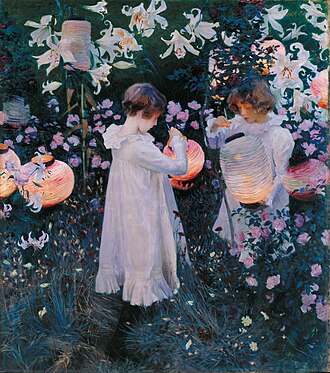 Nelke, Lilie, Lilie, Rose - John Singer Sargent (1885-1886)
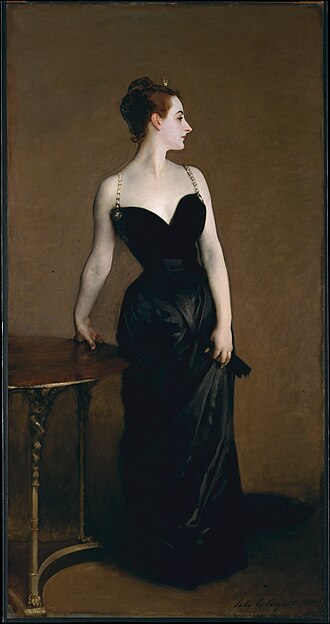 Madame X - John Singer Sargent (1884)
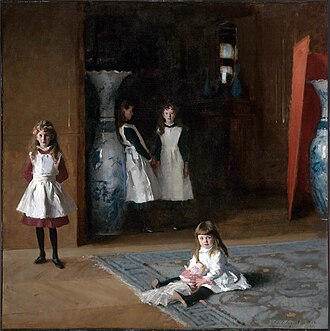 Die Töchter des Edward Darley Boit - John Singer Sargent (1882)
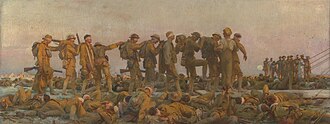 Gassed - John Singer Sargent (1919)
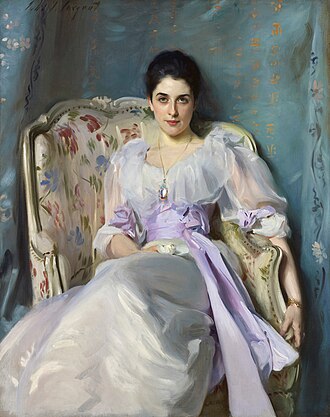 Lady Agnew of Lochnaw - John Singer Sargent (1892)
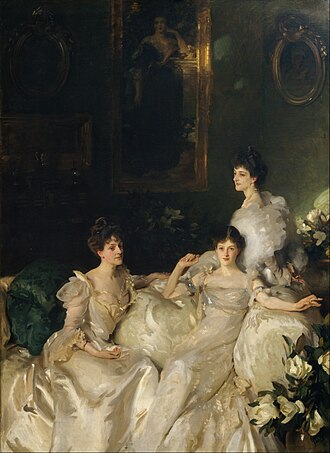 The Wyndham Sisters: Lady Elcho, Mrs. Adeane, and Mrs. Tennant - John Singer Sargent (1899)
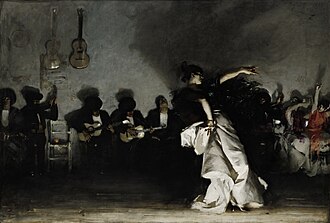 El Jaleo - John Singer Sargent (1882)
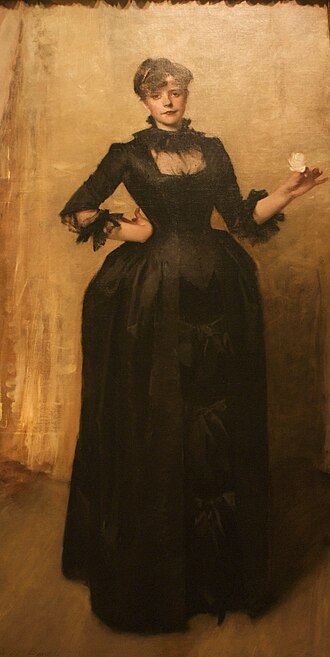 Dame mit Rose - John Singer Sargent (1882)
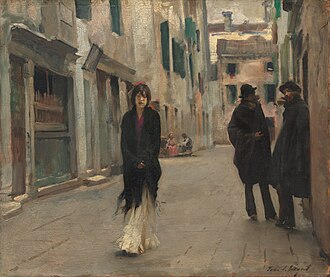 Straße in Venedig - John Singer Sargent (1882)
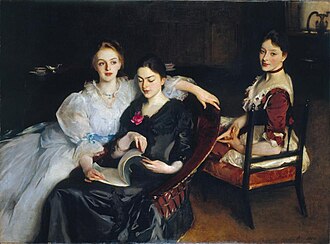 The Misses Vickers - John Singer Sargent (1884)
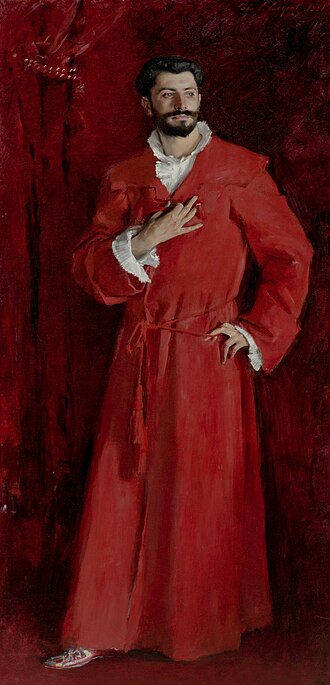 Dr. Pozzi at Home - John Singer Sargent (1881)
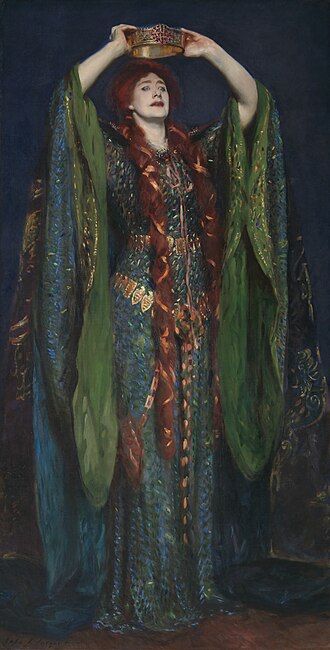 Ellen Terry as Lady Macbeth - John Singer Sargent (1889)
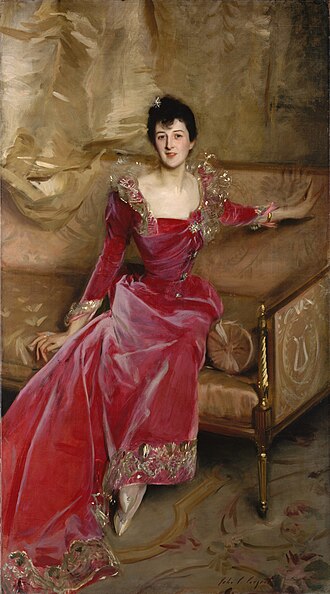 Mrs. Hugh Hammersley - John Singer Sargent (1892)
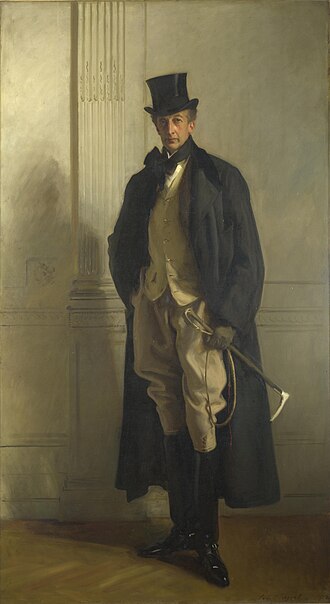 Lord Ribblesdale - John Singer Sargent (1902)
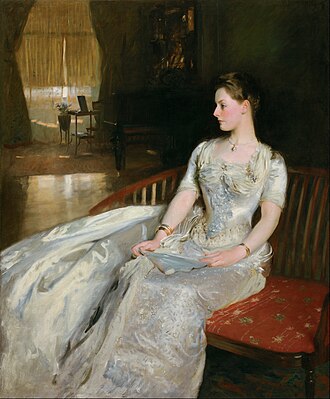 Portrait of Mrs. Cecil Wade - John Singer Sargent (1886)
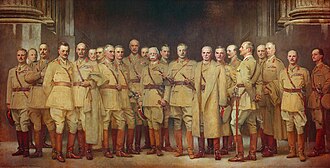 General Officers of World War I - John Singer Sargent (1922)
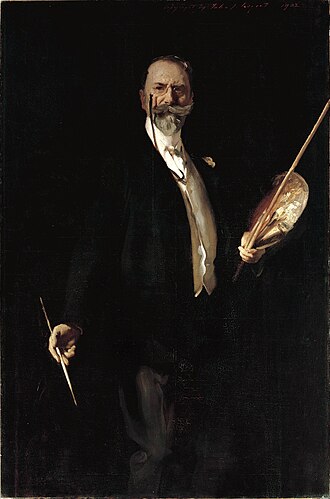 William M. Chase, N. A. - John Singer Sargent (1902)
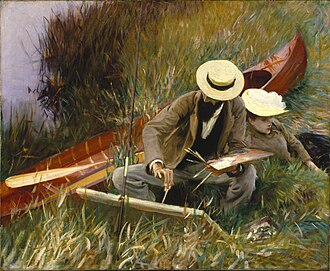 An Out-of-Doors Study - John Singer Sargent (1889)
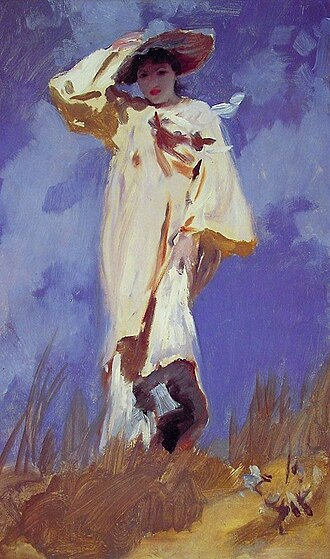 A Gust of Wind - John Singer Sargent (1880s)
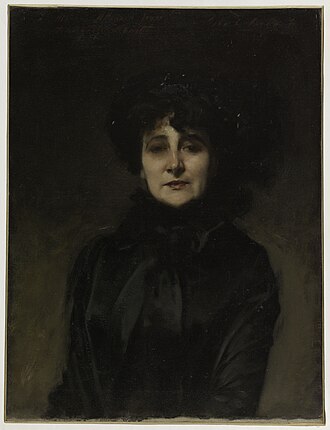 Mme Emma-Marie Allouard-Jouan - John Singer Sargent (1882)
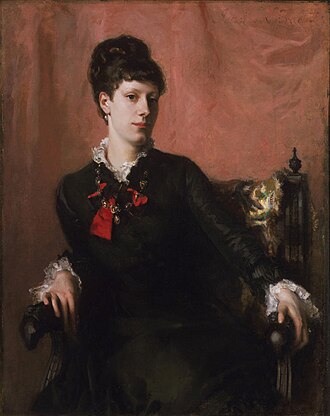 Portrait of Frances Sherborne Ridley Watts - John Singer Sargent (1877)
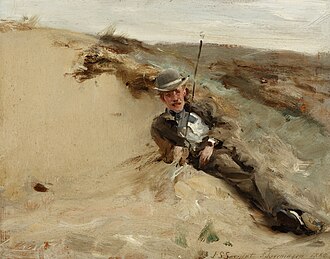 Portrait of Ralph Curtis on the Beach at Scheveningen - John Singer Sargent (1880)
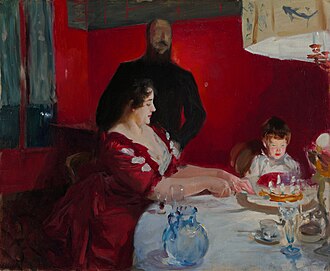 The Birthday Party - John Singer Sargent (1885)
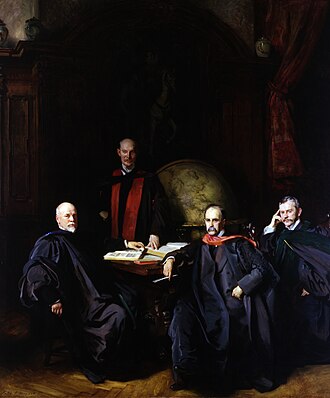 The Four Doctors - John Singer Sargent (1906)
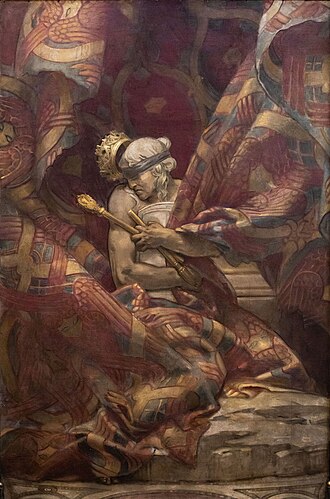 Synagogue - John Singer Sargent (1919)