Porträt von Feyntje van Steenkiste
Frans Hals · 1635
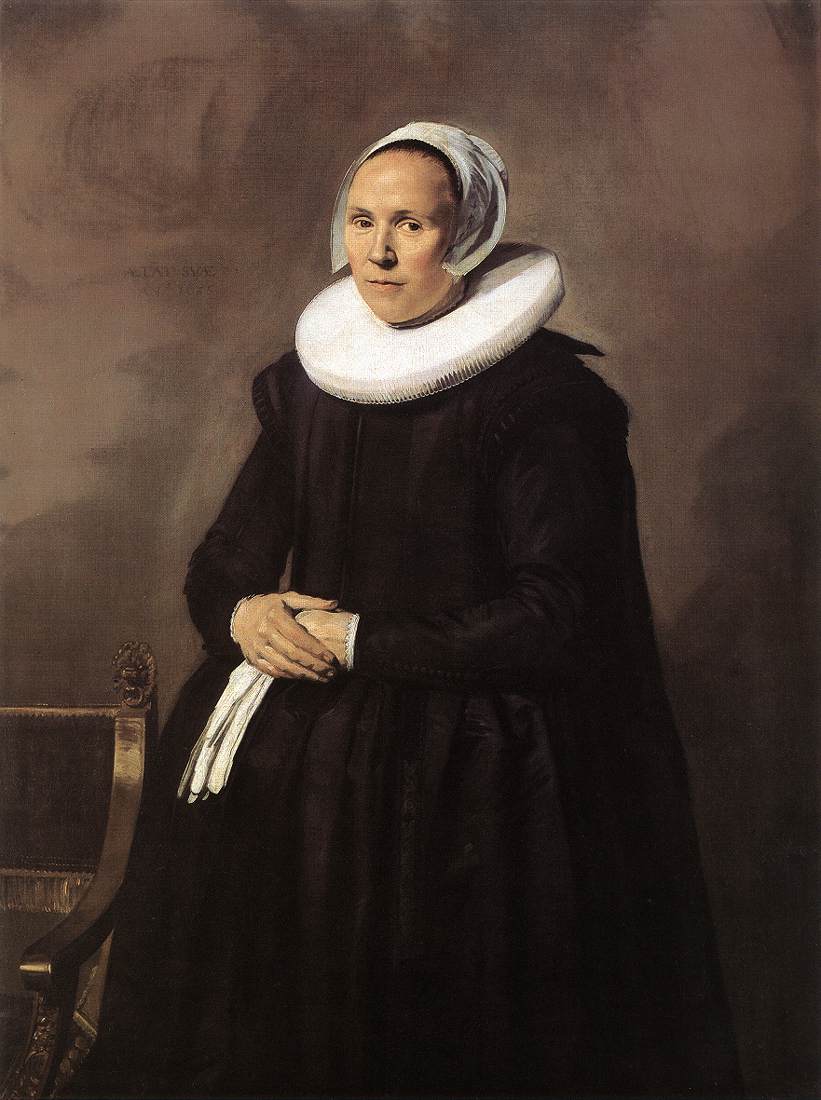
No lace at her wrists, no jewellery, only a sober black dress and a white cap. Feyntje van Steenkiste, a Mennonite of Haarlem, stands life-size before Frans Hals in 1635, gloves clasped in her hands, looking straight at us.
The story behind the painting
Feyntje van Steenkiste was born in Haarlem, the daughter of a Mennonite potash merchant. On 8 January 1622 she became engaged to Lucas de Clercq, also a Mennonite potash merchant, and together they had three children, Janneke, Passchina and Pieter. Frans Hals painted her around 1635, as a pendant to his portrait of Lucas. The inscription on the left gives her age as 31 and the year 1635. Only five years later, on 3 March 1640, Feyntje was buried, and Lucas remarried that same September.
What to look for
She is shown three-quarter length and life size, standing almost facing us and slightly inclined to the left, with a chair beside her. Her hands, holding her gloves, are clasped in front of her, and the cataloguer Hofstede de Groot noted in 1910 that the hands are painted with exceptional breadth and accuracy. Look at the dress: many buttons and pleated edges show an expensive cut. The millstone collar is folded into extra tight figure-eight loops, and a winged cap edged with lace covers her hair.
Meaning and intent
What she leaves out is as telling as what she wears. Unlike the women in Hals' other wedding portraits, Feyntje wears a sober Mennonite dress without lace wrist collars, and she wears no jewellery at all. The plainness speaks of her faith, while the careful tailoring and the crisp collar quietly show the family's wealth. Hals painted another, unnamed Haarlem woman of the 1630s in a very similar outfit, so the portrait also records how Mennonite brides of the city chose to present themselves.
Legacy
The De Clercq family gave the portrait to the city of Amsterdam in 1891, and it has been on loan to the Rijksmuseum since then, as Hofstede de Groot recorded. It was also engraved by C. E. Taurel. Both Hofstede de Groot and later Seymour Slive treated it as the pendant of Lucas de Clercq's portrait. Today the painting keeps alive a woman who died young, five years after it was made, holding her gloves and meeting the viewer's eye.
Schon gewusst?
- Painted by Frans Hals around 1635; the inscription gives her age as 31.
- Pendant to the portrait of her husband Lucas de Clercq.
- She wears sober Mennonite dress and no jewellery.
- Given to Amsterdam in 1891 and shown in the Rijksmuseum.
Über den Künstler
Frans Hals (1591-1666)
Porträt · Rijksmuseum · Amsterdam-Museum
Mehr von Frans Hals
 Ein Schütze einen Berkemeyer haltend, bekannt als „Der fröhliche Trinker" - Frans Hals (1620s)
 Der lachende Kavalier - Frans Hals (1624)
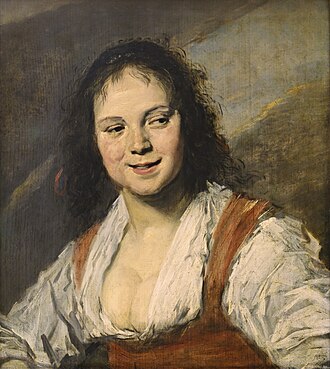 La Bohémienne - Frans Hals (1628)
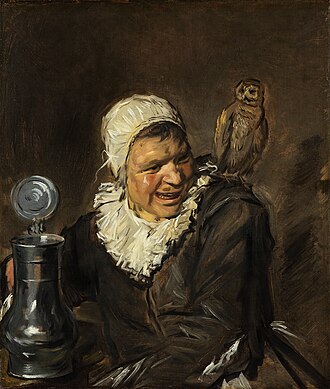 Malle Babbe - Frans Hals (1640s)
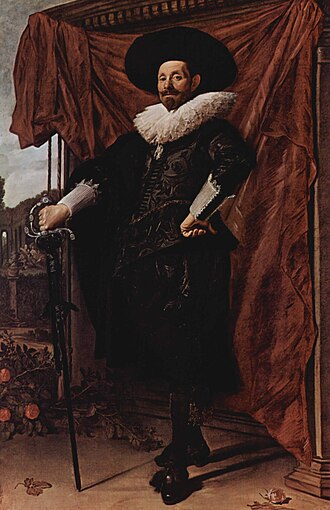 Willem van Heythuysen - Frans Hals (1625)
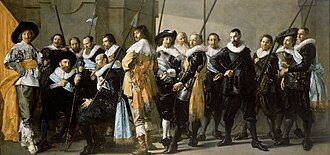 Schützen XI. Bezirks unter Leitung Kapitän Reynier Reael gen. ‘Magere compagnie’ - Frans Hals (1630s)
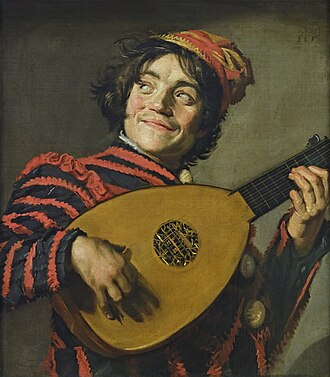 Der Lautenspieler - Frans Hals (1623)
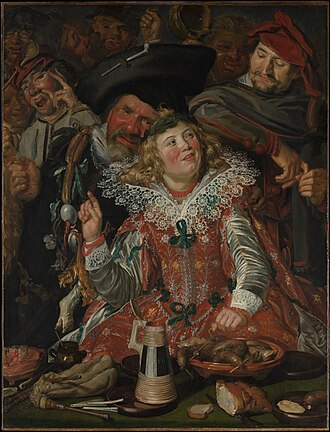 Lustige Gesellschaft - Frans Hals (1610s)
Werke verwandter Künstler
 Die Nachtwache - Rembrandt van Rijn (1642)
 Selbstbildnis - Rembrandt van Rijn (1659)
 Das Mädchen mit dem Perlenohrgehänge - Johannes Vermeer (1665)
 Dienstmagd mit Milchkrug - Johannes Vermeer (c. 1658)
 Fest des hl.Nikolaus - Jan Steen (1660s)
 Mädchen mit Austern. - Jan Steen (1658)
 Die Mühle von Wijk - Jacob van Ruisdael (1670)
 Judenfriedhof - Jacob van Ruisdael (1650s)
 Hof eines Hauses in Delft - Pieter de Hooch (1658)
 A Woman Peeling Apples - Pieter de Hooch (1663)