Porträt von Dorothea Berck
Frans Hals · 1644
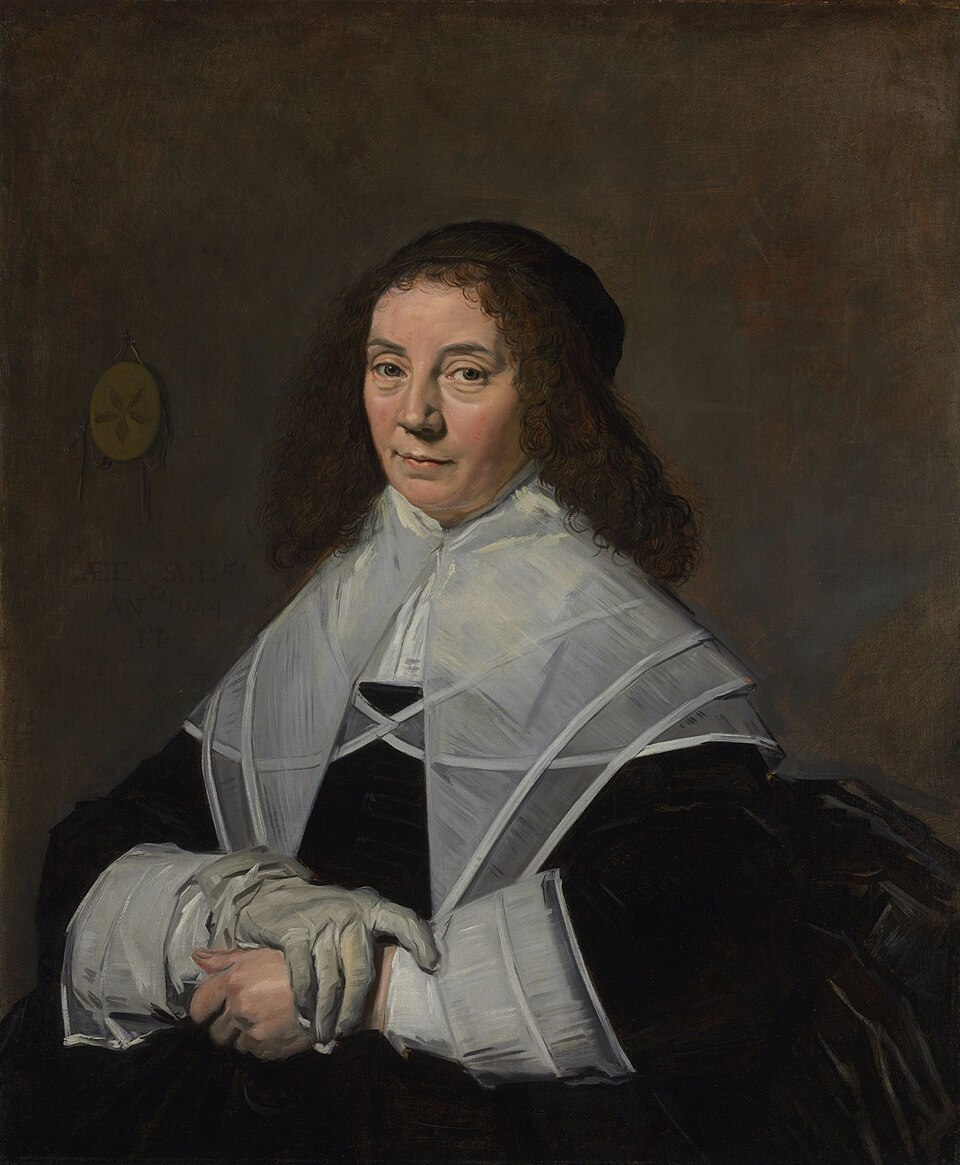
A woman of fifty-one sits upright in a dark chair, one glove off, a finger hooked lightly over her wrist. Frans Hals painted Dorothea Berck in 1644, when her daughter married, and her husband in the matching portrait holds the other glove.
The story behind the painting
Dorothea Berck was the wife of Joseph Coymans, a prosperous merchant of Haarlem. In 1644, when she was 51, Frans Hals painted her and her husband as a pair. The occasion was the wedding of their daughter Isabella, and Hals also painted the marriage pendants of Isabella and her husband. Like many of his portraits, this one is inscribed and signed, yet the inscription does not name the sitter. Her identity was only established in 1908, more than two and a half centuries after she sat for it.
What to look for
Notice how upright she sits in the dark chair, her hands resting on what may be a dark desk or perhaps the wide mass of her dress. Her ungloved hand may be holding a book, or only part of her sleeve. The brushwork is loose, as is typical of Hals, and it catches a passing gesture: one finger casually hooked over her wrist. As in all of Hals' marriage pendants, the light comes from the left and falls fully on the woman, who sits on the right of the pair.
Meaning and intent
The glove matters. Portraits with one glove on and one glove off are common in Dutch marriage pendants of the seventeenth century, because gloves stood for the wedding vows: husband and wife each held one of a pair. Here Joseph Coymans wears the other glove in his own portrait. The pose has been compared with the Mona Lisa. Raphael's portrait of Baldassare Castiglione caused a sensation at an Amsterdam auction in 1639 and made the posture popular, and Hals is sure to have seen it, though it is not certain he knew the Mona Lisa.
Legacy
Dorothea Berck is remembered in Haarlem for more than her portrait. In 1655 she bought the almshouse, or hofje, now known as the Vrouwe- en Antonie Gasthuys, and named it the Coymans Hofje. Why it was later sold on to Kolder is not known. Her portrait now belongs to the Baltimore Museum of Art. It is a quiet record of a mother at her daughter's wedding, and of a woman who later left her own mark on the city.
Schon gewusst?
- Painted by Frans Hals in 1644, when the sitter was 51.
- Made for the wedding of her daughter Isabella, as a pair with her husband's portrait.
- The sitter was only identified in 1908.
- In the Baltimore Museum of Art.
Über den Künstler
Frans Hals (1591-1666)
Mehr von Frans Hals
 Ein Schütze einen Berkemeyer haltend, bekannt als „Der fröhliche Trinker" - Frans Hals (1620s)
 Der lachende Kavalier - Frans Hals (1624)
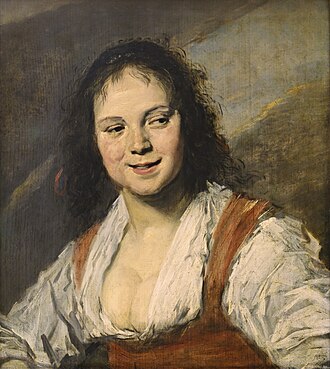 La Bohémienne - Frans Hals (1628)
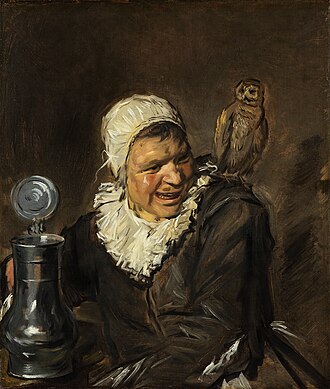 Malle Babbe - Frans Hals (1640s)
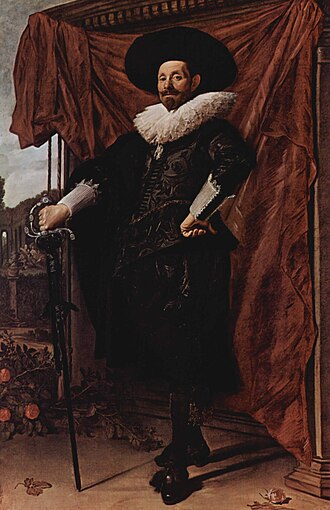 Willem van Heythuysen - Frans Hals (1625)
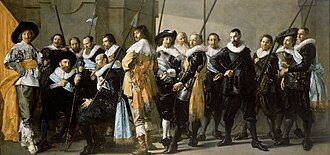 Schützen XI. Bezirks unter Leitung Kapitän Reynier Reael gen. ‘Magere compagnie’ - Frans Hals (1630s)
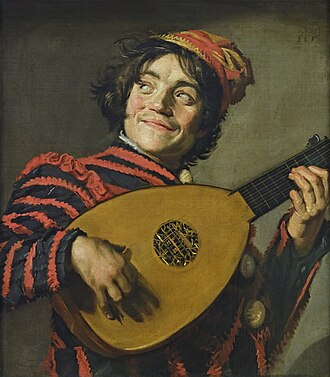 Der Lautenspieler - Frans Hals (1623)
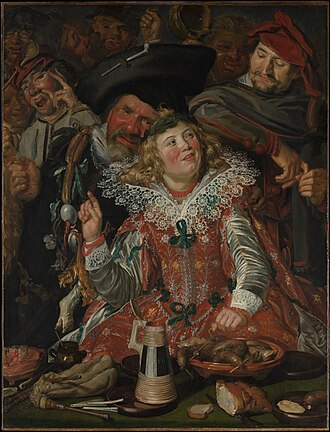 Lustige Gesellschaft - Frans Hals (1610s)
Werke verwandter Künstler
 Die Nachtwache - Rembrandt van Rijn (1642)
 Selbstbildnis - Rembrandt van Rijn (1659)
 Das Mädchen mit dem Perlenohrgehänge - Johannes Vermeer (1665)
 Dienstmagd mit Milchkrug - Johannes Vermeer (c. 1658)
 Fest des hl.Nikolaus - Jan Steen (1660s)
 Mädchen mit Austern. - Jan Steen (1658)
 Die Mühle von Wijk - Jacob van Ruisdael (1670)
 Judenfriedhof - Jacob van Ruisdael (1650s)
 Hof eines Hauses in Delft - Pieter de Hooch (1658)
 A Woman Peeling Apples - Pieter de Hooch (1663)