Porträt eines Mannes
Frans Hals · 1660
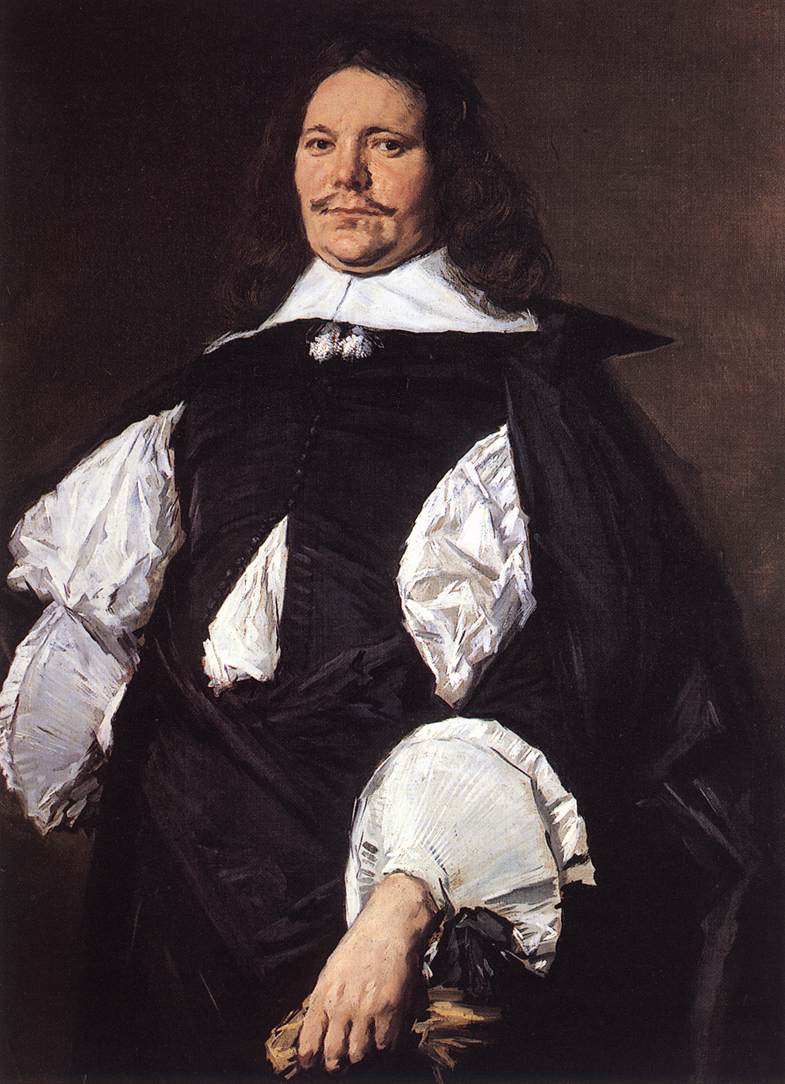
For decades this proud man in black was shown as the famous admiral Michiel de Ruyter. He was not. He was a Haarlem citizen showing off a cascade of fine white linen, painted by Frans Hals in his last years.
The story behind the painting
Frans Hals painted this portrait around 1660, in oil on canvas, signing it on the left at the level of the collar with his FH monogram. The sitter's name is unknown. He was long believed to be Admiral Michiel de Ruyter and was exhibited under that name in Manchester in 1857, in The Hague and London in 1903 and at the Royal Academy in 1907. As early as 1860 the critic Théophile Thoré-Bürger noted that he looks nothing like Ferdinand Bol's portrait of De Ruyter in the Rijksmuseum.
What to look for
Watch the linen. The man proudly displays a fine white shirt pouring out of his split-sleeve jacket, and he has wrapped his cloak under his right arm to show off the sleeve. Such abundant wrist ruffles are rarely seen in Hals's portraits or among any Haarlem sitters. In 1910 Hofstede de Groot described him three-quarter length, facing us, his left arm hanging nearly straight and holding his gloves, with long dark brown hair and a slight moustache. The canvas is about 113 by 81.9 cm.
Meaning and intent
The clothing tells us what the face cannot: the opulent fabric suggests the sitter was perhaps a cloth merchant or a burgomaster. Hals mostly portrayed local people, apart from a few smaller portraits possibly made for visitors to the town. Hofstede de Groot called it a masterly painting, executed one might almost assume without any preliminary sketch, drawn directly with the brush. Seymour Slive dated it around 1660 from its style and from the clothes, which places it in the final decade of the painter's long life.
Legacy
After about half a century in the collection of Earl Spencer at Althorp, the painting was sold to the dealer Joseph Duveen, who sold it on to Henry Clay Frick. It now hangs in the Frick Collection in New York. Its history shows how a name can attach itself to a portrait and travel with it through famous exhibitions, until careful looking takes it away. What remains is what Hofstede de Groot saw: not the admiral, but a simple citizen, painted with great freedom.
Schon gewusst?
- Painted by Frans Hals around 1660, signed with the FH monogram.
- Long misidentified as Admiral Michiel de Ruyter.
- Formerly at Althorp in the Spencer collection.
- Now in the Frick Collection, New York.
Über den Künstler
Frans Hals (1591-1666)
Porträt · Mann · The Frick Collection
Mehr von Frans Hals
 Ein Schütze einen Berkemeyer haltend, bekannt als „Der fröhliche Trinker" - Frans Hals (1620s)
 Der lachende Kavalier - Frans Hals (1624)
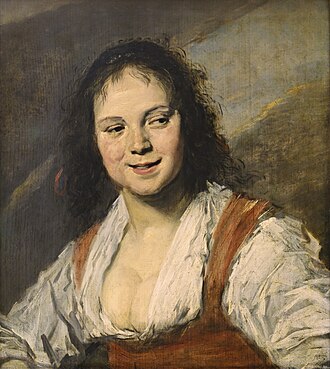 La Bohémienne - Frans Hals (1628)
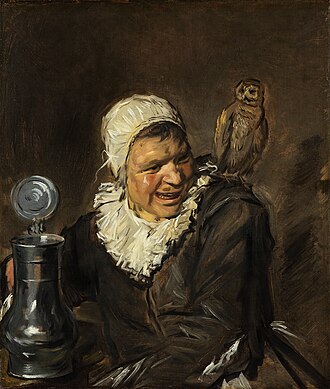 Malle Babbe - Frans Hals (1640s)
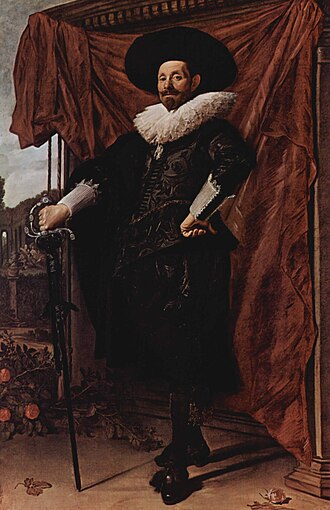 Willem van Heythuysen - Frans Hals (1625)
 Schützen XI. Bezirks unter Leitung Kapitän Reynier Reael gen. ‘Magere compagnie’ - Frans Hals (1630s)
 Der Lautenspieler - Frans Hals (1623)
 Lustige Gesellschaft - Frans Hals (1610s)
Werke verwandter Künstler
 Die Nachtwache - Rembrandt van Rijn (1642)
 Selbstbildnis - Rembrandt van Rijn (1659)
 Das Mädchen mit dem Perlenohrgehänge - Johannes Vermeer (1665)
 Dienstmagd mit Milchkrug - Johannes Vermeer (c. 1658)
 Fest des hl.Nikolaus - Jan Steen (1660s)
 Mädchen mit Austern. - Jan Steen (1658)
 Die Mühle von Wijk - Jacob van Ruisdael (1670)
 Judenfriedhof - Jacob van Ruisdael (1650s)
 Hof eines Hauses in Delft - Pieter de Hooch (1658)
 A Woman Peeling Apples - Pieter de Hooch (1663)