Martyrium des hl. Laurentius
Fra Angelico · 1447
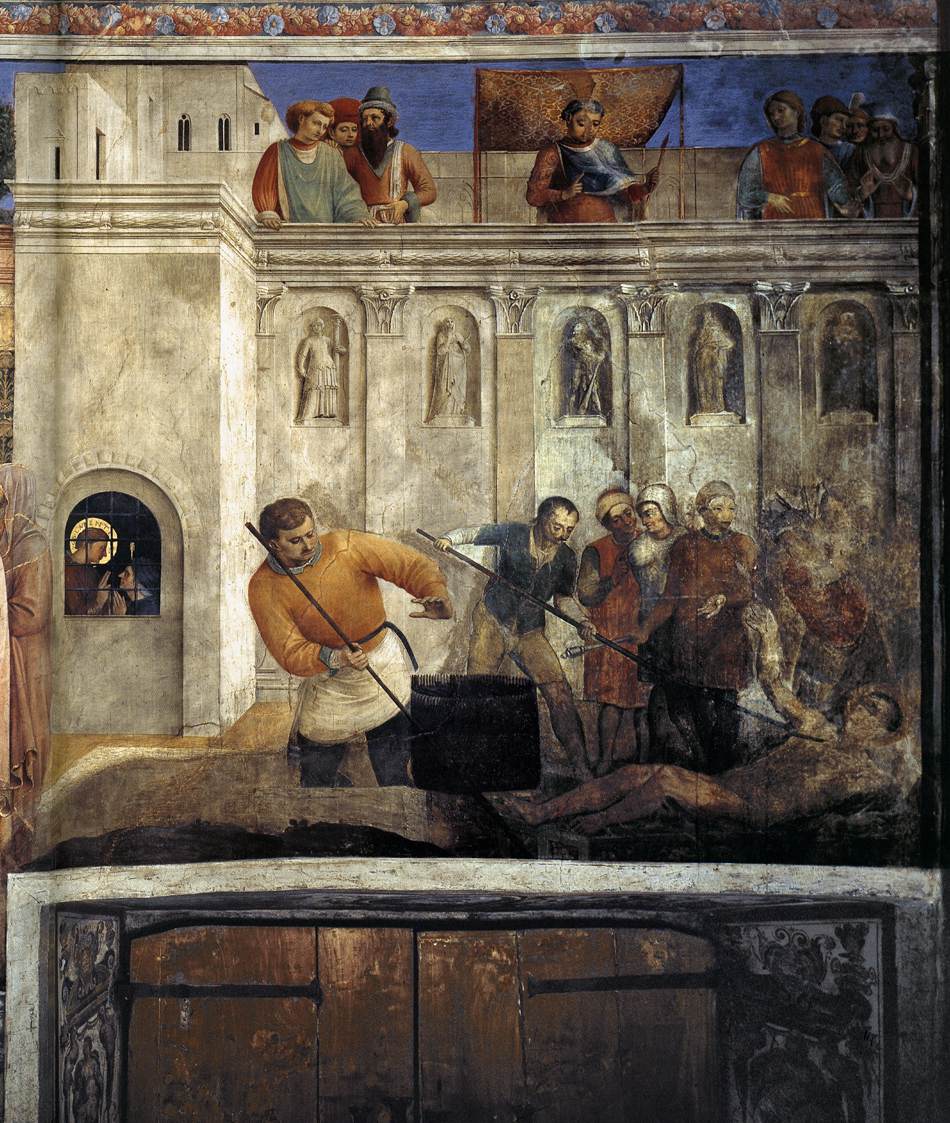
A young deacon is held down on a gridiron while executioners stoke the fire beneath him. Fra Angelico painted this last scene of Saint Lawrence's story on the wall of a pope's private chapel in the Vatican.
The story behind the painting
Fra Angelico worked on the Niccoline Chapel during his stay in Rome between 1445 and 1450, with assistants including Benozzo Gozzoli. The first documents about the frescoes date from May and June 1447, under Pope Nicholas V, though work may have begun in the two years before, under Eugene IV. After a pause in the summer of 1447, when the painter went to Orvieto, the frescoes were probably finished by the end of 1448, since on 1 January 1449 Angelico received a new commission. Wikidata gives 1447 as the date.
What to look for
This is the fifth and last episode of the Stories of Saint Lawrence, and the most damaged scene of the series. The gridiron fills the foreground, with executioners all around fanning the flames and pinning the saint down by the neck. Above them, on a raised tribune, the emperor Valerian watches with his officials. Through a barred prison window at the side, a smaller scene shows Lawrence converting his jailer Hippolytus. A figure stepping over the boundary between buildings links the martyrdom to the scene before it, Saint Lawrence before Valerian.
Meaning and intent
The French Wikipedia article notes that the composition is fairly traditional, a scheme Angelico had already used in a predella panel showing Saints Cosmas and Damian condemned to the stake. What stands out, compared with his other works, is the richness of the architecture, such as the row of niches holding statues. The building is more idealised than real and may reflect the writings of Leon Battista Alberti. As in Angelico's other works, the heart of the picture is a clear, diffuse light that falls evenly over cruelty and calm alike.
Legacy
The Niccoline frescoes differ deeply from the ones Angelico painted at San Marco in Florence around 1440 to 1445. Scholars such as John Pope-Hennessy explain this not as a change in his style but as a change of purpose. At San Marco the frescoes helped monks meditate; in the Vatican they had to celebrate the power and wide learning of the papacy, which was trying to renew the glory of ancient Rome after the city had been neglected during the Avignon period. The fresco, about 271 by 236 cm, remains in the Apostolic Palace.
Schon gewusst?
- Fresco in the Niccoline Chapel, Vatican, painted around 1447-1448.
- Fifth and last scene of the Stories of Saint Lawrence.
- Painted by Fra Angelico with assistants including Benozzo Gozzoli.
- The most damaged scene of the cycle.
Über den Künstler
Fra Angelico (1400-1455)
religiöse Kunst · Italienische Renaissance · Apostolischer Palast
Mehr von Fra Angelico
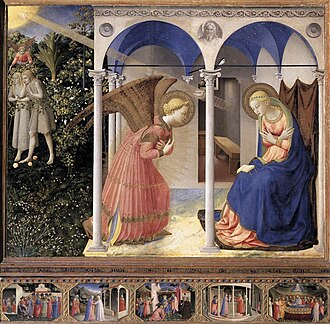 Verkündigung - Fra Angelico (1425)
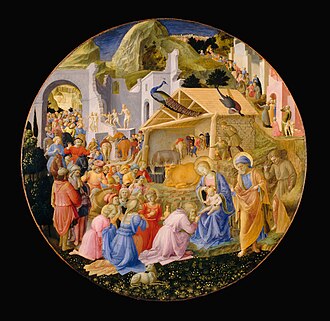 Die Anbetung der Könige, Tondo - Fra Angelico (1430)
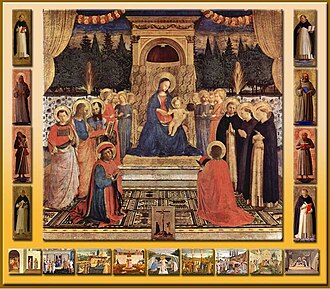 Altarbild von San Marco - Fra Angelico
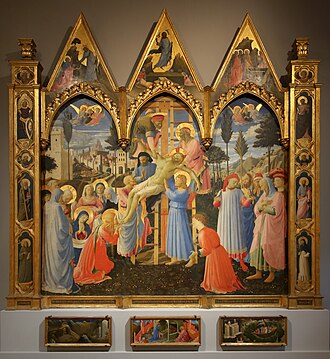 Kreuzabnahme - Fra Angelico (1432)
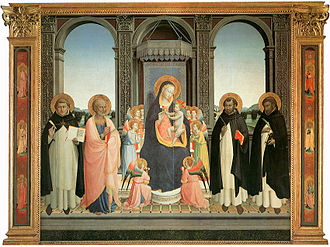 Fiesole Altar - Fra Angelico (1422)
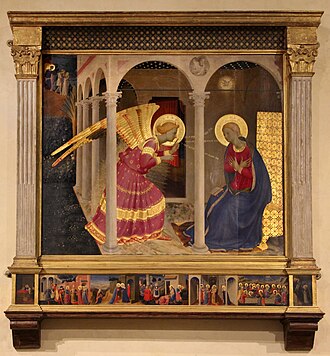 Verkündigung von Cortona - Fra Angelico (1430s)
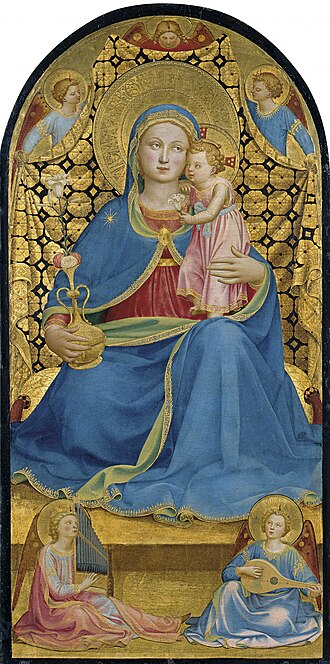 Demutsmadonna - Fra Angelico (1433)
 Marienkrönung - Fra Angelico (1430s)
Werke verwandter Künstler
 Mona Lisa - Leonardo da Vinci (1503-1519)
 Dame mit dem Hermelin - Leonardo da Vinci (1490)
 Tondo Doni - Michelangelo (1500s)
 Die Versuchung des Hl. Antonius - Michelangelo (1487)
 Die Geißelung Christi - Piero della Francesca (1450s)
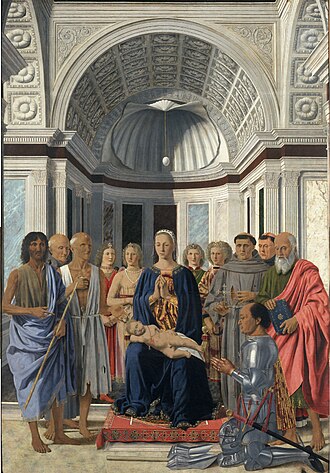 Madonna mit Kind, Heiligen, Engeln und Federico da Montefeltro (Altar des hl. Berhard} - Piero della Francesca (1472)