Heilige Familie mit Elisabeth und Johannesknaben
Peter Paul Rubens · 1615
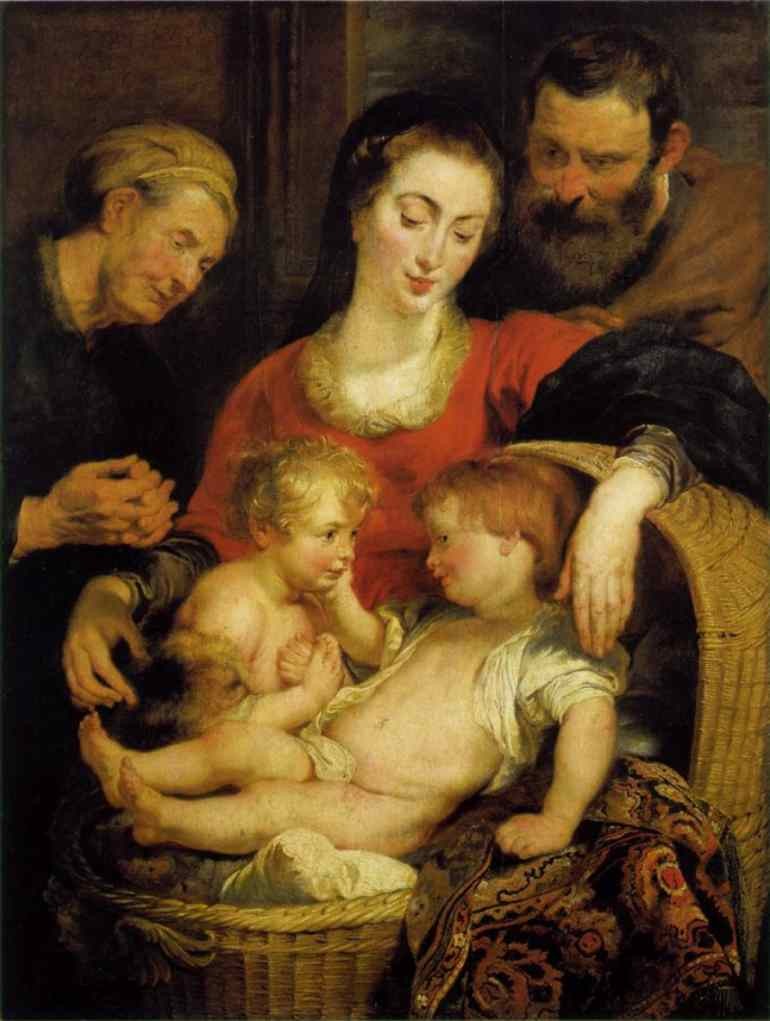
A baby in a wicker cradle reaches up and strokes his cousin's face. Rubens filled this small Holy Family with tenderness, and Napoleon's inspectors liked it enough to carry it off to France.
The story behind the painting
The Madonna of the Basket, or Madonna della Cesta, is dated to around 1615 and is now in the Galleria Palatina of the Palazzo Pitti in Florence. The oldest records place it at the Villa del Poggio Imperiale in 1654 to 1655. From 1697 it was in the Palazzo Pitti, in the Parrot Room, and later in various other rooms. In 1799 French inspectors sent the work to Paris, and it was kept at the Museum of Fine Arts in Dijon. It stayed there until the end of 1815 and returned to Florence the following year. The canvas measures about 114 by 88 cm.
What to look for
The basket that gives the painting its name is in fact the wicker cradle where the baby Jesus lies, watched over by Mary and Joseph. The Child tenderly caresses the face of the young John the Baptist, recognisable by the fur coat of a desert hermit. Behind John stands his mother, Saint Elizabeth. Joseph is mature but not old. Look at the details the source singles out: the shining hair, the dull, matte texture of Joseph's beard, and the material weight of the carpet under the baby. The faces are full of life and the figures are arranged with an easy, flowing rhythm.
Meaning and intent
Rubens painted this after his years in Italy, and the work is marked by Italian models, especially Parmigianino, whose influence shows in Mary's face. Making Joseph mature rather than elderly, the source suggests, presents him more as a saint. The centre of the picture is an act of affection between two children, the future Christ and the future Baptist, framed by watchful parents. The fluid placement of the people, the mastery of colour and brushwork, and the careful character of each figure make it, in the words of the source, a small masterpiece showing Rubens at his best.
Legacy
Copies show how admired the composition was. One, found in a private collection in Vienna with the signature of L. Burchard, is described as of higher quality than the Florentine version, an unusual claim worth keeping in mind. Another, more modest copy in the Galleria di Palazzo Spinola in Genoa is attributed to Jacob Jordaens. The painting is counted among the best compositions on this subject that Rubens produced around 1615, together with the version in the Wallace Collection in London, dated about 1614. Its round trip to Dijon and back also makes it a small witness to the Napoleonic removals of Italian art.
Schon gewusst?
- Dated around 1615, now in the Galleria Palatina, Florence.
- Taken to France in 1799 and kept in Dijon until 1815.
- The basket is actually the wicker cradle of the Christ Child.
- A copy in Vienna is described as better than the Florence version.
Über den Künstler
Peter Paul Rubens (1577-1640)
religiöse Kunst · Maria · Jesuskind · Josef von Nazaret · Galleria Palatina · Johannesknabe · Heilige Familie
Mehr von Peter Paul Rubens
.jpg) Die Aufrichtung des Kreuzes - Peter Paul Rubens (1609)
Die Aufrichtung des Kreuzes - Peter Paul Rubens (1609)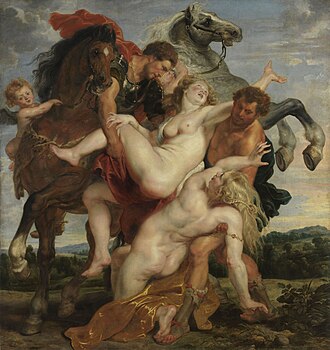 Der Raub der Töchter des Leukippos - Peter Paul Rubens (1618)
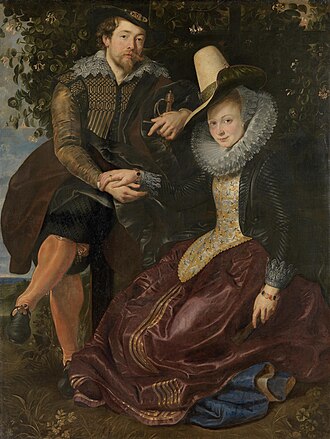 Rubens und Isabella Brant in der Geißblattlaube - Peter Paul Rubens (1600s)
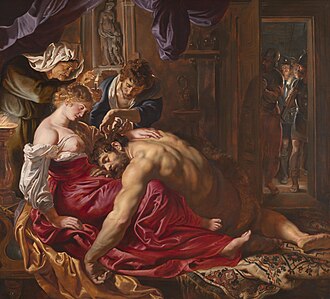 Samson und Delilah - Peter Paul Rubens (1600s)
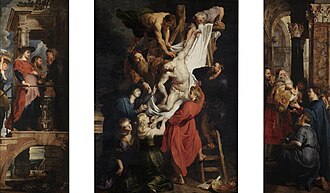 Kreuzabnahme - Peter Paul Rubens (1611)
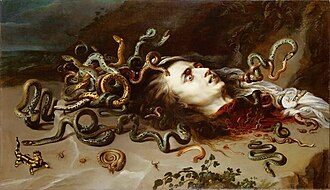 Haupt der Medusa - Peter Paul Rubens (1618)
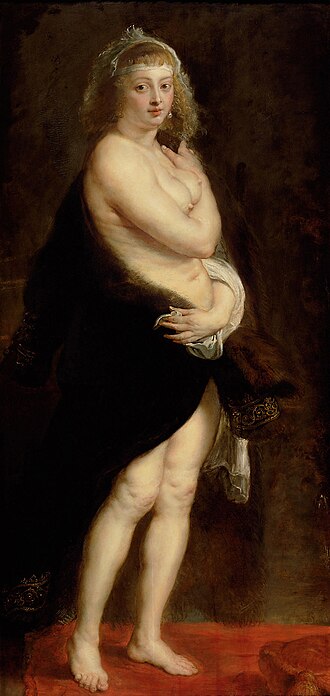 Helena Fourment - Peter Paul Rubens (1638)
.jpg) Der Liebesgarten - Peter Paul Rubens (1632)
Der Liebesgarten - Peter Paul Rubens (1632)
Werke verwandter Künstler
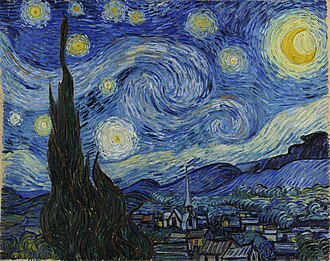 Die Sternennacht - Vincent van Gogh (1889)
.jpg) Caféterrasse am Abend - Vincent van Gogh (1888)
Caféterrasse am Abend - Vincent van Gogh (1888) Das Abendmahl in Emmaus - Caravaggio (1601)
 Die Berufung des Hl. Matthäus - Caravaggio (1609)
 Las Meninas - Diego Velázquez (1656)
 Die Übergabe von Breda - Diego Velázquez (1635)
%20-%20Google%20Art%20Project.jpg) Dreifachporträt von Karl I. - Anthony van Dyck (1635)
Dreifachporträt von Karl I. - Anthony van Dyck (1635)%20with%20M.%20de%20St%20Antoine%20-%20Google%20Art%20Project.jpg) Karl I mit M. de St. Antoine - Anthony van Dyck (1636)
Karl I mit M. de St. Antoine - Anthony van Dyck (1636)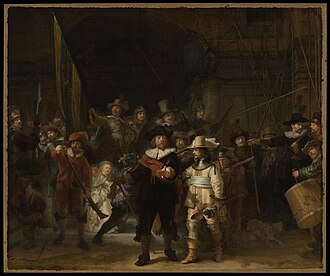 Die Nachtwache - Rembrandt van Rijn (1642)
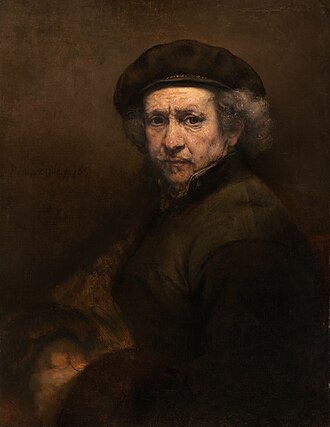 Selbstbildnis - Rembrandt van Rijn (1659)
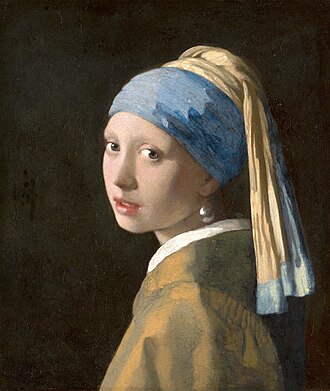 Das Mädchen mit dem Perlenohrgehänge - Johannes Vermeer (1665)
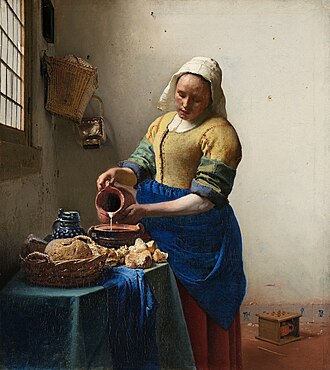 Dienstmagd mit Milchkrug - Johannes Vermeer (c. 1658)