Madonna della Vallicella
Peter Paul Rubens · 1606
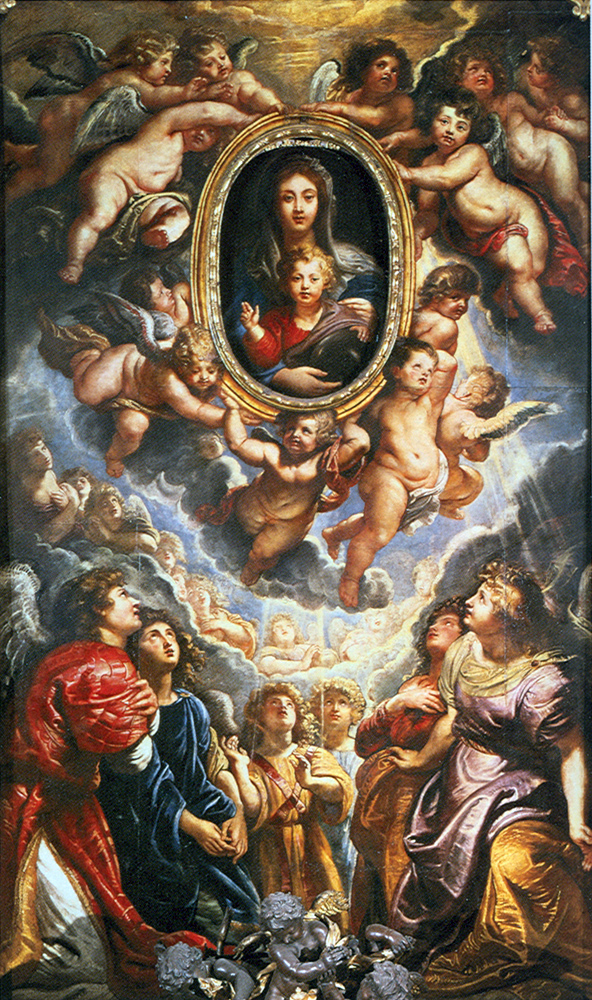
A young Rubens in Rome painted a high altar, saw the light glare on his canvas, and started again on stone. Behind his painting hides an ancient miraculous icon, revealed by pulleys and cords.
The story behind the painting
The Madonna della Vallicella was painted between 1606 and 1608 for the high altar of Santa Maria in Vallicella in Rome, also called the Chiesa Nuova, the New Church. Wikidata gives 1606, the start of the work. It was Rubens's second confirmed commission in Rome, after a lost cycle for Santa Croce in Gerusalemme. His first version, on canvas, is known as Saint Gregory with Saints, but it must not have satisfied the clients because of how light glared on its surface. So Rubens painted a new version on a slab of slate, a material that reflects light differently and removed the problem. The work is about 425 by 250 cm.
What to look for
The church takes its name from an ancient miraculous icon, the Madonna vallicelliana, of the Nicopeia, bringer of victory, or Kyriotissa, enthroned, type. Rubens reconstructed this image surrounded by concentric circles of adoring angels and cherubs. On a copper plate set over it he painted another Madonna, with the Baby Jesus giving a blessing, mirroring the sacred icon beneath. The plate can be raised with a mechanism of pulleys and cords. In the central panel, space seems to spread beyond the frame, a common theme in Baroque painting. Look also at the side walls, where two more slate panels complete the ensemble.
Meaning and intent
In the altar niche the Madonna forms a triptych with two other paintings on slate: Pope Gregory I with Papias and Maurus on the left, and Saints Domitilla, Nereus and Achilleus on the right. The church also owns relics of the saints shown, so the painted figures stand near their own remains. Rubens set the two side paintings away from the central altar and turned them toward the Madonna, so the devotional gazes of Gregory and Domitilla lead the worshipper toward the altar. The arrangement may reflect Annibale Carracci's composition for the Salviati Chapel at San Gregorio Magno al Celio, made only a few years before.
Legacy
The paintings of the Chiesa Nuova are the only works Rubens made in Rome that remain in their original places. Elsewhere, his Roman pictures have moved, but here visitors can still see the whole scheme as he planned it, with the hidden icon, the movable copper plate and the angled side panels. The rejected first canvas had its own afterlife. According to the source on van Dyck's Madonna del Rosario, Rubens took it back to Antwerp, where his pupil Anthony van Dyck could see it, and its Saint Domitilla seems to echo in van Dyck's later Saint Olivia in Palermo.
Schon gewusst?
- Painted 1606-1608 for the high altar of the Chiesa Nuova, Rome.
- Rubens redid the work on slate because light glared on his canvas.
- A copper plate over the ancient icon can be raised with pulleys.
- His only Roman works still in their original place.
Über den Künstler
Peter Paul Rubens (1577-1640)
religiöse Kunst · Frau · Maria · Jesuskind · Junge · Mutter · Blick auf den Betrachter
Mehr von Peter Paul Rubens
.jpg) Die Aufrichtung des Kreuzes - Peter Paul Rubens (1609)
Die Aufrichtung des Kreuzes - Peter Paul Rubens (1609) Der Raub der Töchter des Leukippos - Peter Paul Rubens (1618)
 Rubens und Isabella Brant in der Geißblattlaube - Peter Paul Rubens (1600s)
 Samson und Delilah - Peter Paul Rubens (1600s)
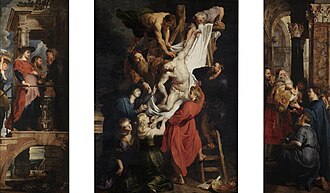 Kreuzabnahme - Peter Paul Rubens (1611)
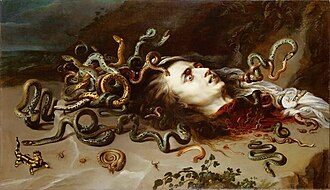 Haupt der Medusa - Peter Paul Rubens (1618)
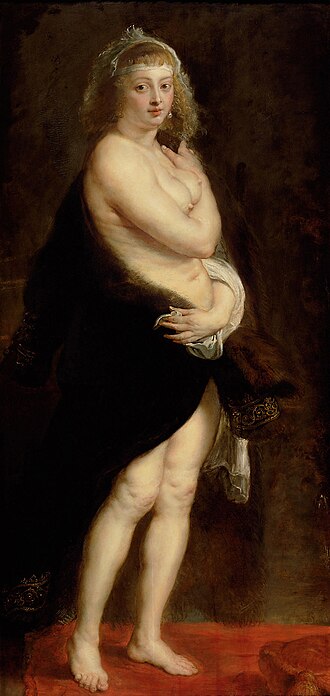 Helena Fourment - Peter Paul Rubens (1638)
.jpg) Der Liebesgarten - Peter Paul Rubens (1632)
Der Liebesgarten - Peter Paul Rubens (1632)
Werke verwandter Künstler
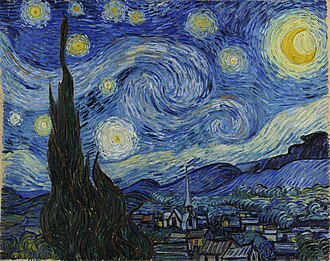 Die Sternennacht - Vincent van Gogh (1889)
.jpg) Caféterrasse am Abend - Vincent van Gogh (1888)
Caféterrasse am Abend - Vincent van Gogh (1888) Das Abendmahl in Emmaus - Caravaggio (1601)
 Die Berufung des Hl. Matthäus - Caravaggio (1609)
 Las Meninas - Diego Velázquez (1656)
 Die Übergabe von Breda - Diego Velázquez (1635)
%20-%20Google%20Art%20Project.jpg) Dreifachporträt von Karl I. - Anthony van Dyck (1635)
Dreifachporträt von Karl I. - Anthony van Dyck (1635)%20with%20M.%20de%20St%20Antoine%20-%20Google%20Art%20Project.jpg) Karl I mit M. de St. Antoine - Anthony van Dyck (1636)
Karl I mit M. de St. Antoine - Anthony van Dyck (1636)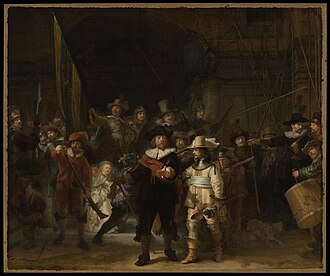 Die Nachtwache - Rembrandt van Rijn (1642)
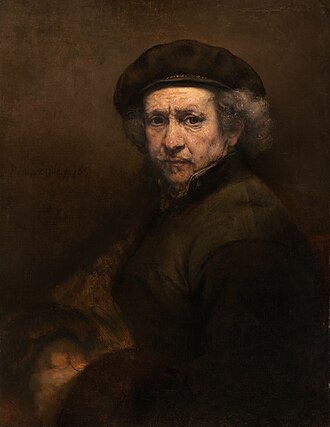 Selbstbildnis - Rembrandt van Rijn (1659)
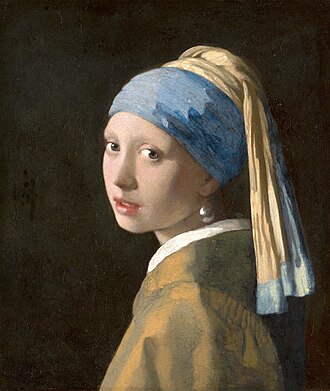 Das Mädchen mit dem Perlenohrgehänge - Johannes Vermeer (1665)
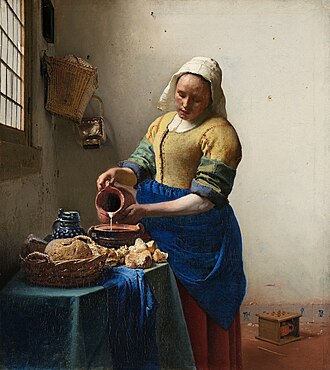 Dienstmagd mit Milchkrug - Johannes Vermeer (c. 1658)