Madame Clémentine Valensi Stora
Pierre-Auguste Renoir · 1870
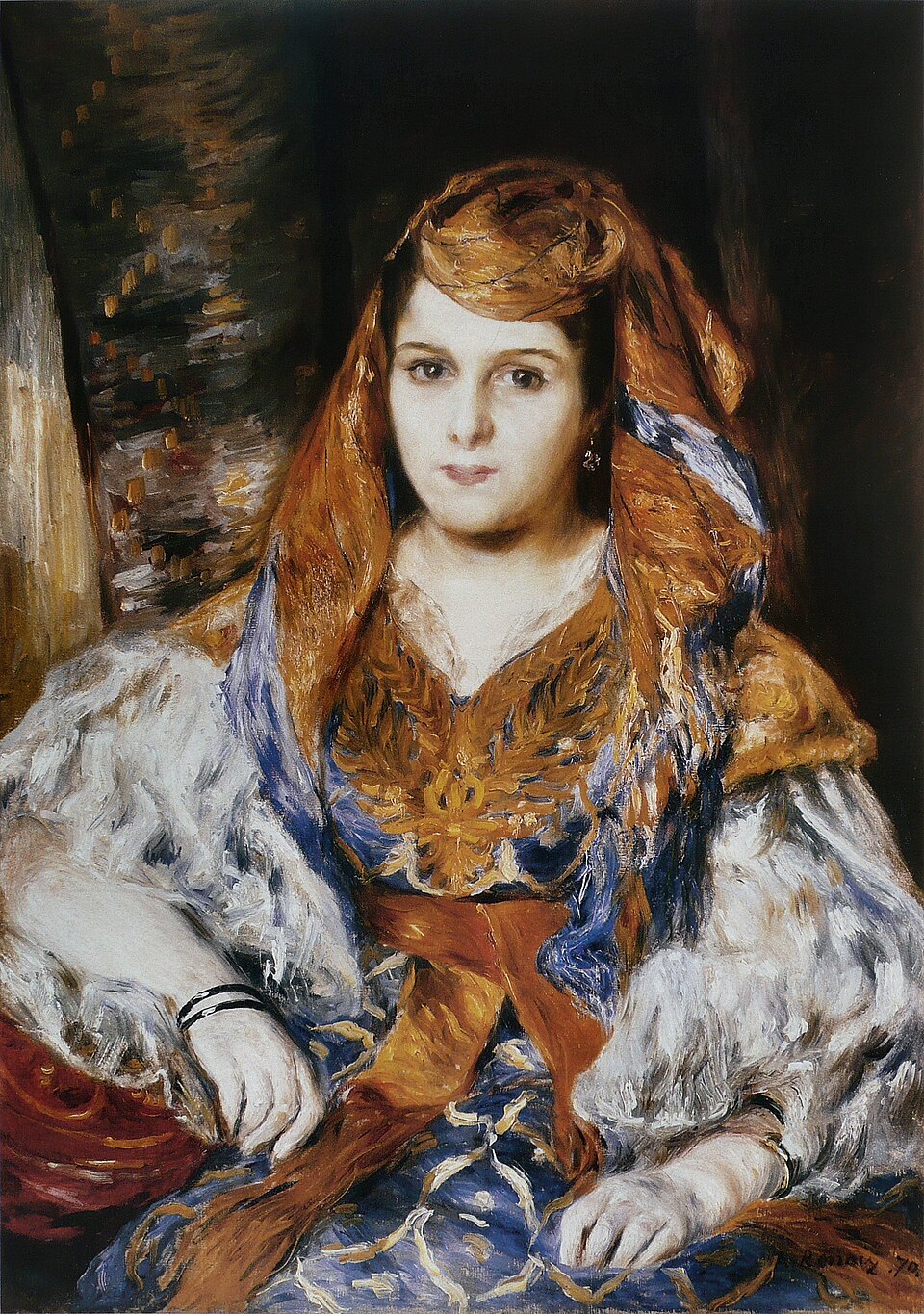
A young woman in Algerian costume purses her lips, not quite pleased. Renoir painted Clémentine Stora in 1870, and both painter and sitter later turned against the picture; she called it horrible.
The story behind the painting
The sitter is Rebecca Clémentine Stora, née Valensi (or Valensin), a young Sephardic Jewish woman born in Algiers on 24 April 1851, the daughter of a maker of travel goods. Her family and the Storas moved to Paris in the late 1860s, as anti-Semitic feeling grew in Algeria. In 1868 she married Nathan Stora, an antiques dealer in North African goods with a shop called Au Pacha on the Boulevard des Italiens. Renoir completed the portrait in 1870. It is untypical of him: his other Orientalist works of the time were homages to Ingres and Delacroix, not portraits of living people, and he did not travel abroad until 1881.
What to look for
Research with photographs of the period has shown that her costume is authentic for a Jewish Algerian woman of her time, and it has been compared with Charles Cordier's bust The Jewish Woman of Algiers. Colin Bailey called the picture proto-Impressionist. Look at the broad brushstrokes and the exuberant colour, a high point of Renoir's temporary turn away from the realism of Courbet and Manet toward his hero Delacroix. Then look at her face: Clémentine's pursed expression seems to say she is not entirely happy with something.
Meaning and intent
Because the clothes are authentic and the sitter is a named living person, the picture is closer to conventional portraiture than to oriental fantasy. Yet questions remain. Such costume was not usual in 1870s Paris, and it is unclear whether the Algerian theme was Renoir's search for authenticity or a wish of the Storas, whose trade relied on the French taste for North African goods. Clémentine was painted again around 1877 by Constant-Joseph Brochart, in an oriental fantasy scene with her daughter, and in a pastel of about 1880 in plain European dress, with no sign of her Jewish Algerian roots.
Legacy
Renoir later repudiated the work, complaining that collectors kept asking for his old manner. Clémentine disliked it too and called it horrible. Around 1893 she sold it to the portraitist Paul Helleu, who sold it to Claude Monet before 1906; Monet lent it that year to an exhibition of French Orientalists in Paris. It passed to Michel Monet in 1926, then through the Galerie Bernheim-Jeune and London dealers, to Prentice Cobb Hale of San Francisco. In 1966 Mr and Mrs Prentice Cobb Hale gave it to the Fine Arts Museums of San Francisco in honour of Thomas Carr Howe Jr.
Schon gewusst?
- Painted by Pierre-Auguste Renoir in 1870.
- The sitter, Clémentine Stora, was born in Algiers in 1851.
- Once owned by Claude Monet.
- In the Fine Arts Museums of San Francisco since 1966.
Über den Künstler
Pierre-Auguste Renoir (1841-1919)
Mehr von Pierre-Auguste Renoir
 Tanz im Moulin de la Galette - Pierre-Auguste Renoir (1876)
 Das Frühstück der Ruderer - Pierre-Auguste Renoir (1881)
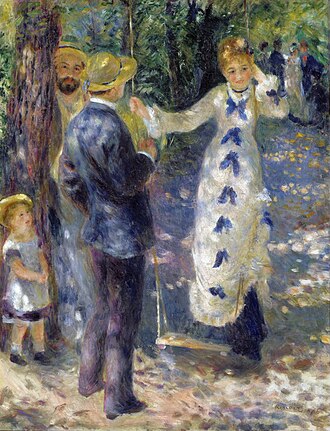 Auf der Schaukel - Pierre-Auguste Renoir (1876)
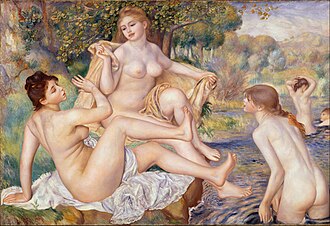 Die großen Badenden - Pierre-Auguste Renoir (1884)
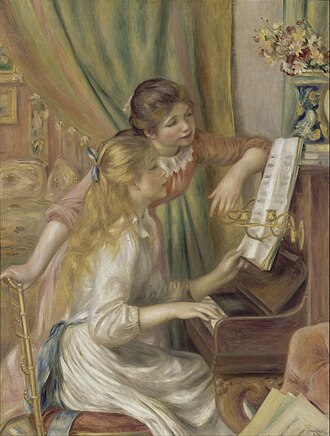 Zwei Mädchen am Klavier - Pierre-Auguste Renoir (1892)
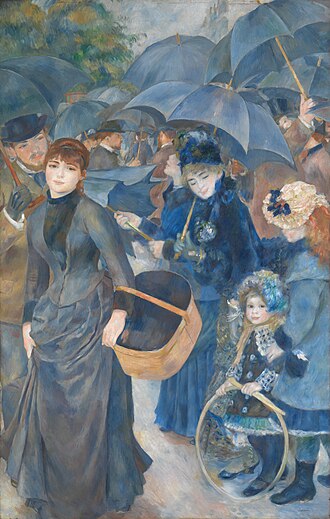 Regenschirme - Pierre-Auguste Renoir (1880s)
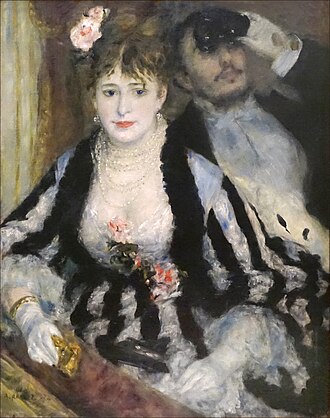 Die Loge - Pierre-Auguste Renoir (1874)
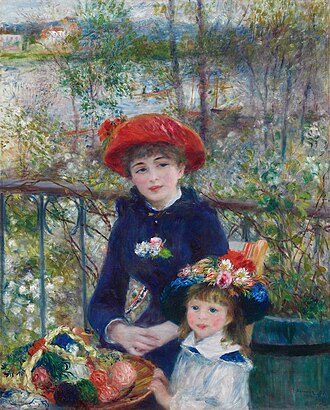 Auf der Terrasse - Pierre-Auguste Renoir (1881)
Werke verwandter Künstler
 Impression, Sonnenaufgang - Claude Monet (1872)
 Seerosen - Claude Monet (1906)
 Das Frühstück im Grünen - Édouard Manet (1863)
 Olympia - Édouard Manet (1863)
 Wiege - Berthe Morisot (1872)
 Sommertag - Berthe Morisot (1879)
 Der Absinth - Edgar Degas (1875)
 Die Bellelli Familie - Edgar Degas (1858)
 Der Kanal von Loing - Alfred Sisley (1892)
 The Watering Pond at Marly with Hoarfrost - Alfred Sisley (1876)
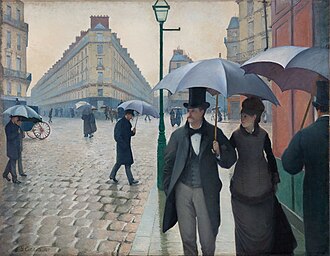 Straße in Paris an einem regnerischen Tag - Gustave Caillebotte (1877)
 Die Parkettschleifer - Gustave Caillebotte (1875)