Licht und Farbe
J. M. W. Turner · 1843
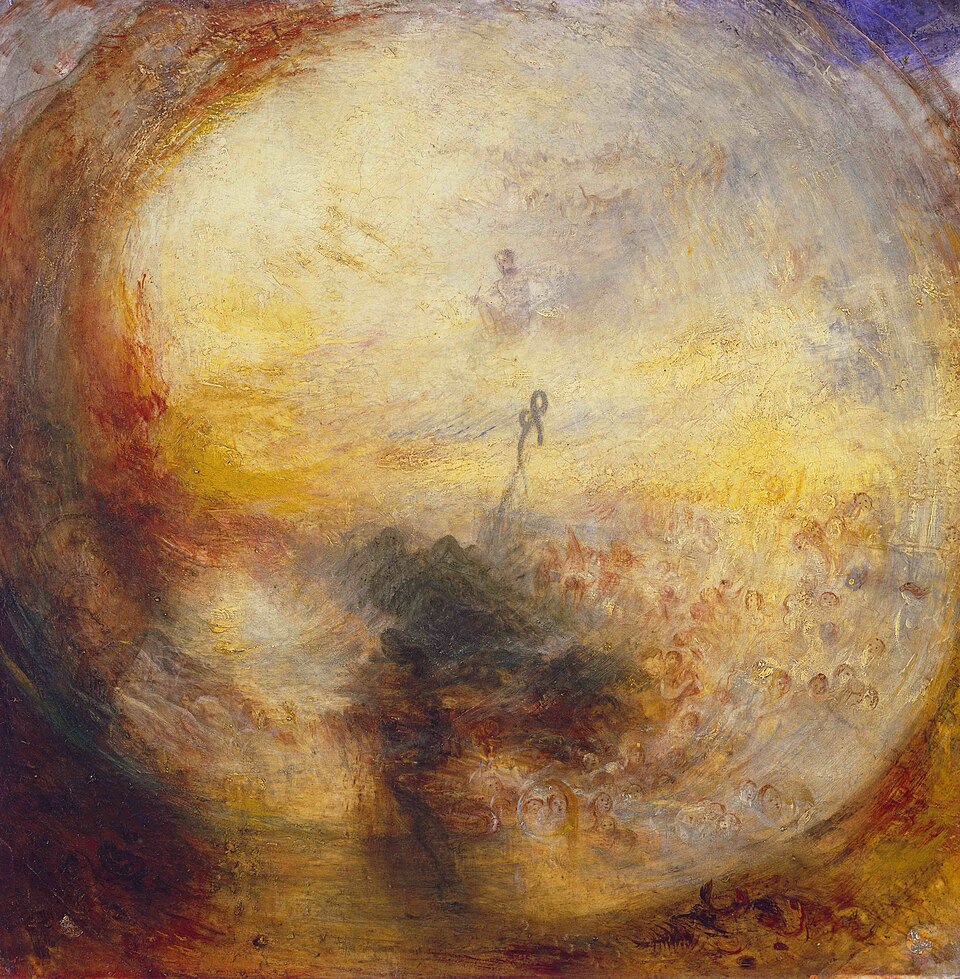
A whirl of gold and red light opens like an eye after the Great Flood. Late in life Turner painted the morning after the Deluge as pure colour, borrowing ideas from Goethe's theory of how light and darkness make every hue.
The story behind the painting
J. M. W. Turner showed this painting at the Royal Academy exhibition of 1843, in the later years of his career. Its long title names three things at once: Goethe's theory of light and colour, the morning after the Great Flood told in the Book of Genesis, and Moses writing that book. Turner had taken a close interest in Goethe's Theory of Colours, published in 1810, which rejected Newton's account and held that every colour is its own mix of light and darkness. Turner exhibited a companion piece the same year, Shade and Darkness - The Evening of the Deluge.
What to look for
The canvas, 78.7 by 78.7 cm, is square, and the image within it is circular, which Wikipedia reads as an echo of the human eye. Colour takes the place of form: yellow fills the centre and, as you move outward, deepens into orange and red and darkens at the edges, following Goethe's idea of how yellow light changes as it deepens. Turner's main colours here are red, yellow and blue. Nothing is drawn sharply; the blurred shapes ask your eye to build the scene for itself, as it always tries to remake nature.
Meaning and intent
In Goethe's scheme, red and yellow belong to the plus side and lift the spirits, while blue brings melancholy. The yellow here is hopeful, yet it is tied to a light that will not last: a morning sun that is already changing. The picture shows nature as beautiful but able to destroy and remake life, with people left passive before it, and Wikipedia also reads in it Turner's belief in God's power, who sends the flood, spares Noah and inspires Moses. Turner is said to have written a poem, Fallacies of Hope, to accompany the pair of paintings.
Legacy
The work shows Turner's place in the Romantic movement and as a forerunner of Impressionism; Wikidata also links it to abstract art. In 1994 Light and Colour was one of three paintings stolen from a museum in Frankfurt, together with its companion Shade and Darkness. In 2002 the Tate recovered it through a covert purchase on the black market. Wikidata lists both the Tate and the National Gallery as its holders.
Schon gewusst?
- First shown at the Royal Academy in 1843.
- Inspired by Goethe's Theory of Colours (1810).
- Companion to Shade and Darkness - The Evening of the Deluge.
- Stolen in Frankfurt in 1994, recovered by the Tate in 2002.
Wikipedia · Wikidata · Wikipedia
Über den Künstler
J. M. W. Turner (1775-1851)
religiöse Kunst · National Gallery · Romantik · Tate
Mehr von J. M. W. Turner
 Die letzte Fahrt der Temeraire - J. M. W. Turner (1839)
 Rain, Steam and Speed - The Great Western Railway - J. M. W. Turner (1844)
 Das Sklavenschiff - J. M. W. Turner (1840)
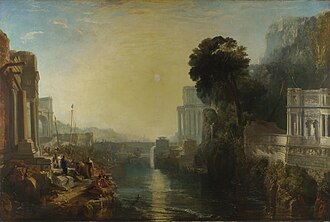 Dido building Carthage - J. M. W. Turner (1815)
.jpg) Die Seeschlacht von Trafalgar am 21. Oktober 1805 - J. M. W. Turner (1820s)
Die Seeschlacht von Trafalgar am 21. Oktober 1805 - J. M. W. Turner (1820s)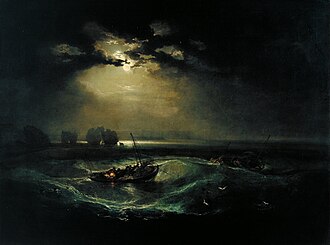 Fischer auf dem Meer - J. M. W. Turner (1796)
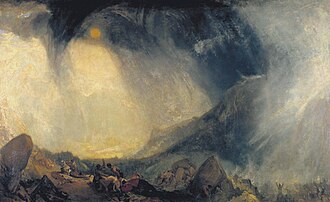 Schneesturm: Hannibal und sein Herr überqueren die Alpen - J. M. W. Turner (1812)
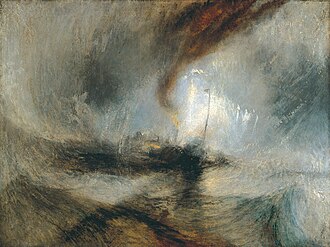 Schneesturm - ein Dampfschiff im flachen Wasser vor einer Hafeneinfahrt gibt Leuchtsignale ab - J. M. W. Turner (1842)
Werke verwandter Künstler
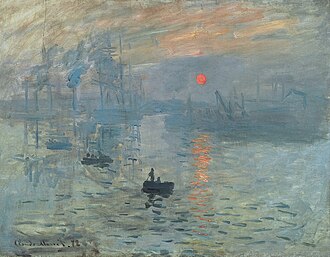 Impression, Sonnenaufgang - Claude Monet (1872)
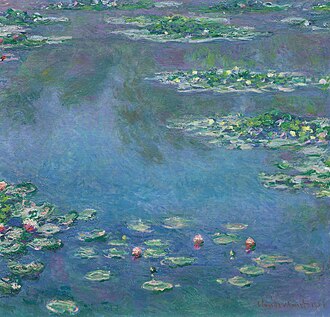 Seerosen - Claude Monet (1906)
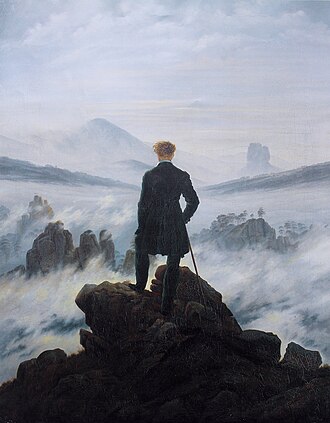 Der Wanderer über dem Nebelmeer - Caspar David Friedrich (c. 1818)
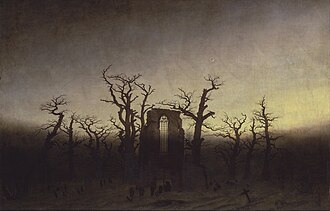 Abtei im Eichwald - Caspar David Friedrich (1800s)
 Die Erschießung der Aufständischen - Francisco Goya (1814)
.jpg) Die nackte Maja - Francisco Goya (1800)
Die nackte Maja - Francisco Goya (1800)