Le Bon Bock
Édouard Manet · 1873
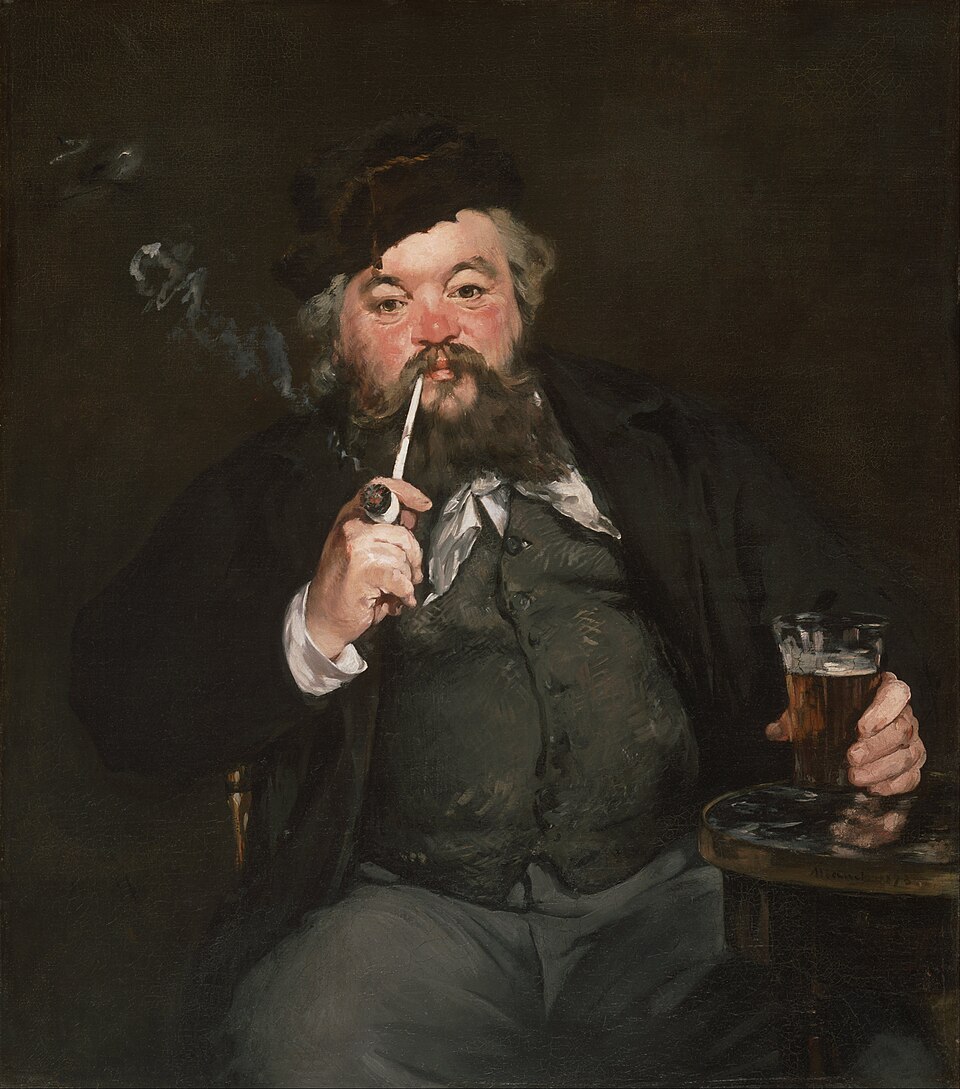
A round, contented man with a pipe and a glass of beer. Manet painted Le Bon Bock in 1873 after looking at Frans Hals in Holland, and for once the Salon jury and the critics loved him.
The story behind the painting
In 1873 Manet, seen by his peers as a painter who had broken free from academic art, even a revolutionary, still wanted the favour of the Salon jury. He had already drawn on Spanish masters such as Goya and Velázquez. His Dutch wife, Suzanne Leenhoff, led him on trips to the Netherlands, and in summer 1872 he saw the work of Frans Hals there. The sitter is Émile Bellot, a printer and engraver who was a regular at the Café Guerbois, where Manet met the Impressionists.
What to look for
The canvas, about 95 by 83 cm, shows Bellot as the regular of a café, though it is not established that the scene is the Guerbois. The source compares the style to Hals paintings such as The Merry Drinker: fairly conventional, with a touch of modernity. Wikidata titles the painting with its beer, a bock, the glass at the heart of the picture. The painting is often taken as a sign of how much the Golden Age of Dutch painting shaped Manet's style at this moment.
Meaning and intent
The beer was not neutral. Bellot published a weekly paper called Le Bon Bock, funded by brewers and aimed at café owners. Beer against wine was a common debate, worrying the wine trade, and beer had a special aura in Paris after the recent loss of Alsace-Lorraine, whose products were in fashion. The painting was made to win the Salon of 1873, and it did: it was accepted and the critics were enthusiastic.
Legacy
The baritone Jean-Baptiste Faure bought it directly from Manet. He had collected Barbizon painters, sold them, and became the first collector to turn on a large scale to Manet and the Impressionists. After passing through several dealers, the painting went to an American collector in 1923 and was bequeathed to the Philadelphia Museum of Art in 1963. It remains one of the clearest signs of Dutch influence in his work.
Schon gewusst?
- Painted in 1873, inspired by Frans Hals.
- The sitter is the engraver Émile Bellot.
- Accepted at the Salon of 1873 and praised by critics.
- Bequeathed to the Philadelphia Museum of Art in 1963.
Über den Künstler
Édouard Manet (1832-1883)
Genreszene · Philadelphia Museum of Art
Mehr von Édouard Manet
 Das Frühstück im Grünen - Édouard Manet (1863)
 Olympia - Édouard Manet (1863)
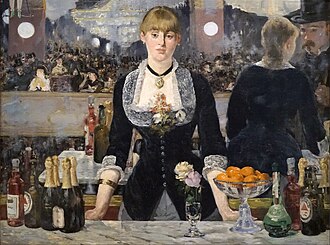 Bar in den Folies-Bergère - Édouard Manet (1882)
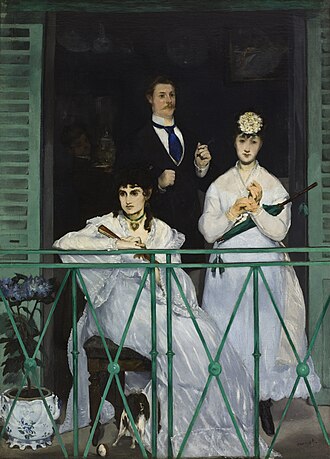 Der Balkon - Édouard Manet (1868)
 Musik im Tuileriengarten - Édouard Manet (1862)
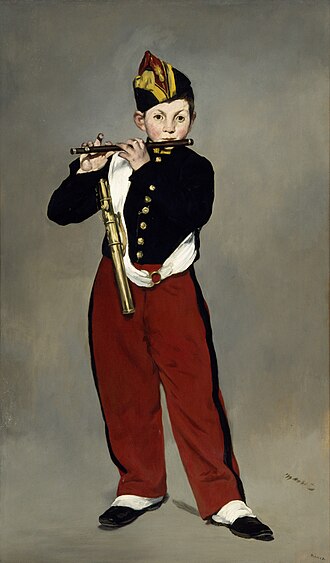 Der Pfeifer - Édouard Manet (1866)
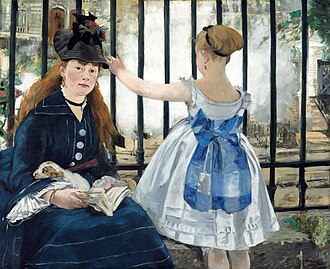 Die Eisenbahn - Édouard Manet (1873)
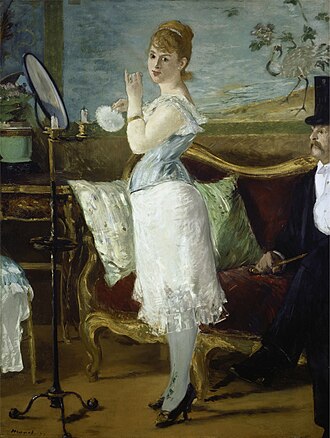 Nana - Édouard Manet (1877)
Werke verwandter Künstler
 Impression, Sonnenaufgang - Claude Monet (1872)
 Seerosen - Claude Monet (1906)
 Tanz im Moulin de la Galette - Pierre-Auguste Renoir (1876)
 Das Frühstück der Ruderer - Pierre-Auguste Renoir (1881)
 Wiege - Berthe Morisot (1872)
 Sommertag - Berthe Morisot (1879)
 Der Absinth - Edgar Degas (1875)
 Die Bellelli Familie - Edgar Degas (1858)
 Der Kanal von Loing - Alfred Sisley (1892)
 The Watering Pond at Marly with Hoarfrost - Alfred Sisley (1876)
 Straße in Paris an einem regnerischen Tag - Gustave Caillebotte (1877)
 Die Parkettschleifer - Gustave Caillebotte (1875)