Beweinung Christi
Sandro Botticelli · 1495
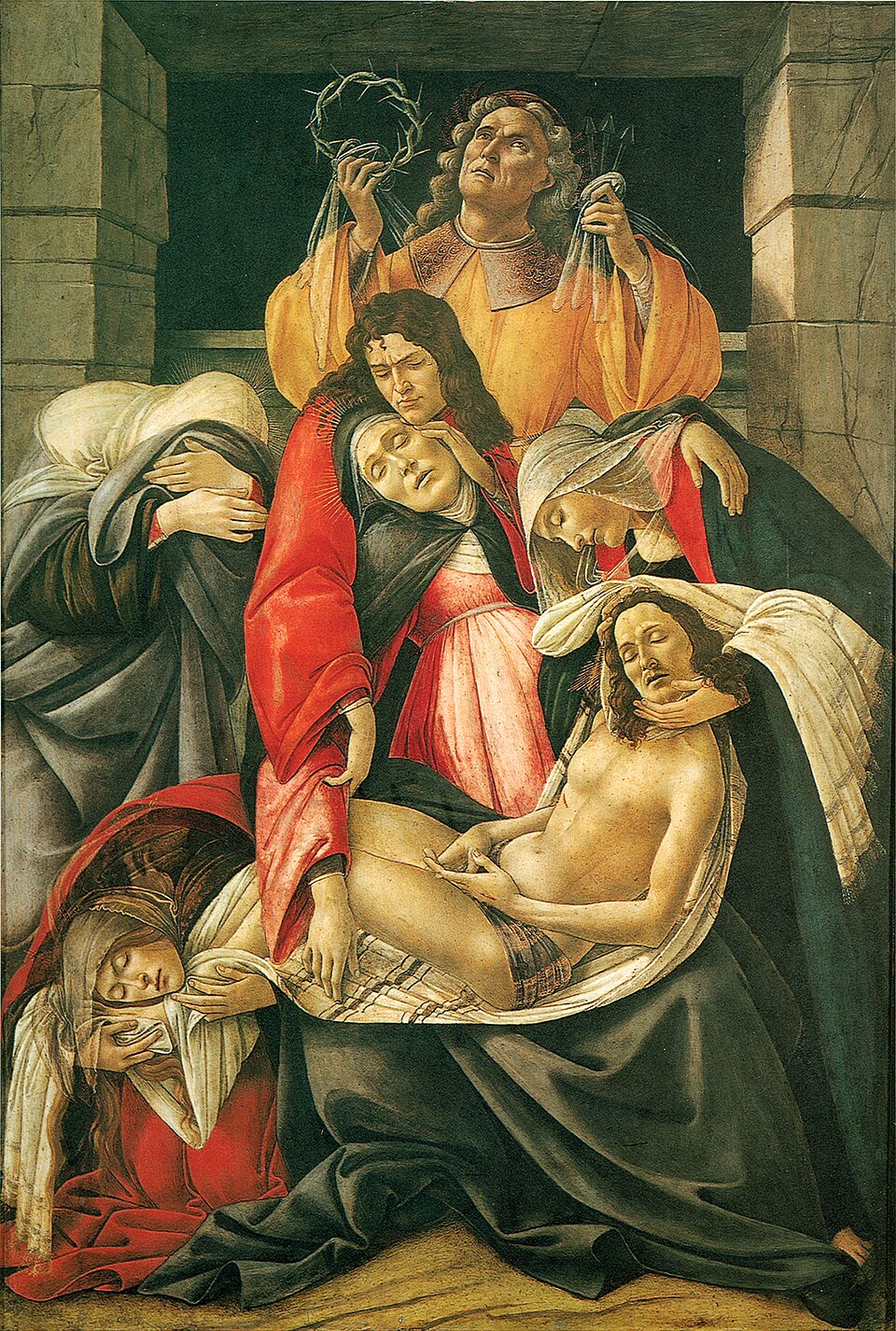
The Virgin sits upright with her dead son across her lap, his body strangely small, while the mourners twist around them in despair. Botticelli bends the human figure to his own geometry of grief.
The story behind the painting
Botticelli, born Alessandro di Mariano Filipepi in 1445, painted this Lamentation between 1490 and 1495; Wikidata gives 1495. In his later works he developed a more personal style, especially in religious subjects, and he is believed to have been influenced by the preacher Girolamo Savonarola. The painting was originally kept in the church of Santa Maria Maggiore in Florence. It is one of two versions of the Lamentation by Botticelli; the other, from about 1492, is in the Alte Pinakothek in Munich.
What to look for
The Virgin Mary sits vertically with the dead Christ on her lap, and his body appears extremely small. Together they form a Pieta, the image of the Virgin mourning her son. The Three Marys circle this inner group, expressing despair. Mary Magdalene is at Christ's feet, in turmoil. Saint John sits above the Virgin and cradles her head, trying to soothe her. Joseph of Arimathea stands above the group holding the crown of thorns and three nails. Notice the contorted, distorted poses.
Meaning and intent
Botticelli does not follow the rules of naturalism here. Instead of a believable arrangement of bodies, he builds the scene from his own preferred geometry, stacking the figures in a tight, vertical column of sorrow. The reduced size of Christ and the bent postures of the mourners turn the picture into an image of feeling rather than of anatomy. Each gesture, from John holding Mary's head to the Magdalene clasping the feet, passes the grief from one figure to the next.
Legacy
Botticelli has been described as one of the most powerful painters of the lyrical current of the Renaissance, and this style of geometry influenced the third generation of Renaissance painters who came after him. The work left Florence's Santa Maria Maggiore and is now in the Museo Poldi Pezzoli in Milan. Seen beside the Munich version, it shows how the painter of the Birth of Venus and Primavera turned, late in life, toward an intense and personal religious art.
Schon gewusst?
- Painted between 1490 and 1495; Wikidata gives 1495.
- Originally in Santa Maria Maggiore, Florence.
- Joseph of Arimathea holds the crown of thorns and three nails.
- Now in the Museo Poldi Pezzoli, Milan.
Über den Künstler
Sandro Botticelli (1445-1510)
religiöse Kunst · Mann · Maria · Jesus Christus · Frührenaissance · Maria Magdalena · Johannes der Evangelist · Gebet · Heiliger
Mehr von Sandro Botticelli
 Die Geburt der Venus - Sandro Botticelli (c. 1485)
 Primavera - Sandro Botticelli (1480s)
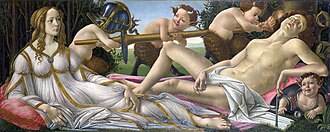 Venus und Mars - Sandro Botticelli (1485)
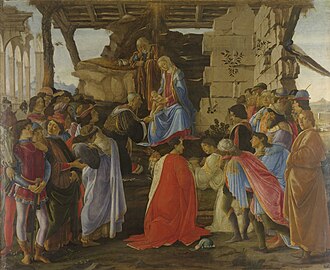 Anbetung der Heiligen drei Könige - Sandro Botticelli (1470s)
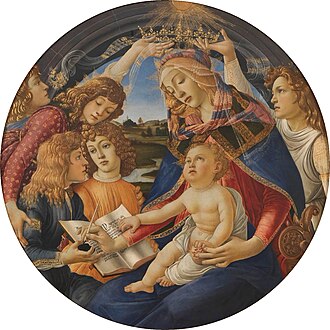 Madonna des Magnificat - Sandro Botticelli (1481)
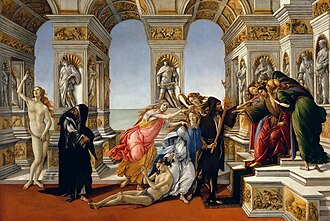 Die Verleumdung des Apelles - Sandro Botticelli (1490s)
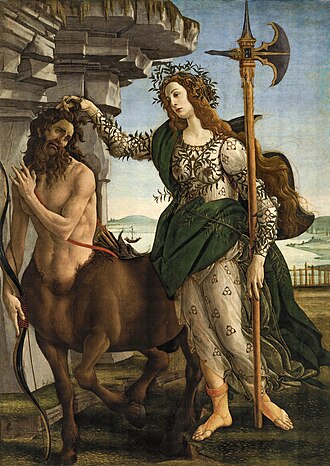 Minerva und der Kentaur - Sandro Botticelli (1482)
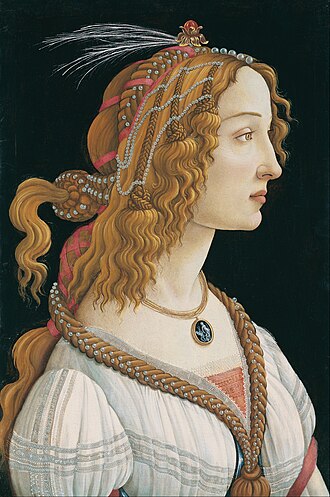 Weibliches Idealbildnis - Sandro Botticelli (1480)
Werke verwandter Künstler
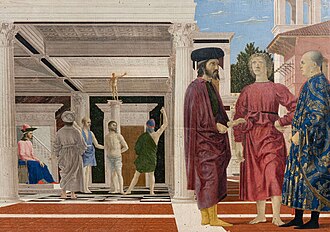 Die Geißelung Christi - Piero della Francesca (1450s)
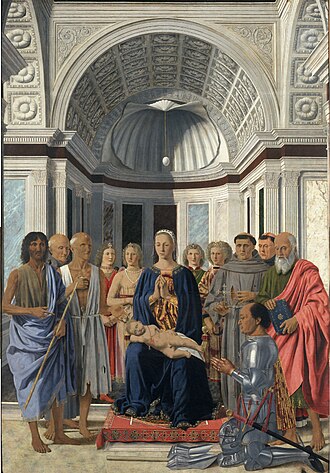 Madonna mit Kind, Heiligen, Engeln und Federico da Montefeltro (Altar des hl. Berhard} - Piero della Francesca (1472)
 Mona Lisa - Leonardo da Vinci (1503-1519)
 Dame mit dem Hermelin - Leonardo da Vinci (1490)
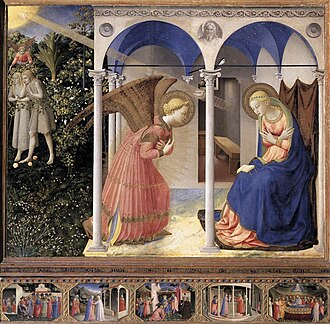 Verkündigung - Fra Angelico (1425)
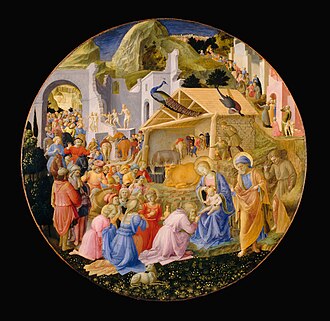 Die Anbetung der Könige, Tondo - Fra Angelico (1430)
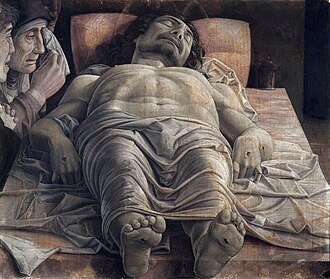 Beweinung Christi - Andrea Mantegna (1483)
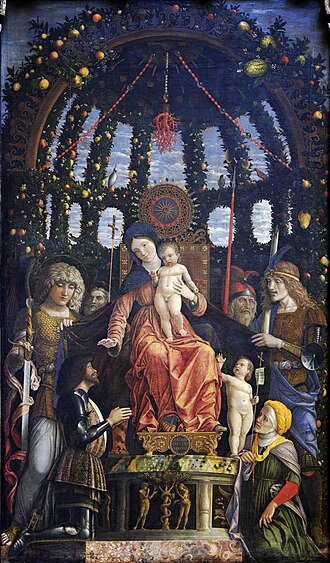 Madonna della Vittoria - Andrea Mantegna