Die Hoffnung I
Gustav Klimt · 1903
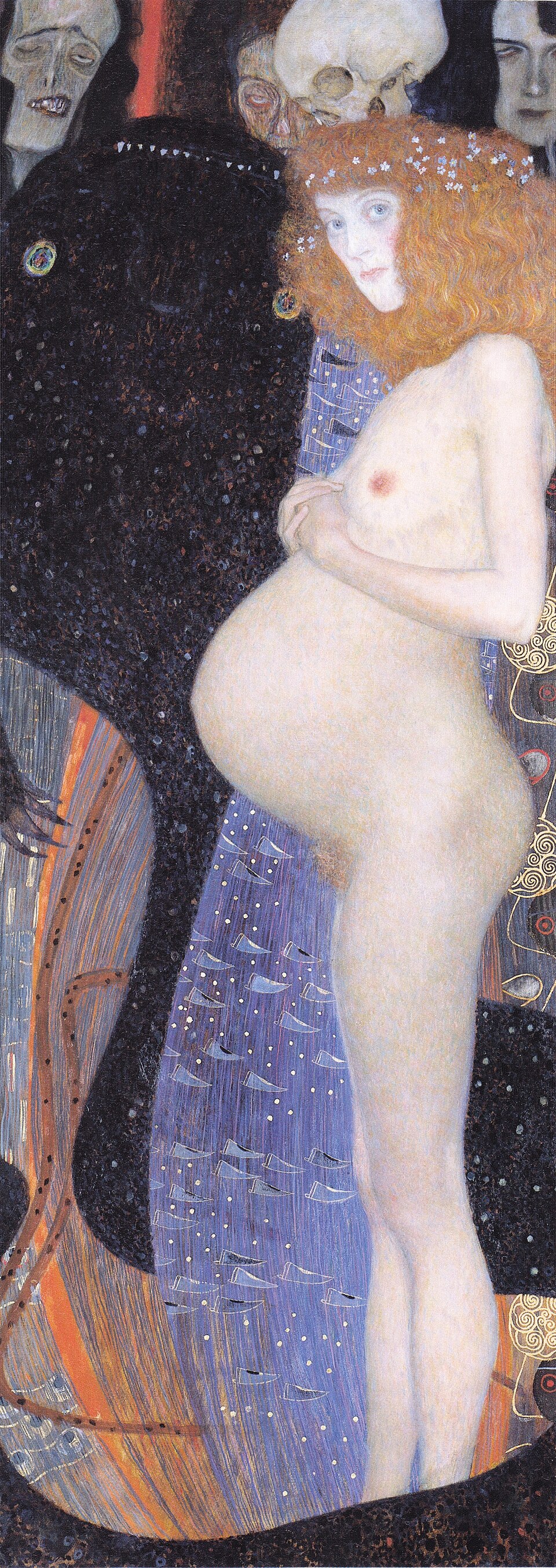
A pregnant woman stands naked and gazes straight at you, forget-me-nots in her hair. At first the picture seems all beauty. Then you notice the skull above her head, the ghostly faces, and a sea monster's claw reaching toward her.
The story behind the painting
Klimt painted Hope I in 1903. His model was Herma, one of his favourite models. One day she failed to come to the studio, and when Klimt sent someone to check whether she was ill, he learned she was pregnant. He insisted she come anyway, and on seeing her he decided to make her the subject of this painting. A year earlier, in 1902, Klimt's own infant son Otto Zimmermann had died. The first sketch showed a man comforting the pregnant woman; in the final painting that man is replaced by a skull, and the loss may explain the change.
What to look for
The tall, narrow canvas, 189 by 67 cm, is dominated by the nude woman, hands folded above her belly, her great mass of hair crowned with forget-me-nots. Behind her, three sickly figures are read as disease, old age and madness. Directly above her head is a skull on a blue body of shapes and colours. On the left a sea monster bares its teeth, its claw opposite her womb, and its long tail wraps around her feet as if to capture her. Klimt also painted her body hair, which was unheard of in the nudes of his time.
Meaning and intent
Birth and death press against each other here. The skull belongs to the tradition of memento mori, a reminder that death is unavoidable even for someone in full bloom of life. Few Western painters before Klimt had shown pregnancy so openly, and he refused the drapery and allegorical excuses that Austrian painters usually gave their nudes. His women, as in this picture, are powerful and unashamed, a new woman that shocked conservative Vienna and helped make his name.
Legacy
Klimt meant to show the painting at the Vienna Secession in November 1903, but withdrew it on the advice of the Minister for Culture and Education. He later wrote that superior powers had prevented it, and told Berta Zuckerkandl he withdrew it to spare the Secession embarrassment, though he would have defended it himself. It was shown in Berlin in 1905 and in Vienna only at the 1909 Kunstschau. The Hope II article says Hope I was rejected from a 1901 exhibition, which conflicts with its 1903 date. It is now in the National Gallery of Canada, Ottawa.
Schon gewusst?
- Painted in 1903; the model was Herma, then pregnant.
- Withdrawn from the 1903 Secession show after official advice.
- Exhibited in Berlin in 1905 and at the Vienna Kunstschau in 1909.
- Held by the National Gallery of Canada, Ottawa.
Über den Künstler
Gustav Klimt (1862-1918)
Mehr von Gustav Klimt
 Der Kuss - Gustav Klimt (1907-1908)
 Adele Bloch-Bauer I - Gustav Klimt (1907)
 Danaë - Gustav Klimt (1907)
.jpg) Judith I - Gustav Klimt (1901)
Judith I - Gustav Klimt (1901)%20Google%20Art%20Project.jpg) Die drei Lebensalter einer Frau - Gustav Klimt (1905)
Die drei Lebensalter einer Frau - Gustav Klimt (1905)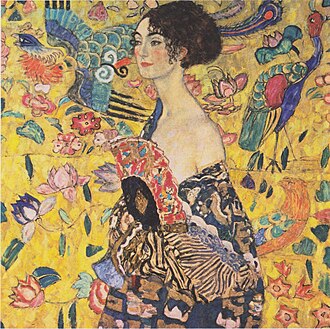 Dame mit Fächer - Gustav Klimt (1917)
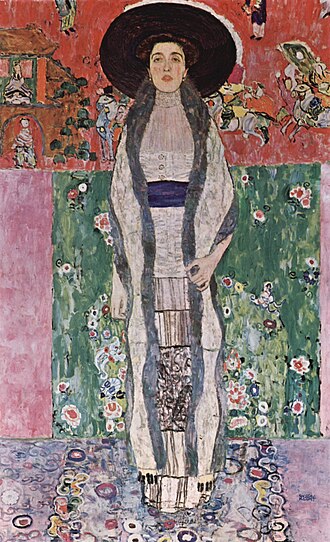 Bildnis Adele Bloch-Bauer II - Gustav Klimt (1912)
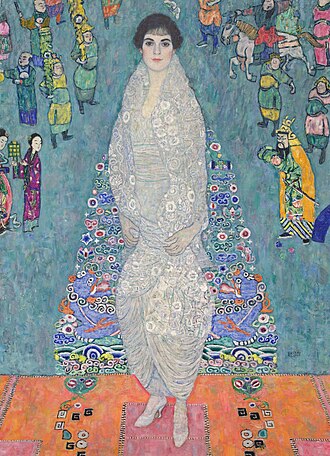 Bildnis der Elisabeth Lederer - Gustav Klimt (1910s)