Marientod
El Greco · 1565
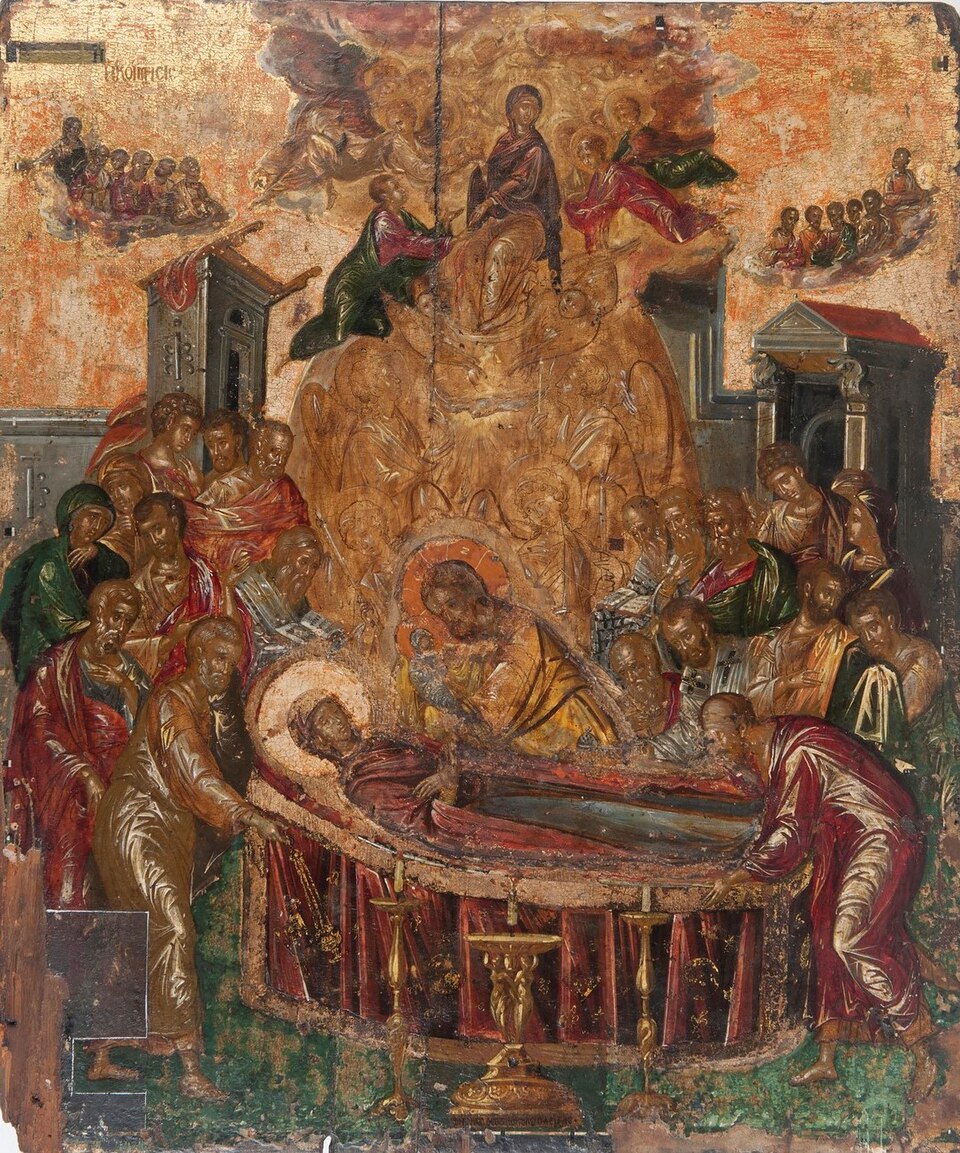
A small icon still venerated in a church on the Greek island of Syros turned out, in 1983, to carry El Greco's signature. That discovery changed how we understand where the painter began.
The story behind the painting
Before he became famous in Spain, El Greco trained as an icon painter on Crete. This tempera painting on panel was made near the end of his Cretan period, probably before 1567, while Wikidata gives 1565. The icon was probably brought to Syros during the Greek War of Independence, and it is still used for veneration in the Church of the Dormition of the Virgin there. In 1983 El Greco's signature was discovered on the base of the central candelabrum, which turned an anonymous church icon into a key early work of a major painter.
What to look for
The panel is small, about 61 by 45 cm. It follows closely the established pattern for the Dormition, the falling asleep of the Virgin, a subject very common in the Orthodox Church in which El Greco grew up. Look at the base of the central candelabrum, where the signature was found. Notice also how the image loses some of the traditional Byzantine austerity: the source says it takes on traits of Renaissance engravings, combining post-Byzantine and Italian Mannerist elements in style and iconography.
Meaning and intent
The icon shows a young painter standing between two worlds. It respects the Orthodox model and still serves its religious purpose, but it already borrows from Western prints. Scholars now see El Greco as an artist formed on Crete, whose early works trace a path from Crete to Venice and then Rome. Marina Lambraki-Plaka and Robert Byron link the Dormition type to the composition of his later Burial of the Count of Orgaz; Byron argued that El Greco, as a genuine Byzantine painter, drew on a repertoire of motifs throughout his life.
Legacy
The 1983 discovery led to the attribution to El Greco of three other works signed Doménicos, the Modena Triptych, Saint Luke Painting the Virgin and Child and The Adoration of the Magi, and then to the acceptance of more works, signed or not, such as The Passion of Christ of 1566. It was a major step in understanding his training and early career. Unlike most paintings by famous masters, it has not moved to a museum but remains an object of prayer in its church on Syros.
Schon gewusst?
- Tempera on panel, probably before 1567 (Wikidata: 1565).
- El Greco's signature was found on the candelabrum in 1983.
- Still venerated in the Church of the Dormition on Syros.
- Led to the attribution of other early works to El Greco.
Über den Künstler
El Greco (1541-1614)
Mehr von El Greco
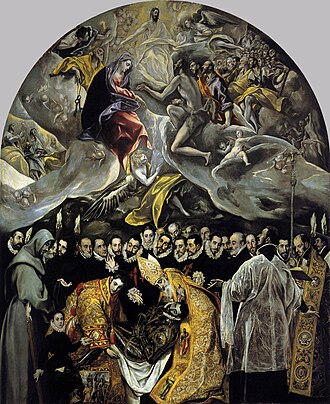 Begräbnis des Grafen von Orgaz - El Greco (1586)
 Ansicht von Toledo - El Greco (1596)
 Die Entkleidung Christi - El Greco (1570s)
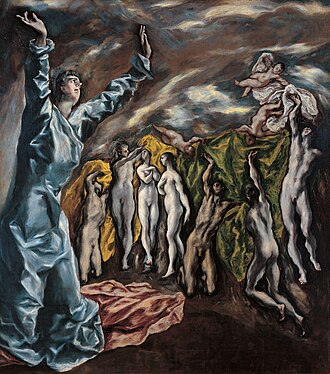 Die Öffnung des fünften Siegels - El Greco (1610)
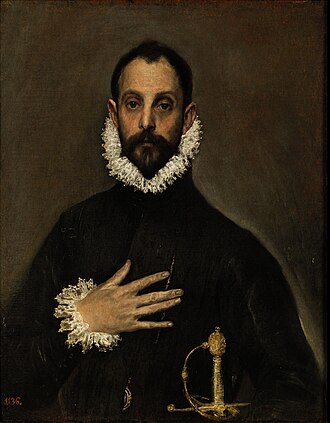 Bildnis eines Edelmanns mit der Hand auf der Brust - El Greco (1580)
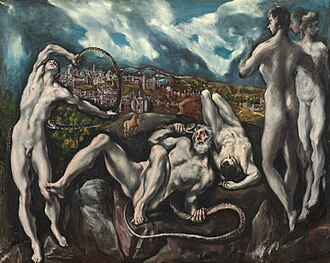 Laokoon - El Greco (1610s)
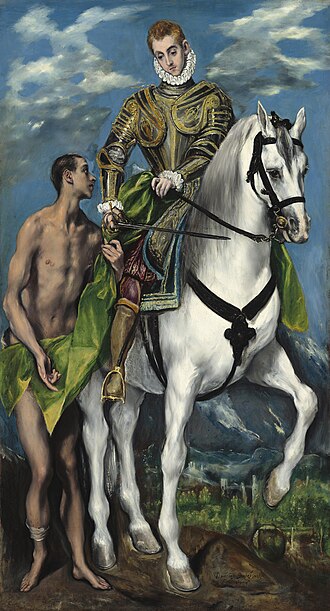 Der hl. Martin und der Bettler - El Greco (1597)
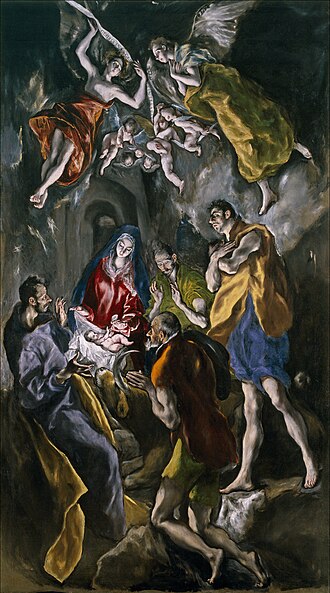 Anbetung der Hirten - El Greco (1612)
Werke verwandter Künstler
 Die Hochzeit zu Kana - Paolo Veronese (1560s)
 Das Gastmahl im Hause des Levi - Paolo Veronese (1573)
 Das letzte Abendmahl - Jacopo Tintoretto (1563)
 Der heilige Markus befreit den gefesselten Sklaven - Jacopo Tintoretto (1540s)
 Venus von Urbino - Titian (1538)
 Mariä Himmelfahrt - Titian (1510s)
 Das Abendmahl in Emmaus - Caravaggio (1601)
 Die Berufung des Hl. Matthäus - Caravaggio (1609)
 Die Gesandten - Hans Holbein the Younger (1533)
 Der Leichnam Christi im Grabe - Hans Holbein the Younger (1520s)