Apostle Andrew at full-length
El Greco · 1591
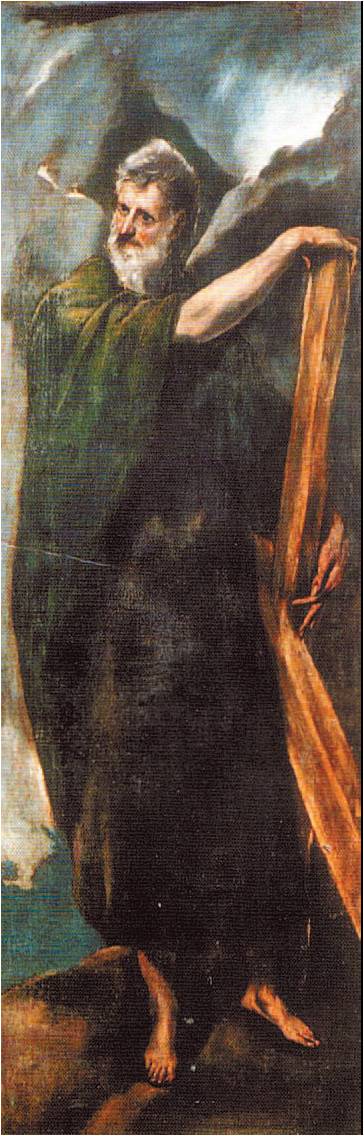
Saint Andrew holds his diagonal cross with both hands and turns his face toward a statue that is no longer there. El Greco drew this tall, nervous figure for a lost altarpiece, and he never painted the apostle this way again.
The story behind the painting
This Saint Andrew comes from the former altarpiece of Talavera la Vieja, which no longer exists. It is number 10 in the catalogue raisonné of El Greco compiled by the art historian Harold Wethey. Wikidata dates it to 1591. In the altarpiece the canvas stood to the right of a sculpture of the Virgin of the Rosary, as seen by the viewer. The original plan was different: El Greco was supposed to paint Saint Joseph for this place. In the end Saint Joseph was replaced by Simon Peter, and the arrangement of the apostles shifted, leaving Andrew on the right.
What to look for
The canvas is oil, about 126 by 46 cm, a tall, narrow format. Andrew stands almost frontally, holding his X shaped cross with both hands, his face turned toward the statue that once stood at the centre of the altarpiece. Around his head the clouds form a kind of diamond shaped halo. The saint fills most of the canvas. His body is elongated, yet his arms, legs and feet are painted without distortion; the stretching is limited to the torso. The shadows on the face, beard and hair are masterly, built from layers, transparencies, scratches and small brushstrokes that suggest each material precisely.
Meaning and intent
The figure belongs to an elongated, nervous and elegant type that El Greco first used for Saint John the Evangelist and Saint John the Baptist in the main altarpiece of Santo Domingo el Antiguo in Toledo, and that he would repeat in many later images. Yet this particular way of showing Saint Andrew was never repeated in any surviving painting, either by the master or by his workshop. Colour, expression, gesture, drapery, the misty background and the overall idea of the image show a strong pictorial conception, with intensity and vigour in every detail.
Legacy
Harold Wethey was fairly critical of the work, suggesting that the drawing is by El Greco but that the painting itself may have been carried out by his workshop. The article describes the work as held at the Royal Monastery of Santa Maria de Guadalupe in the province of Cáceres, Spain, and Wikidata also lists the Museum of Santa Cruz alongside it. The altarpiece it was made for has disappeared, but this lone apostle still turns his head toward its vanished centre, a fragment that keeps the memory of the whole.
Schon gewusst?
- From the lost altarpiece of Talavera la Vieja; Wethey catalogue no. 10.
- Oil on canvas, about 126 by 46 cm; Wikidata dates it to 1591.
- Wethey thought the drawing was El Greco's, the painting perhaps his workshop's.
- Linked to the Royal Monastery of Guadalupe and the Museum of Santa Cruz.
Über den Künstler
El Greco (1541-1614)
Mehr von El Greco
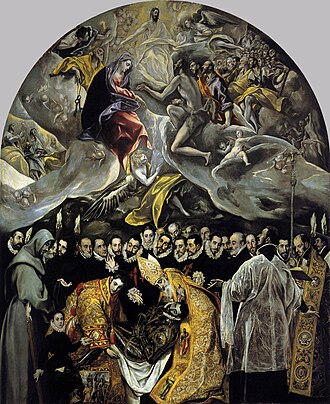 Begräbnis des Grafen von Orgaz - El Greco (1586)
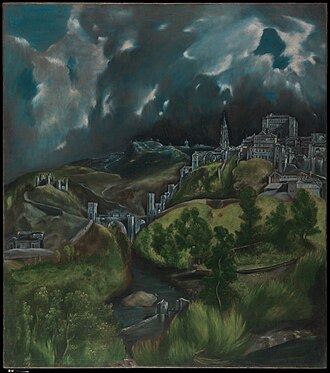 Ansicht von Toledo - El Greco (1596)
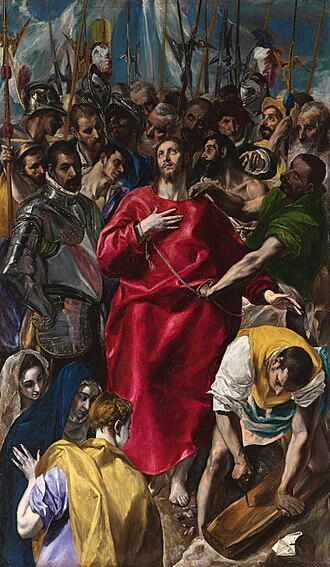 Die Entkleidung Christi - El Greco (1570s)
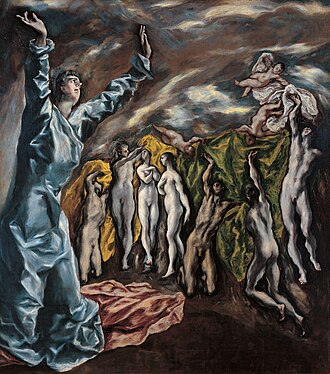 Die Öffnung des fünften Siegels - El Greco (1610)
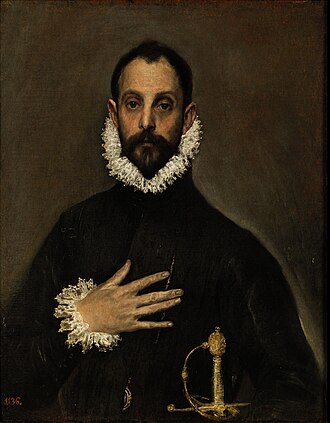 Bildnis eines Edelmanns mit der Hand auf der Brust - El Greco (1580)
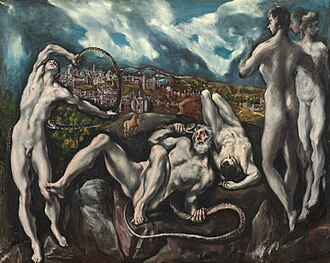 Laokoon - El Greco (1610s)
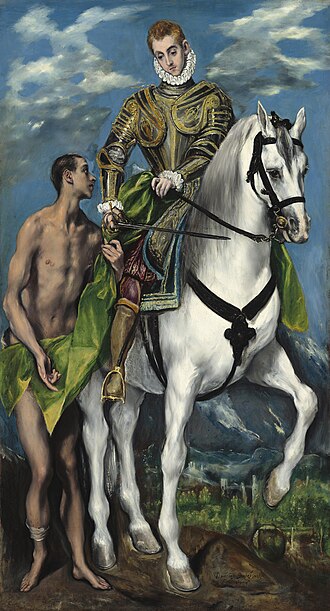 Der hl. Martin und der Bettler - El Greco (1597)
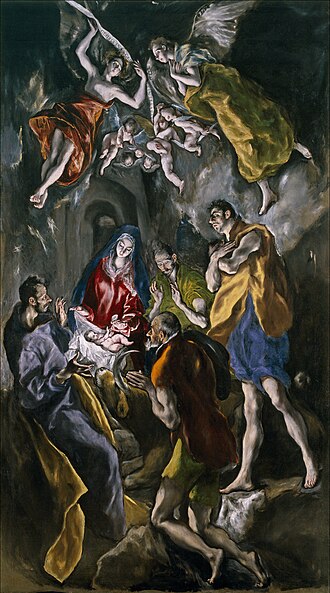 Anbetung der Hirten - El Greco (1612)
Werke verwandter Künstler
 Die Hochzeit zu Kana - Paolo Veronese (1560s)
 Das Gastmahl im Hause des Levi - Paolo Veronese (1573)
 Das letzte Abendmahl - Jacopo Tintoretto (1563)
 Der heilige Markus befreit den gefesselten Sklaven - Jacopo Tintoretto (1540s)
 Venus von Urbino - Titian (1538)
 Mariä Himmelfahrt - Titian (1510s)
 Das Abendmahl in Emmaus - Caravaggio (1601)
 Die Berufung des Hl. Matthäus - Caravaggio (1609)
 Die Gesandten - Hans Holbein the Younger (1533)
 Der Leichnam Christi im Grabe - Hans Holbein the Younger (1520s)