Anbetung der Könige
Peter Paul Rubens · 1609
.jpg)
Painted for the room where Spain and the Dutch Republic would talk peace, given away to an ambassador who was later executed, reworked by Rubens twenty years on, and thrown out of a burning palace window. This huge canvas has lived several lives.
The story behind the painting
At the end of 1608 Antwerp was preparing to host the delegates negotiating an end to the war between Spain and the Dutch Republic. The talks took place in the City Hall from 28 March to 9 April 1609 and produced the Twelve Years' Truce. Early in 1609 the city council commissioned a painting for the Statenkamer, the room of the negotiations, and chose Rubens, already the city's most notable painter and fresh from Italy. The theme alluded to the blessings the city, hurt by the Dutch blockade, hoped peace would bring. A sketch survives in Groningen, with several preparatory studies.
What to look for
Today the canvas is enormous, about 355 by 493 cm, but it was not always so. Its original size was 259 by 381 cm. During his second stay in Spain, from September 1628 to September 1629, Rubens added strips at the top and right and reworked the whole picture in the style of the late 1620s, strongly influenced by Titian. Francisco Pacheco recorded that Rubens changed some things in it. Look closely and you can still see cuts and small blisters in the paint, left by the heat of a fire in 1734. A full study in London lets scholars reconstruct its first appearance.
Meaning and intent
The picture began as a message of hope: kings bringing gifts to a child, set in a room where enemies hoped to make peace. In spring 1612 the magistrates gave it to Rodrigo Calderón, envoy of the king of Spain, perhaps sent to turn the truce into lasting peace. Calderón fell from grace and was executed in 1621, and in 1623 Philip IV bought the painting from his collection for the Royal Alcázar of Madrid. When Rubens met it again in the palace, he treated it not as finished history but as a work he could still improve.
Legacy
The painting became much loved in the Spanish royal collection. When Queen Maria Anna of Neuburg proposed sending it to her father, the Elector Palatine, her husband Charles II refused. During the fire at the Alcázar in 1734 it was cut from its frame with a knife, rolled up and thrown out of a window, and it survived otherwise undamaged. It moved to the Royal Palace built on the same site, then to the Prado, where it first appears in the inventories in 1834. It was fully restored in 2004. Wikidata dates it 1609, the year of the first version.
Schon gewusst?
- Commissioned in 1609 for the Antwerp City Hall room of the truce talks.
- Enlarged and reworked by Rubens in Madrid in 1628 to 1629.
- Rescued from the Alcázar fire of 1734 by being thrown from a window.
- In the Prado inventories since 1834, restored in 2004.
Über den Künstler
Peter Paul Rubens (1577-1640)
religiöse Kunst · Museo del Prado · Jesuskind
Mehr von Peter Paul Rubens
.jpg) Die Aufrichtung des Kreuzes - Peter Paul Rubens (1609)
Die Aufrichtung des Kreuzes - Peter Paul Rubens (1609)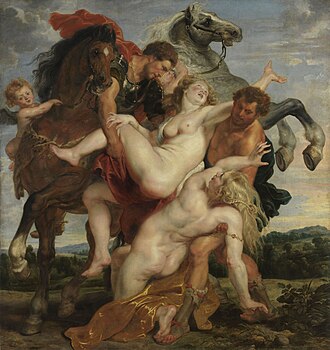 Der Raub der Töchter des Leukippos - Peter Paul Rubens (1618)
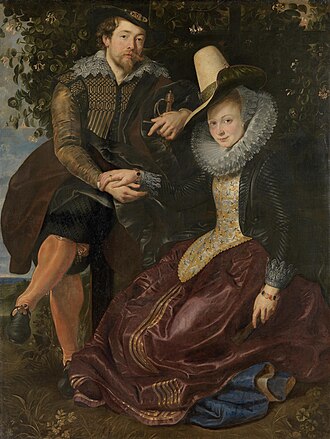 Rubens und Isabella Brant in der Geißblattlaube - Peter Paul Rubens (1600s)
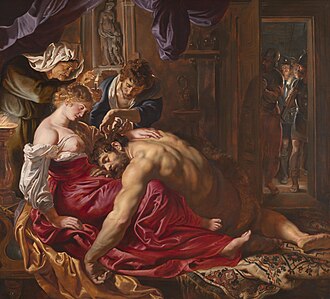 Samson und Delilah - Peter Paul Rubens (1600s)
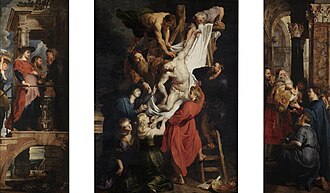 Kreuzabnahme - Peter Paul Rubens (1611)
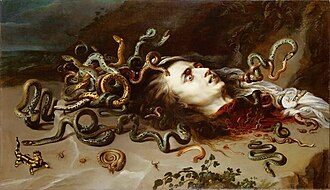 Haupt der Medusa - Peter Paul Rubens (1618)
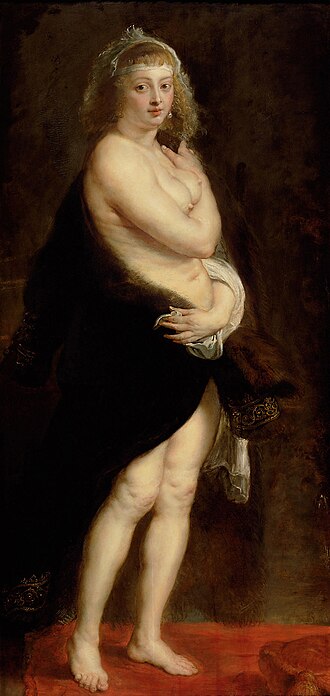 Helena Fourment - Peter Paul Rubens (1638)
.jpg) Der Liebesgarten - Peter Paul Rubens (1632)
Der Liebesgarten - Peter Paul Rubens (1632)
Werke verwandter Künstler
 Die Sternennacht - Vincent van Gogh (1889)
.jpg) Caféterrasse am Abend - Vincent van Gogh (1888)
Caféterrasse am Abend - Vincent van Gogh (1888)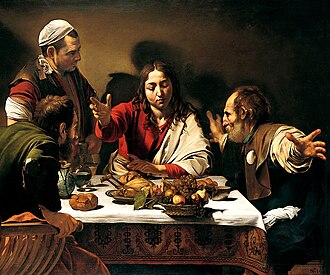 Das Abendmahl in Emmaus - Caravaggio (1601)
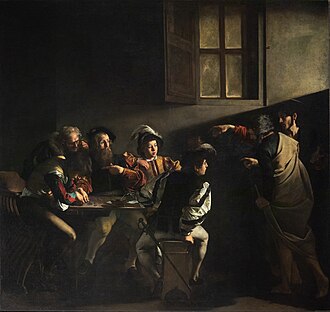 Die Berufung des Hl. Matthäus - Caravaggio (1609)
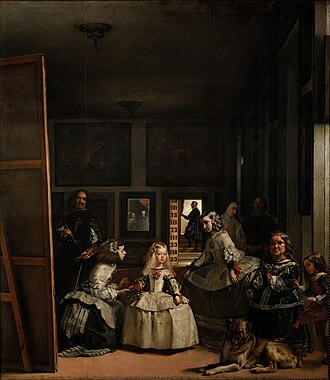 Las Meninas - Diego Velázquez (1656)
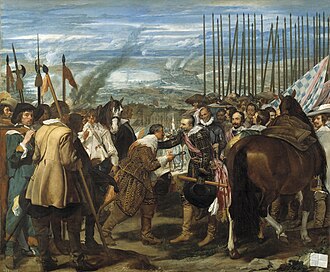 Die Übergabe von Breda - Diego Velázquez (1635)
%20-%20Google%20Art%20Project.jpg) Dreifachporträt von Karl I. - Anthony van Dyck (1635)
Dreifachporträt von Karl I. - Anthony van Dyck (1635)%20with%20M.%20de%20St%20Antoine%20-%20Google%20Art%20Project.jpg) Karl I mit M. de St. Antoine - Anthony van Dyck (1636)
Karl I mit M. de St. Antoine - Anthony van Dyck (1636)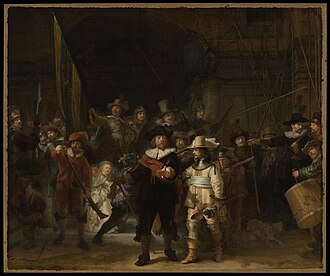 Die Nachtwache - Rembrandt van Rijn (1642)
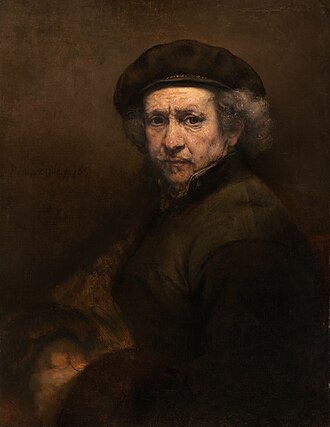 Selbstbildnis - Rembrandt van Rijn (1659)
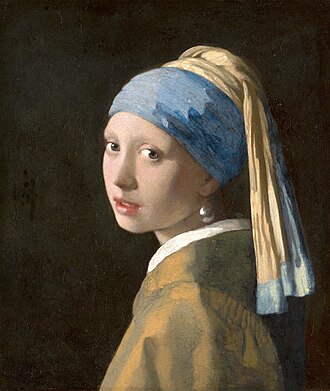 Das Mädchen mit dem Perlenohrgehänge - Johannes Vermeer (1665)
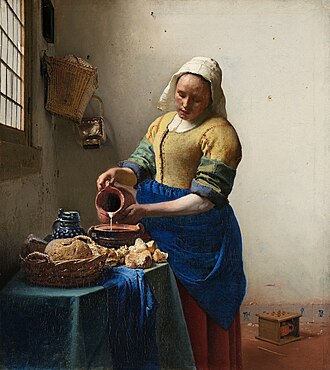 Dienstmagd mit Milchkrug - Johannes Vermeer (c. 1658)